

We continue our series on the history of algebra. Today we discuss the period of elementary algebra.
A brief overview of the elementary-algebra period
This period lasted from the third century CE to the mid-nineteenth century. Algebra became an independent science with its own subject and methods. Mathematics now taught in secondary school gives some idea of these achievements. During this long period of the mathematics of constant quantities, almost all the disciplines now studied in higher education and universities took shape as the classical foundation of modern mathematics.
The symbolic algebra begun by Diophantus underwent major changes in Indian and Arab mathematics. Omar Khayyam, in particular, explicitly defined algebra’s subject as solving equations. Al-Khwarizmi’s algebra spread to Europe in the Middle Ages. Later, in François Viète’s work, it became a calculus using letters and analytical methods.
Symbolic algebra developed further through the German cossists and Italian Renaissance mathematicians. Descartes and Newton refined it.
In the seventeenth and eighteenth centuries, algebra meant the science of calculation with letters. The letters, however, stood for numbers, either whole or fractional. Here is a brief outline of one of the best manuals of the time, Euler’s Complete Introduction to Algebra: integers, common and decimal fractions, roots, logarithms, equations of degrees 1–4, progressions, combinations, the binomial theorem and Diophantine equations. By the mid-eighteenth century, algebra thus covered approximately what we now call elementary algebra.
Eighteenth- and nineteenth-century algebra was primarily the algebra of polynomials. Historically, its first problem was solving algebraic equations in one unknown, of the form a₀xⁿ + a₁xⁿ⁻¹ + … + aₙ = 0. The aim was to find formulas expressing roots in terms of coefficients using addition, multiplication, subtraction, division and root extraction: “solution by radicals.”
Italian mathematicians made substantial progress in the sixteenth century: first a formula for cubic equations was found, then a method for quartic equations.
For almost three more centuries, attempts to find analogous formulas for equations of higher degree failed. This gave special importance to another problem: finding at least one proof that every algebraic equation with complex coefficients has a complex root, without using a formula. Albert Girard first stated this theorem in the seventeenth century, but Gauss gave its first rigorous proof at the end of the eighteenth.
Finally, in 1824 Abel established that equations of degree greater than four are not generally solvable by radicals. In 1830 Galois gave a general criterion for an algebraic equation to be solvable by radicals. Other problems receded into the background, and algebra came to mean the “analysis of equations,” as J. Serret noted in his Course of Higher Algebra (1877–1879).
Alongside equations in one unknown, the theory of systems with several unknowns developed, particularly linear systems. Their study gave rise to matrices and determinants. Matrices subsequently became the subject of an independent theory, matrix algebra, whose role extends beyond studying linear systems.
People, times and places in elementary algebra
Let us outline the principal figures and the chronotope — the times and places — of algebra’s achievements in this period.
Chinese algebra
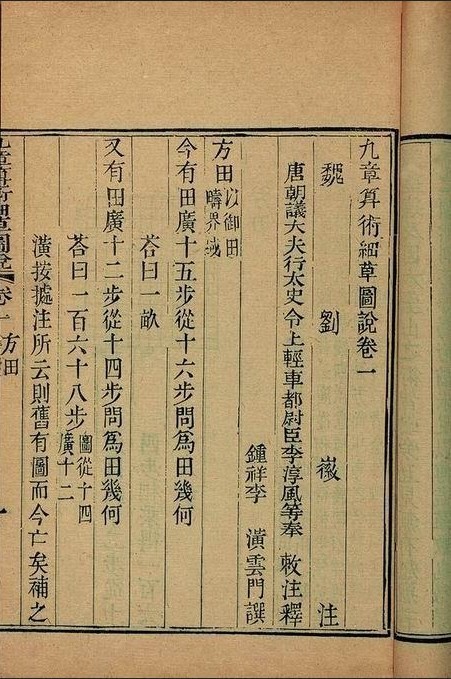
The study of algebra began very early in China. The Nine Chapters on the Mathematical Art (tenth–second centuries BCE), an encyclopedia of ancient Chinese mathematical knowledge, describes algebraic problem-solving methods. These include fangcheng, analogous to Gaussian elimination for linear systems, and tianyuan, analogous to Horner’s scheme for finding polynomial roots.
Decimal fractions based on a decimal system of measures and negative numbers, called fu and interpreted as “debts,” first appeared here. Sunzi’s Mathematical Classic (third century CE) contains a problem and a proposition about remainders now known as the Chinese remainder theorem.

Indian algebra
Indian mathematicians subsequently developed questions raised in ancient Greek algebra. Their best-known achievement is our modern decimal place-value system, dating from the sixth century CE. The Arabs adopted it in the seventh–eighth centuries, and it began spreading westward.
A major Indian achievement was a developed algebraic notation, richer even than Diophantus’s. Most symbols were the first syllables of the corresponding Sanskrit terms.
For example, an unknown quantity was called yavat-tavat, “as much as,” and a letter representing the syllable ya denoted it. A square root was represented by mu, from mula, “base,” which also meant the root of a plant. Arab translators of Indian siddhantas in the eighth century rendered it as jizr, “plant root.” Twelfth-century Latin translators used radix, the source of our terms “root” and “radical.” Similar Indian–Arabic–Latin paths can be traced in other classical mathematical terms.
Indian mathematicians solved linear and quadratic equations and their systems. They also considered indeterminate equations of the first degree, ax + by = c. The first general solution occurs in Brahmagupta. Only integer solutions were admitted, including negative ones.
Brahmagupta’s Correctly Established Doctrine of Brahma (seventh century CE) is rhetorical algebra: its rules are expressed in words. It generalizes methods of solving quadratic equations and attempts to create algebraic notation.
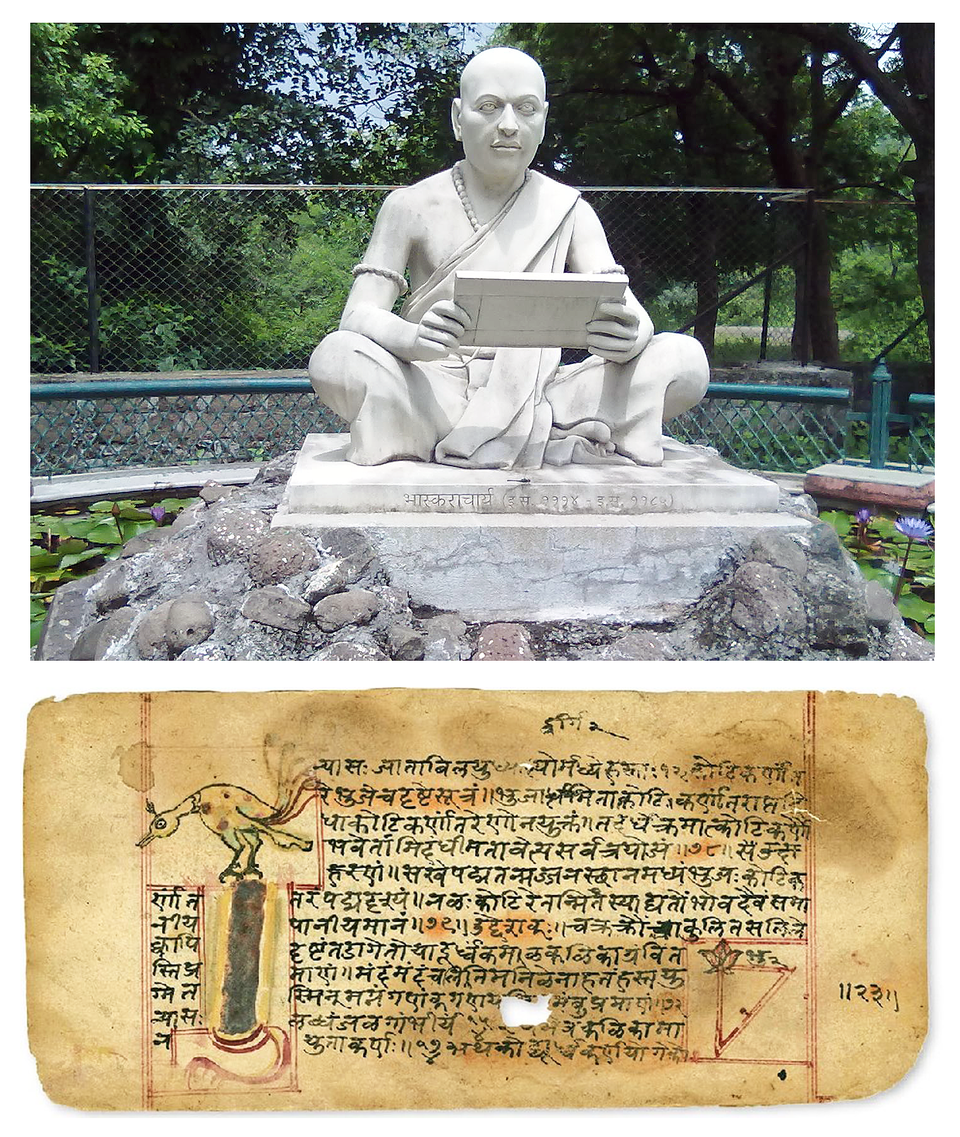
Bhaskara II (1114–1185) wrote Siddhanta Shiromani, “The Crown of the Doctrine,” devoted to astronomy and mathematics. Its arithmetic section, Lilavati, “The Beautiful One,” remained a model mathematics textbook for centuries.

Arab algebra
For European scholars in the Middle Ages and Renaissance, Arab mathematics was a more significant source of knowledge than ancient mathematics. In Islamic countries, algebra and trigonometry first became independent sciences.
Hisab al-Jabr wa-l-Muqabala, written in the early ninth century by Muhammad al-Khwarizmi (c. 787–850, Baghdad), was the first algebra book in the East. It gives the first classification of quadratic equations and their solution methods. The term “algebra” derives from Latin translations of this book.
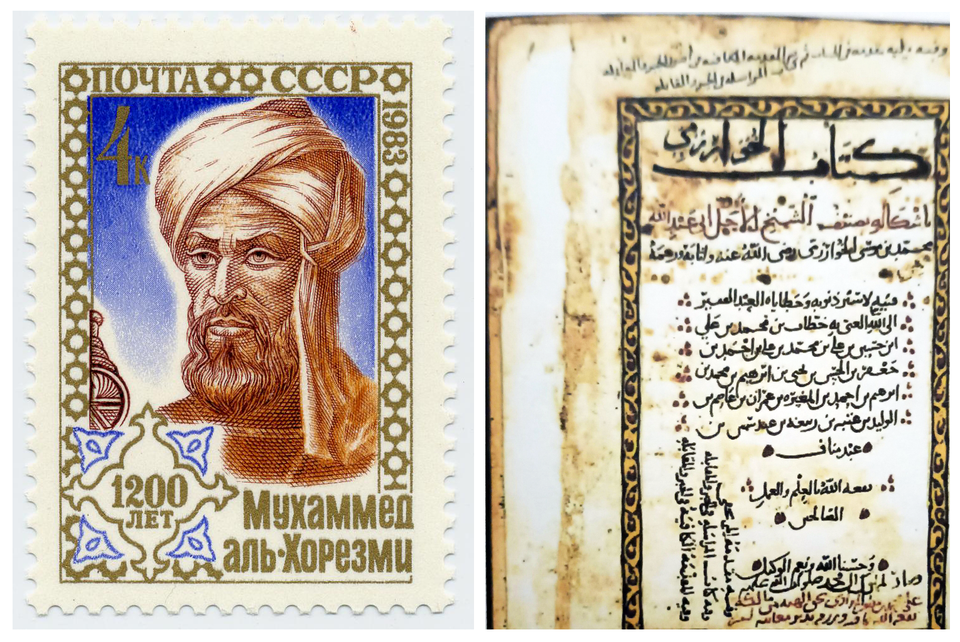

In On Calculation with Hindu Numerals, al-Khwarizmi first explained the Indian system of number notation. This work was also translated into Latin and became one route by which Europe learned decimal place-value notation. Translations called its author Algorizmi, giving our mathematical language the term “algorithm.”
A major drawback of Arab algebra was its absence of symbolic notation and its verbal description of operations, which restrained its development.
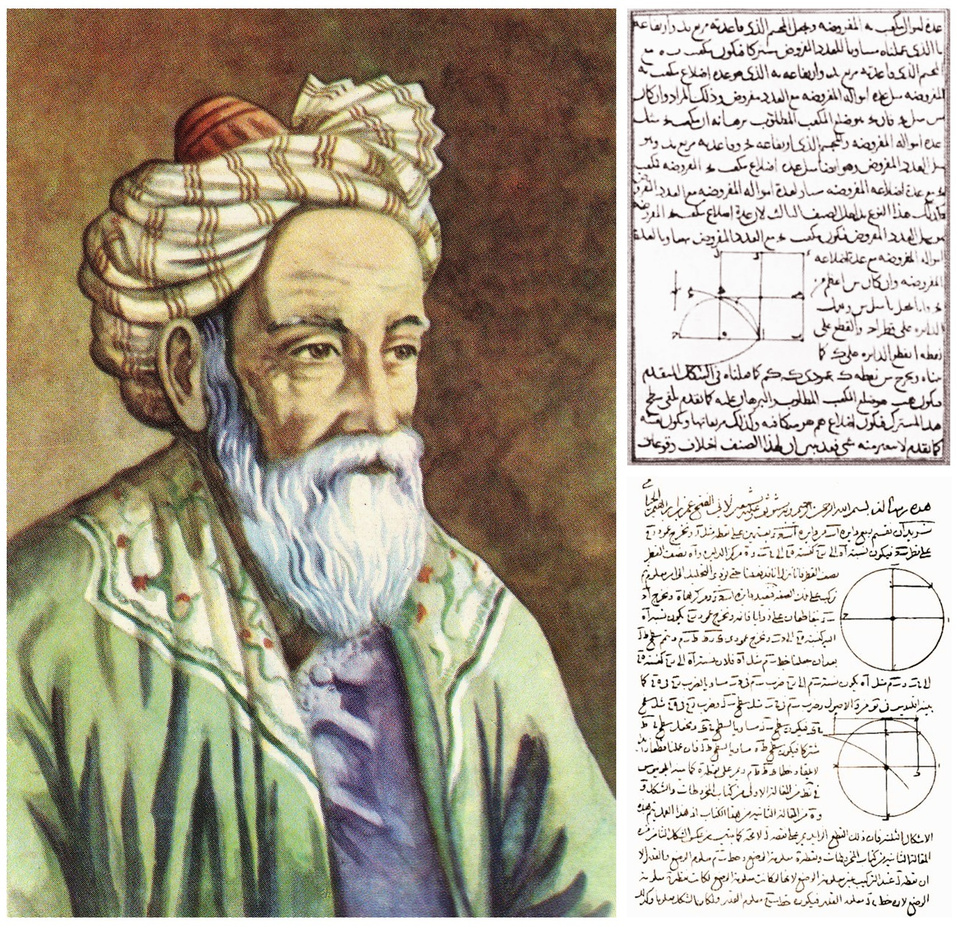
Omar Khayyam was the first mathematician to create a theory of solving equations up to and including the third degree and to give their general classification, in his Treatise on Demonstrations of Problems of al-Jabr and al-Muqabala (1069). Here he also first defined algebra’s subject: finding unknown quantities related to known quantities by equations. Algebra thus came to be regarded as the science of equations.

Algebra in medieval and Renaissance Europe
Arab algebra gradually entered Europe up to the twelfth century.
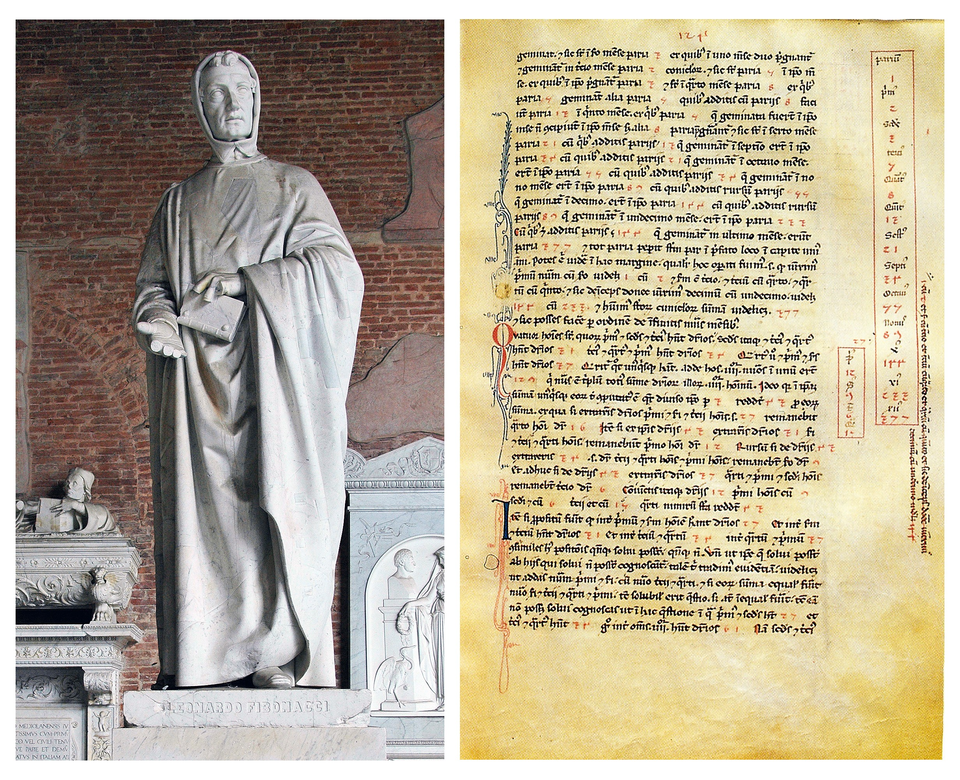
The first independent Western European mathematician to present all the achievements of Islamic mathematicians and advance beyond them was the Italian Leonardo of Pisa (c. 1170–1240), known as Fibonacci. His Liber Abaci, or Book of the Abacus (1202), was Europe’s first complete account of arithmetic and the algebra of linear and quadratic equations.

Luca Pacioli (1445–1517) took the next step toward symbolic algebra with Summary of Knowledge of Arithmetic, Geometry, Ratios and Proportionality (1494), introducing new algebraic signs. Pacioli called algebra Arte maggiore, “The Great Art,” a name often used afterward. His notation differed from ours. For example, co, from cosa, “thing,” denoted the unknown; ce, from censo, its square; and cu, from cubo, its cube.
Nicolas Chuquet (c. 1445–1488) further developed algebraic notation and terminology in The Science of Numbers in Three Parts (1484).
The next step was taken by sixteenth-century German mathematicians known as cossists, including J. Widmann and M. Stifel. They called algebra coss, from the Italian cosa, the algebraists’ word for an unknown.
The cossists used terminology and notation similar to the Italians’, particularly Pacioli’s. Their terminology spread widely beyond Germany. L. Magnitsky, for example, used their signs and names in his Arithmetic (1703).
Michael Stifel (c. 1487–1567) gave a systematic theory of operations with negative numbers in Complete Arithmetic (1544). By comparing geometric and arithmetic progressions, he also came close to the idea of logarithms.
European scholars’ first major mathematical achievement surpassing Eastern discoveries was the general solution of cubic equations by radicals. This work was carried out by Scipione del Ferro (1465–1526), Niccolò Fontana, or Tartaglia (c. 1499–1557), Girolamo Cardano (1501–1576) and Luigi Ferrari (1522–1565).
Cardano’s The Great Art (1545) published rules for solving cubic and quartic equations by radicals — Cardano’s formula and Ferrari’s method — acknowledging Tartaglia’s authorship. In Algebra (1572), Rafael Bombelli (c. 1526–1572) extended these rules by using square roots of negative numbers, effectively beginning the theory of imaginary numbers.
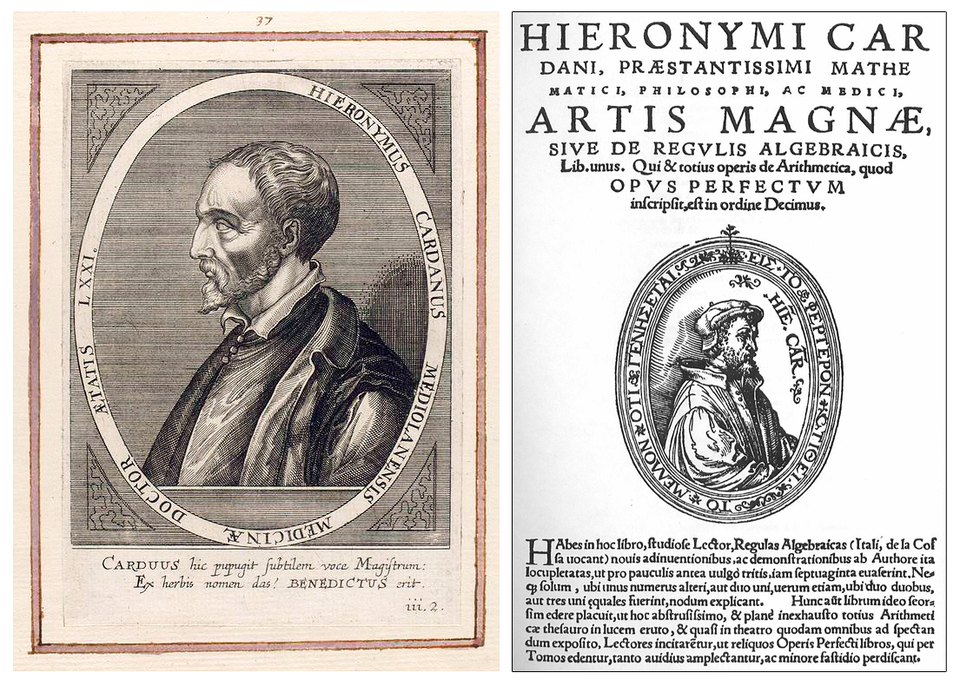

Complex numbers were thus introduced in solving cubic equations rather than quadratic ones.
The Dutch mathematician and engineer Simon Stevin (c. 1548–1620) introduced decimal fractions, though in notation different from ours. After his The Tenth (1585), decimal fractions became widely used in Europe.
The creation of symbolic algebra was an outstanding Renaissance achievement; its absence had held mathematics back. François Viète (1540–1603), the “great amateur” of mathematics and “father of algebra,” fundamentally improved its notation. His Introduction to the Analytic Art (1591) marked the beginning of literal calculus, or calculation with letters.
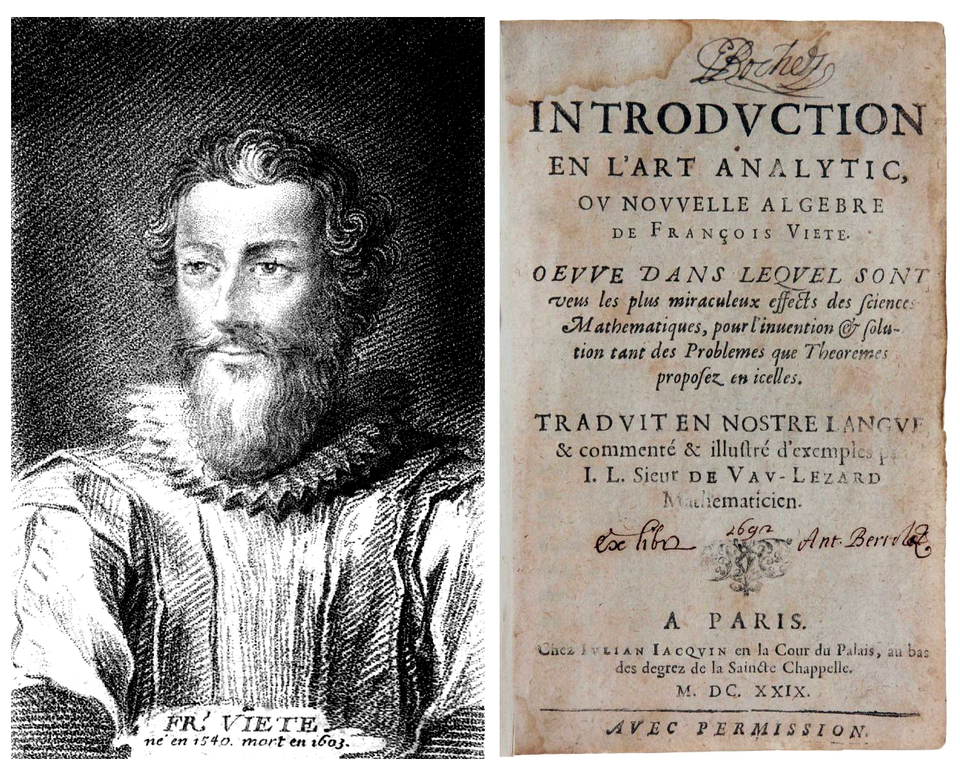

Viète wrote: “All mathematicians knew that beneath their algebra and almuqabala lay incomparable treasures, but they did not know how to find them. Problems they considered most difficult are solved quite easily by the dozen through our art, which therefore offers the surest path for mathematical inquiry.”
His symbolic algebra first used signs not only for unknowns but also for arbitrary quantities: coefficients too were represented by letters. Capital letters represented scalars, vowels for unknowns and consonants for coefficients. Viète used + for addition and − for subtraction in the modern sense.
This was a fundamental turning point: algebraic calculation as a system of formulas became possible. Using a general apparatus of algebraic transformations, Viète’s On the Analysis and Improvement of Equations gave a complete analytical account of equations of the first four degrees.
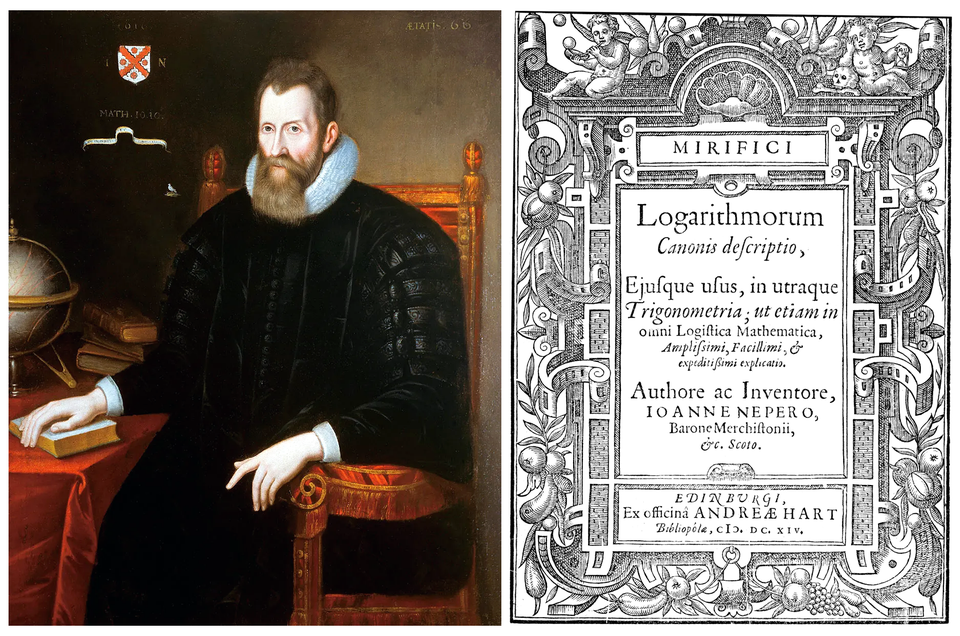
After Stevin’s decimal fractions, the invention of logarithms brought a major improvement in numerical calculation. John Napier, Joost Bürgi and Henry Briggs contributed in the early seventeenth century. Napier’s A Description of the Wonderful Canon of Logarithms (1614), for example, explained their use and gave the first seven-place tables of logarithms of sines. He later constructed Napier’s Bones, described in Rabdology, or the Art of Calculation with Rods (1617), a precursor of early computing tools: the slide rule, arithmometer and calculator.

Algebra in the early modern period: seventeenth–eighteenth centuries
The period of the mathematics of constant quantities continued until the end of the sixteenth century. During the early modern scientific revolution of the seventeenth and eighteenth centuries, laws expressed analytically as functional relationships between jointly changing quantities came to the forefront of the physical and mathematical picture of the world. Mathematics entered the period of variable quantities. Many scholars participated in creating infinitesimal analysis.
Elementary algebra developed through further improvements in notation, analytical calculation and polynomial algebra.
Thomas Harriot (c. 1560–1621, Oxford) wrote The Application of the Analytic Art to the Solution of Algebraic Equations (1631). He improved algebraic notation, devising the order signs still used today: >, “greater than,” and <, “less than.”
Albert Girard (1595–1632, Leiden), in New Discoveries in Algebra (1629), gave the first geometrical interpretation of negative numbers and roots. He also first formulated the fundamental theorem of algebra, began accounting for “imaginary” roots — later complex roots — and developed the theory of symmetric polynomials in the roots of an equation.
René Descartes (1596–1650), the outstanding French philosopher, mathematician, physicist and physiologist, gave mathematics a powerful new impetus. He called his new mathematics “universal.” He set it out in his only printed mathematical work, Geometry, published in 1637 as an appendix to the French-language Discourse on the Method of Rightly Conducting One’s Reason and Seeking Truth in the Sciences, Together with Dioptrics, Meteorology and Geometry, Which Are Examples of This Method.
Descartes systematically applied the well-developed algebra of the early seventeenth century to Greek geometry. This began modern analytic geometry, a bridge between geometry and algebra. In Geometry, he first introduced the concepts of variable quantity and function. Much of his algebraic notation already looks modern. The book had enormous influence: for the next 150 years, algebra and geometry developed along the paths he indicated.
Another “great amateur,” Pierre de Fermat (1607–1665), came somewhat closer to modern analytic geometry. He is considered a founder of algebraic number theory. Fermat primes, Fermat’s little theorem and Fermat’s Last Theorem appear in classical number-theory textbooks and are widely applied in modern information-technology theory.
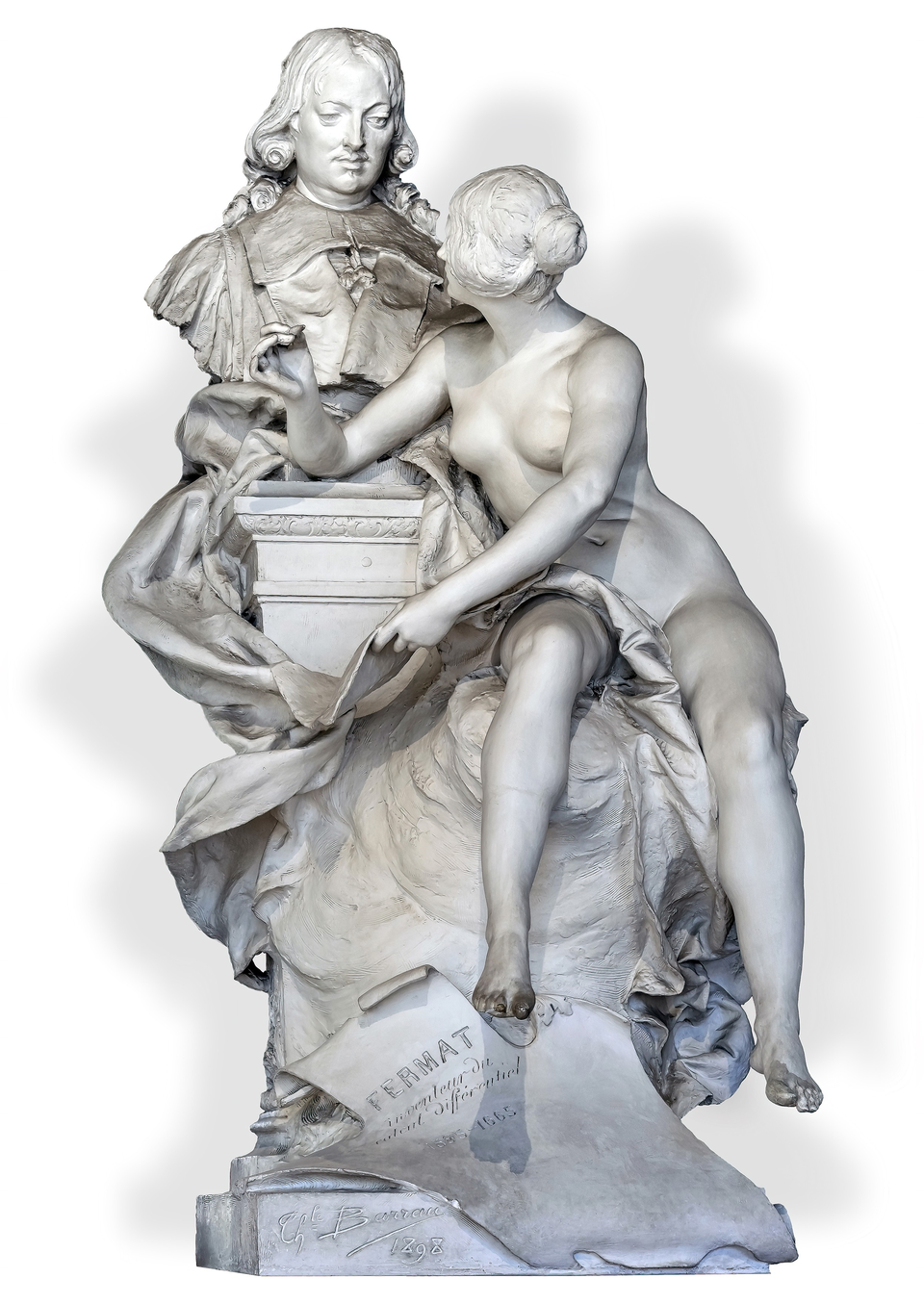

In 1637 Fermat’s famous notes appeared in the margins of Diophantus’s Arithmetica. Diophantus posed the problem: “Divide a square number into two other square numbers.” In algebraic language, integer solutions of x² + y² = z² are called Pythagorean triples. Fermat wrote: “It is impossible to divide a cube into two cubes, a fourth power, or in general any power higher than the second, into two powers of the same kind. I have discovered a truly remarkable proof of this, but the margin is too narrow to contain it.” He thus became the author of what was called the hardest problem on Earth, later known as Fermat’s Last Theorem: xⁿ + yⁿ = zⁿ, n > 2 has no solutions in natural numbers.
John Wallis (1616–1703), professor at Oxford, was the first mathematician whose algebra truly grew into analysis. His principal works are The Arithmetic of Infinites (1656) and A Treatise of Algebra (1685).
The French mathematician and physicist Blaise Pascal (1623–1662) contributed greatly to the foundations of many mathematical fields. His Treatise on the Arithmetical Triangle played an important role in combinatorics. He first arranged a table of combinations in triangular form, Pascal’s triangle. He formed its binomial coefficients by his method of complete mathematical induction, one of his most important discoveries. His first calculating machine, the Pascaline of 1642, performing two arithmetic operations, survives.
The brilliant English scholar Isaac Newton (1643–1727), creator of modern mechanics and the mathematics of continuous processes, made immense contributions to mathematics and physics. His principal work is Mathematical Principles of Natural Philosophy (1687). In it he brought together all previously known information about motion and force, along with his own discoveries, into a single deductive system of terrestrial and celestial mechanics.
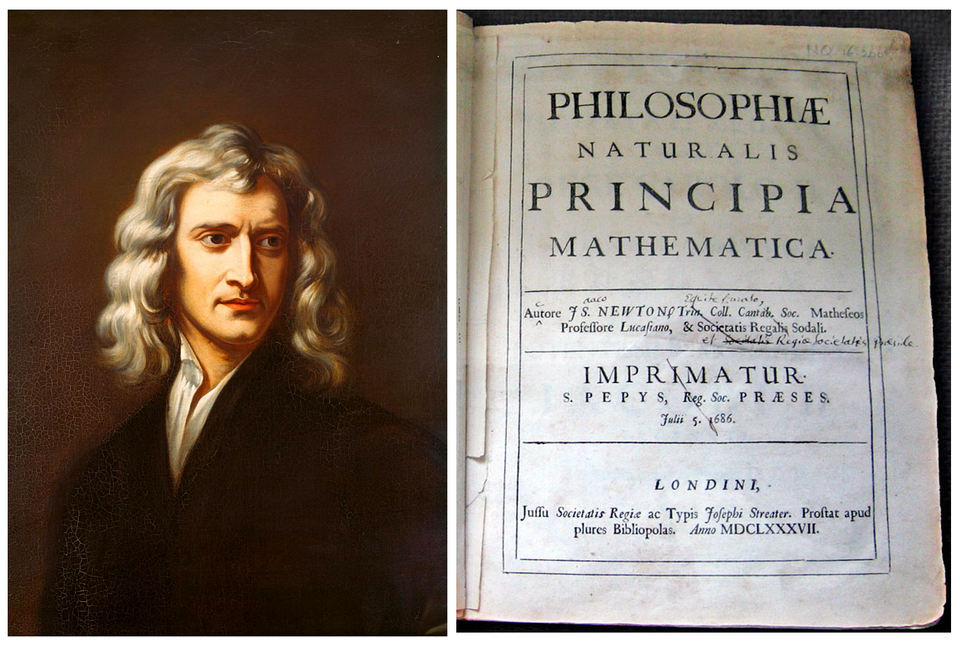

Newton’s Universal Arithmetic (1707) was a substantial contribution to algebra, which he called universal arithmetic. His achievements include a numerical method for solving algebraic equations, Newton’s method; important theorems on symmetric functions of their roots, Newton’s identities; and the isolation of roots.
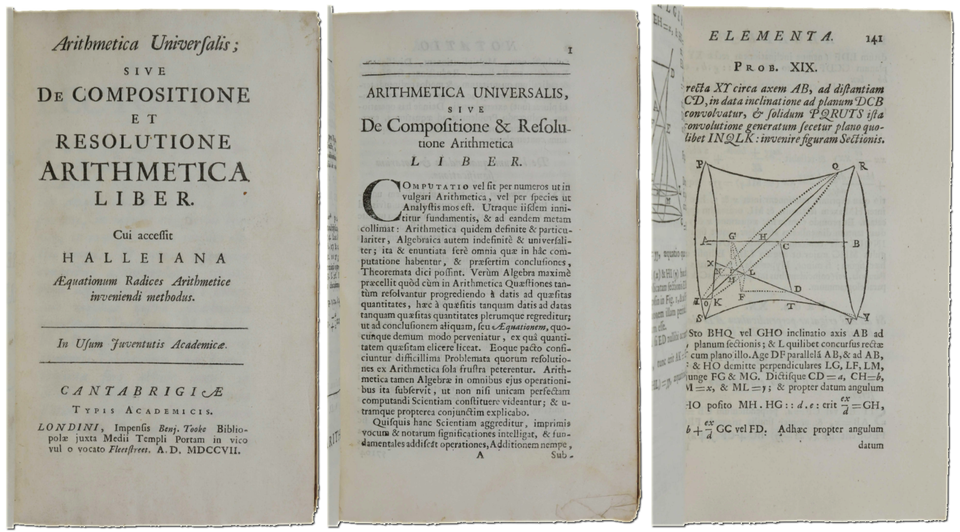

He developed the concept of number and defined it as follows: “By number we mean not so much a multitude of units as the abstract ratio of any quantity to another quantity of the same kind taken as a unit. Numbers are of three kinds: integer, fractional and irrational. An integer is measured by the unit, a fraction by a submultiple of the unit, and an irrational number is incommensurable with the unit.”
Newton thus completed Viète’s and Descartes’s work in moving from rhetorical and geometrical algebra to symbolic algebra.
The great German scholar Gottfried Wilhelm Leibniz (1646–1716) is remembered primarily as a founder of mathematical analysis. He first presented his calculus in print in 1684, in “A New Method for Maxima and Minima, and Also for Tangents, Which Is Obstructed Neither by Fractional nor by Irrational Quantities, and a Remarkable Type of Calculus for Them.” It introduced dx and dy, differentiation rules for products and quotients, and conditions for extrema and inflection points.
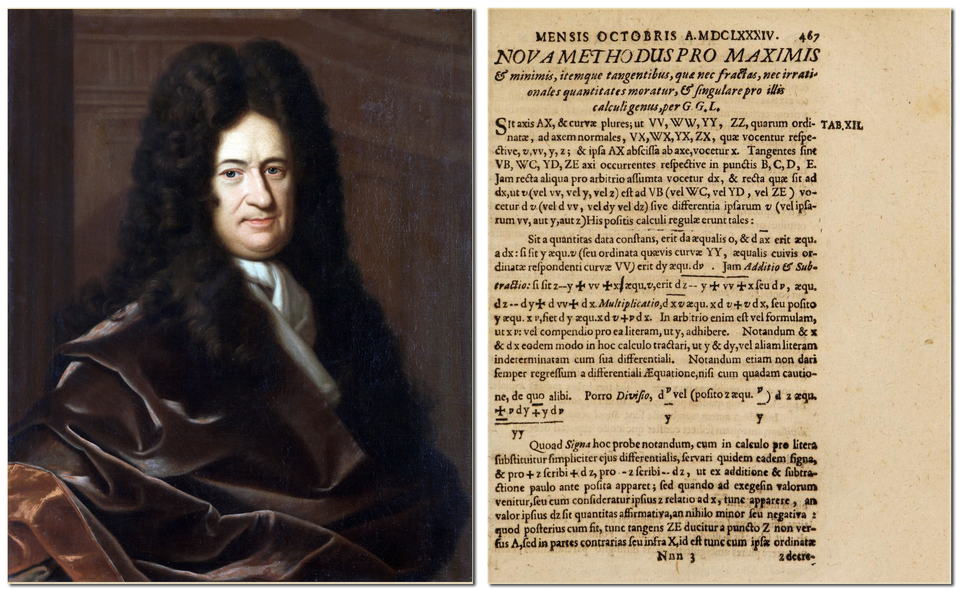

Leibniz was one of the most prolific inventors of modern mathematical symbols. Few mathematicians understood so well the unity of form and content in notation. He gave differential and integral calculus their name and introduced the terms function, variable quantity, coordinates, abscissa, ordinate, differential and algorithm. Through his influence, scholars adopted the equality sign =, multiplication sign ⋅ and logical notation.
Leibniz is regarded as a founder of mathematical logic and an intellectual pioneer of modern machine mathematics. He was among the first to construct a calculating machine capable not only of addition and subtraction but also multiplication, division, exponentiation and extraction of square and cube roots. He also invented the first integrating mechanism.
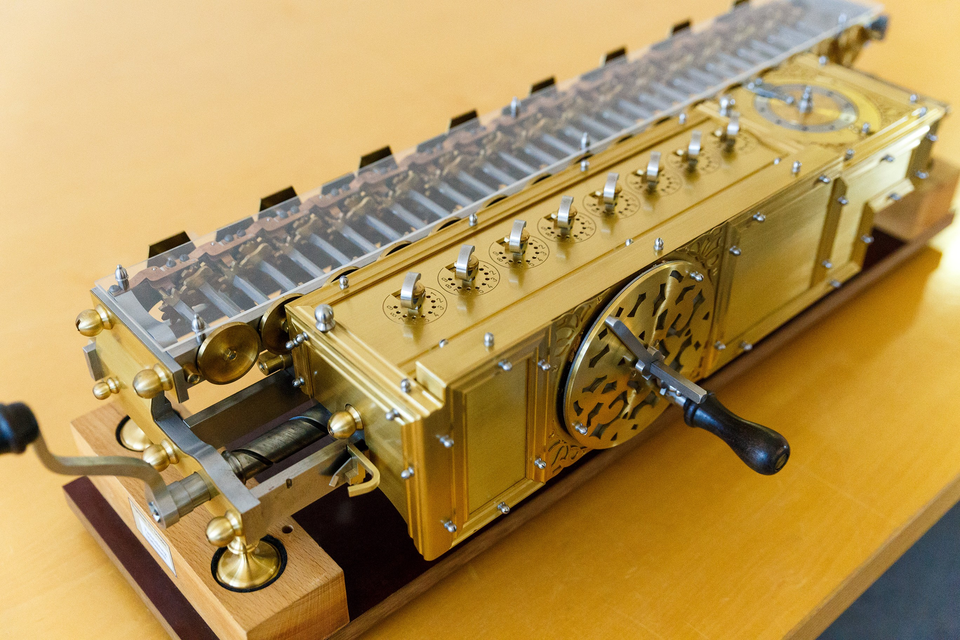

He also stood at the beginnings of modern computer science. He fully described the modern binary system in Explanation of Binary Arithmetic (1703). Interested in Chinese culture, Leibniz knew the Book of Changes and noticed that its hexagrams corresponded to binary numbers from 0 to 111111. He may have been the first programmer and information theorist. He designed a binary calculating machine using a precursor of the punched card.
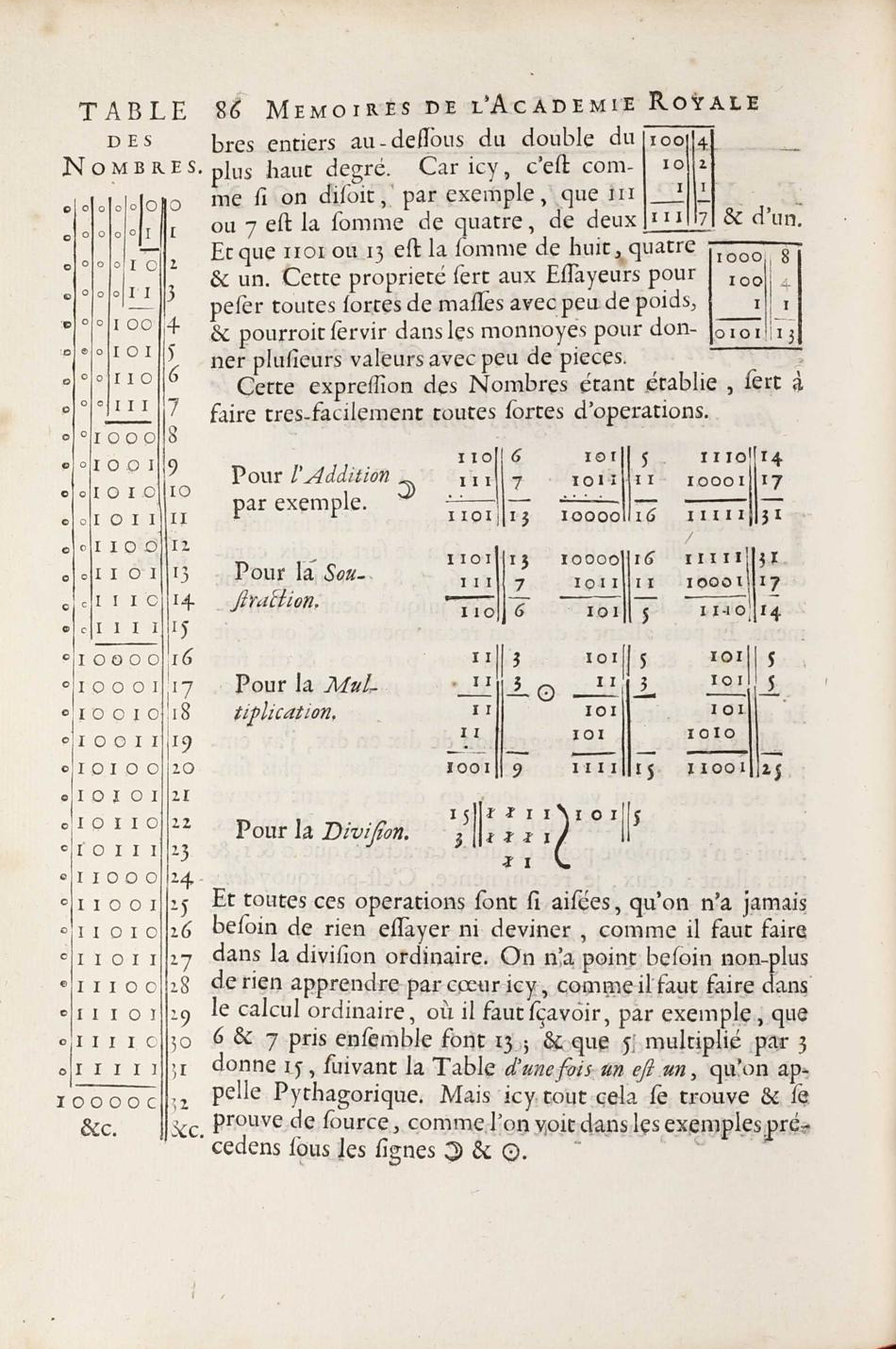

Leibniz introduced the concept of a determinant and proposed ideas about determinant theory, later developed by A. Vandermonde, A. Cauchy and C. Gauss and brought to completion by C. Jacobi.
The eighteenth century: the Age of Euler
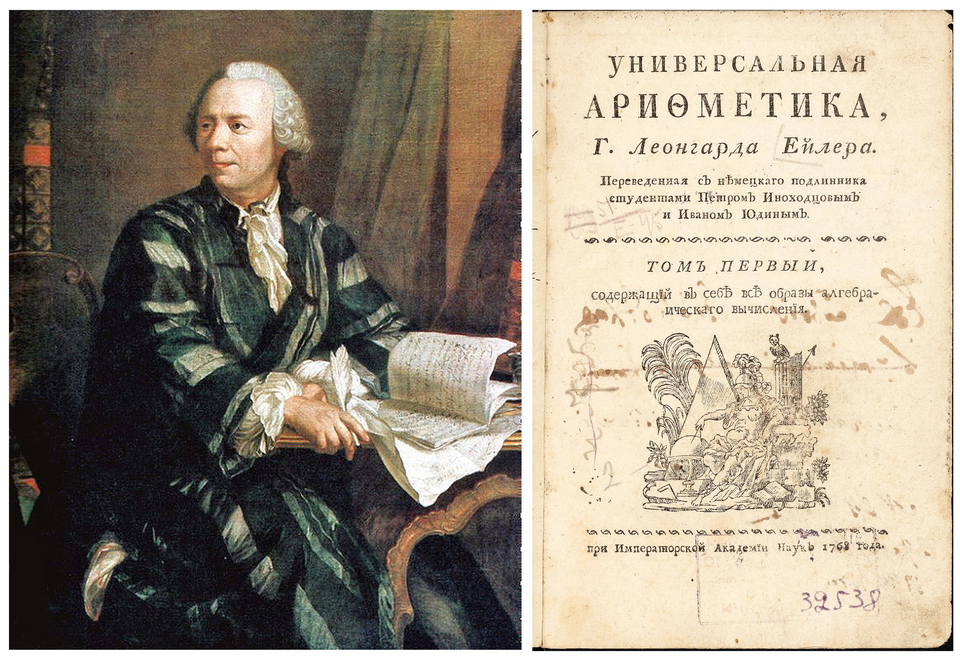
The brilliant mathematician and physicist Leonhard Euler (1707–1783) lived in Russia for many years and contributed substantially to Russian science and mathematics education. He is considered the founder of the St Petersburg mathematical school and Russia’s first school of mathematics teaching methods. The first mathematics textbooks published in Russian were written by Euler. The first Russian mathematical academicians were his pupils: S. Kotelnikov, S. Rumovsky, N. Fuss and M. Golovin.
Euler first connected analysis, algebra, geometry, trigonometry, number theory and other disciplines into a single system, adding many discoveries of his own. He devoted numerous works to algebra and number theory, including Universal Arithmetic (1768), in Russian and German, and Elements of Algebra (1770), in German. He initiated the analytical method in number theory. More than 140 of his works concern it; familiar examples include Euler’s totient function, Euler’s theorem and Euler’s law of quadratic reciprocity.

The end of the elementary-algebra period
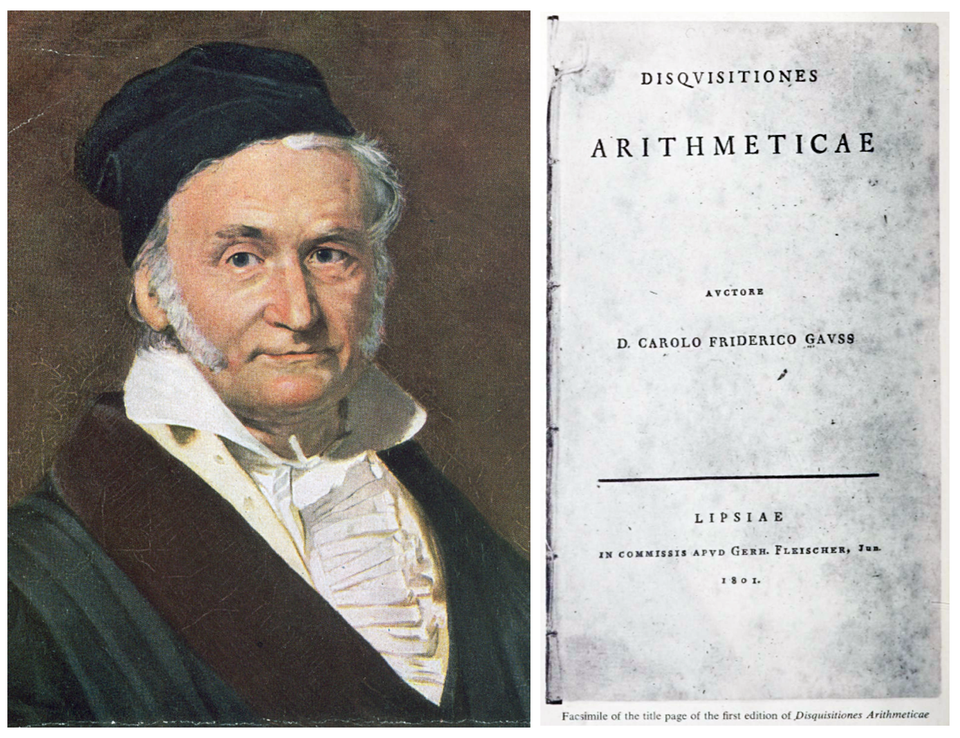
Carl Friedrich Gauss (1777–1855), the brilliant German mathematician and astronomer working in Göttingen, gave the first proof of the fundamental theorem of algebra in 1799. His Disquisitiones Arithmeticae (1801) began modern number theory. Its major topics include residues, quadratic congruences and the law of quadratic reciprocity, the “golden theorem.” It also discusses algebraic topics: quadratic forms and cyclotomic equations.
Gauss later created a new algebra of complex numbers and Gaussian integers in 1831, using the modern geometrical interpretation of complex numbers.

The French mathematical school also developed number theory in the eighteenth and nineteenth centuries. Adrien-Marie Legendre (1752–1833), for example, gave the first systematic and complete account of contemporary number theory in An Essay on the Theory of Numbers (1798).
The French mathematician Augustin-Louis Cauchy (1789–1857) worked in many fields. In algebra he developed determinant theory and described its principal properties. He introduced the terms determinant, modulus of a complex number and conjugate numbers, and first introduced the concept of a finite group.
This concludes our overview of elementary algebra. The next article will discuss the period of modern algebra.