
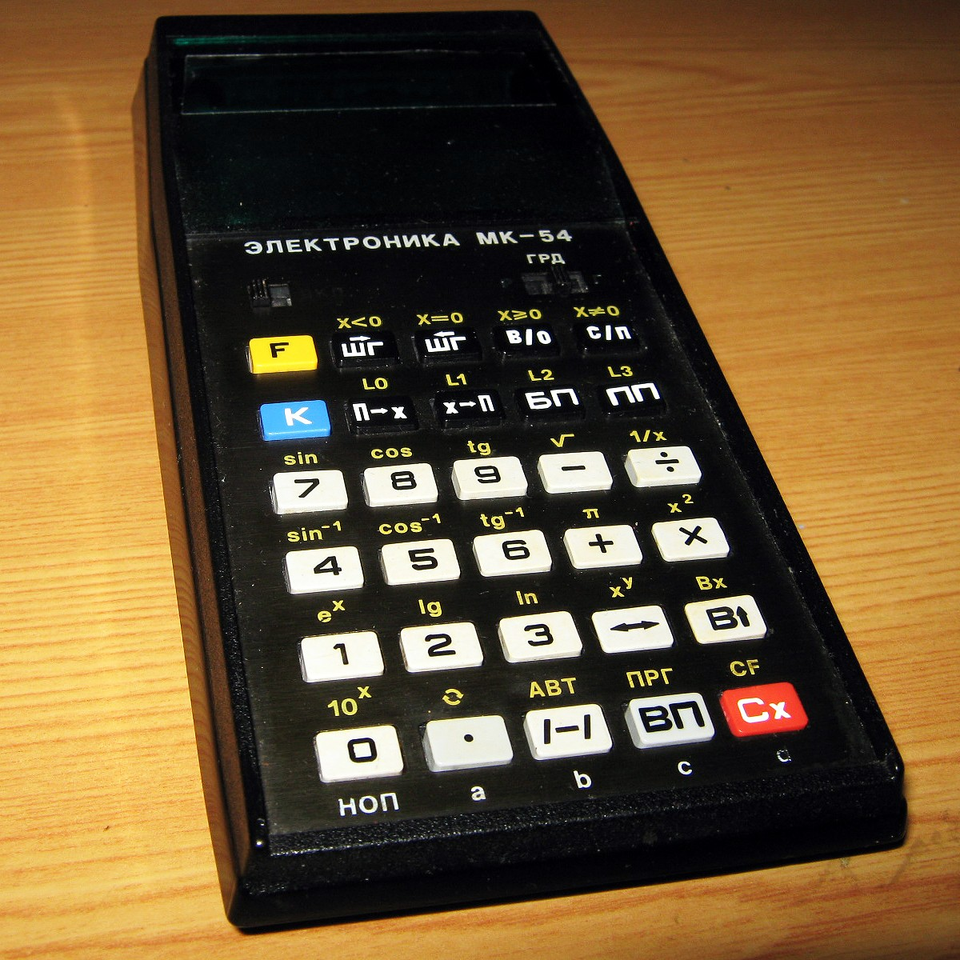

In the Soviet Union, the term “microcalculator” was used for a small electronic calculating device. It was first applied in 1974 to the Elektronika B3-04. Today, “calculator” and “microcalculator” are considered synonyms.
The calculator replaced mechanical calculating devices — abacuses, counting frames, slide rules and arithmometers — as well as mathematical tables.
Today a calculator, from Latin calculator, “counter”, and calculus, “small stone”, can be both an electronic device and software, for example built into a mobile phone or the operating system of a computer or tablet. It performs numerical operations and even symbolic calculations with algebraic formulas.
Every calculator model has a display, devices for entering and outputting numbers and commands, a calculating unit and a power supply. Information is entered through a keyboard with several groups of keys, often in different colours: digit keys, operation keys and function keys. A number typed on the keyboard enters random-access memory (RAM), comprising several registers. Modern calculators chiefly use liquid-crystal displays.
A calculator implements one of three forms of operational logic: arithmetic logic, algebraic logic or reverse Polish notation.
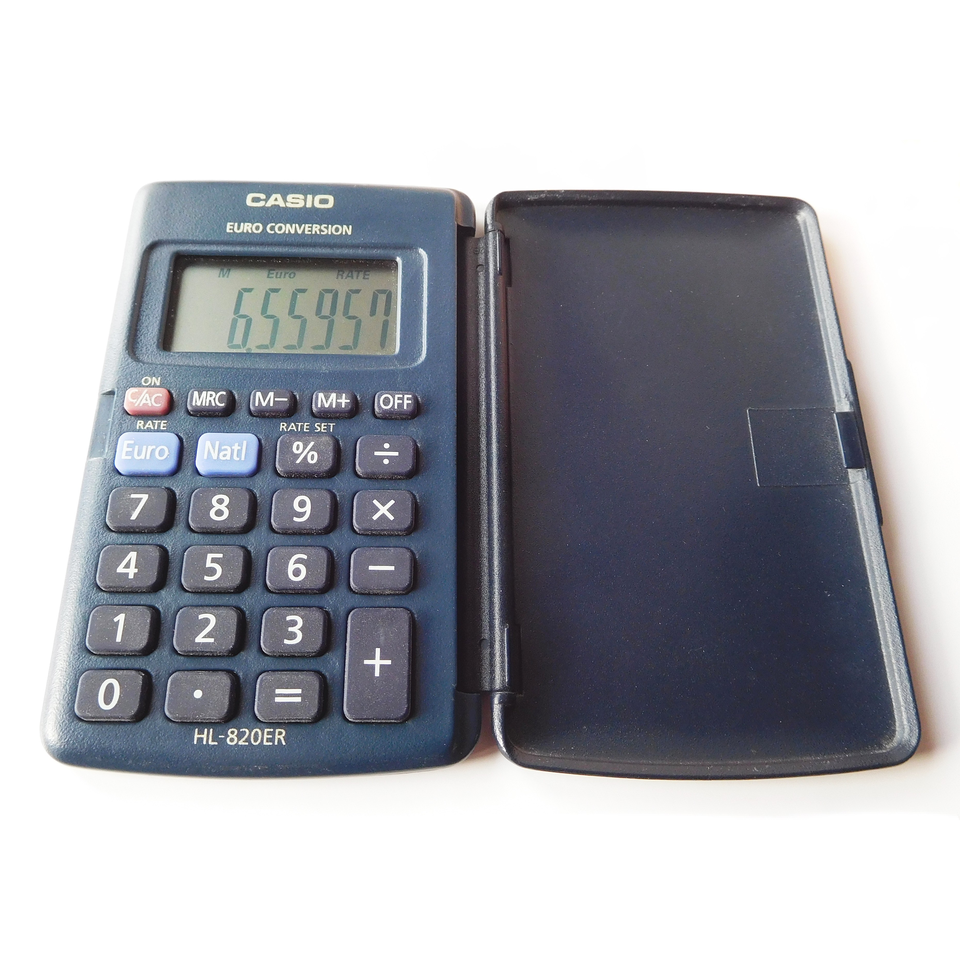
Calculators can be desktop or compact, pocket-sized devices.
By capability and field of use, calculators are divided into:
- arithmetic, or basic, calculators for arithmetic calculations;
- engineering, or scientific, calculators for scientific and engineering calculations of varying complexity;
- programmable calculators that create and execute user programs and have full operating systems, often with a graphical interface;
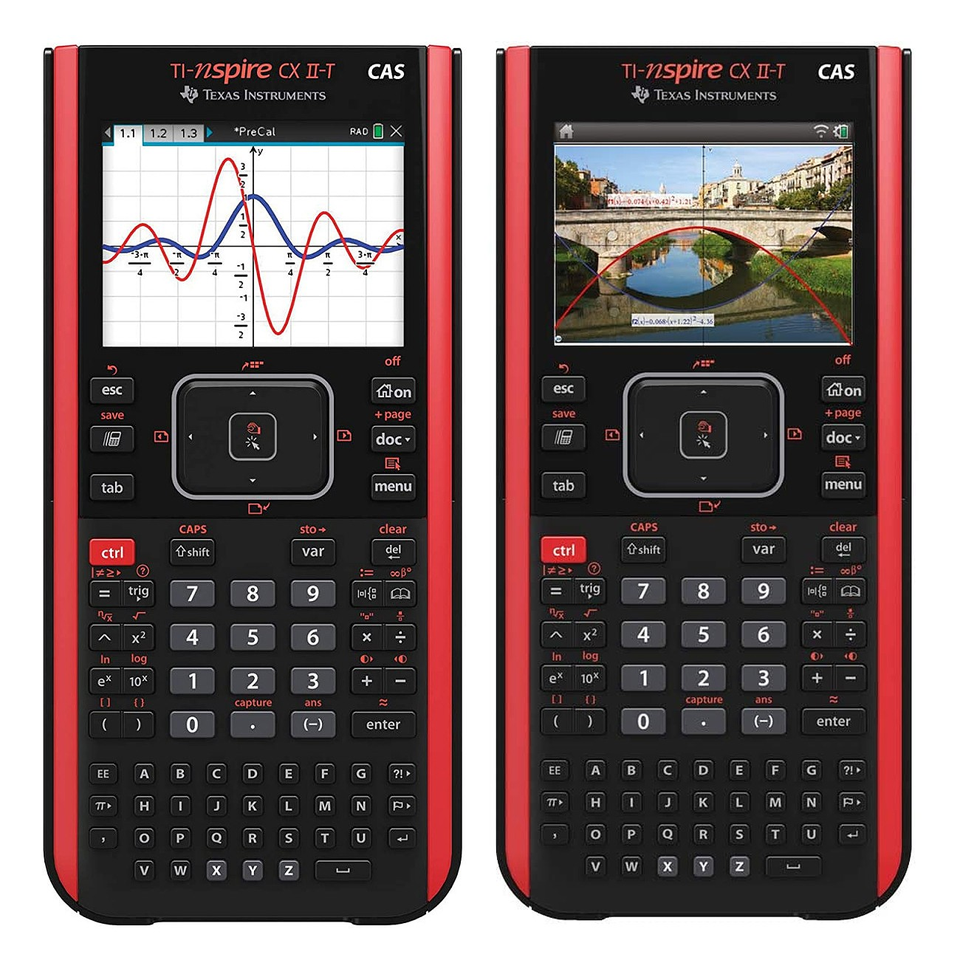
- graphing calculators for plotting functions;
- financial, or accounting, calculators;
- construction calculators.

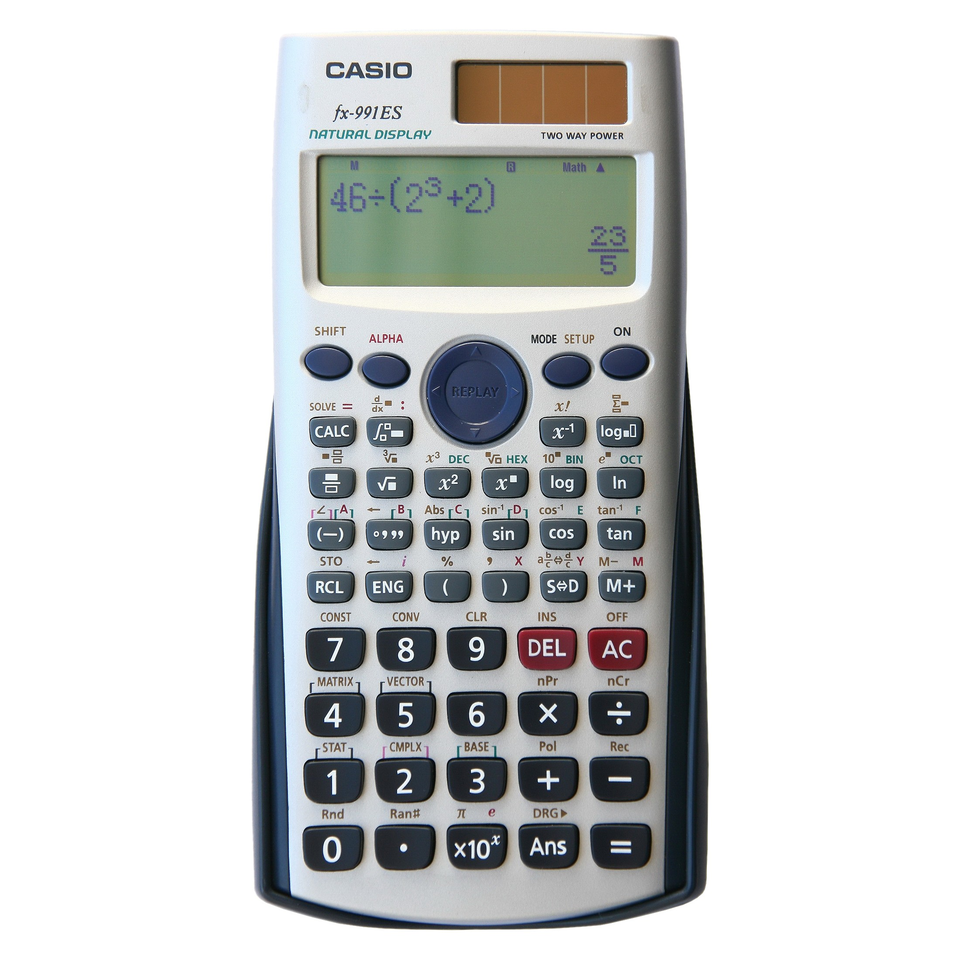


Electronic calculating devices were created in the 1950s, using relays first and later semiconductor components. In 1957, Casio released one of the first mass-produced calculators, the 14-A. In 1969, Hewlett-Packard released the HP 9100A, a programmable desktop calculator for scientific and technical work. In 1972, Hewlett Packard released the HP-35, the first pocket scientific calculator. The first programmable calculator with a graphical display, the Casio FX-7000G, appeared in 1985.
Calculator functionality has changed relatively little since the late XX century. One major innovation was the addition of symbolic algebra systems to top-end scientific models. Affordable LCDs made it possible to display formulas more naturally and create a new class of graphing calculators that present calculation results graphically. Scientific calculators subsequently acquired touchscreens.
In 1964, the USSR produced its first domestic mass-produced electronic calculator, Vega. Its first pocket calculator, Elektronika B3-04, appeared in 1974. The first widely available Soviet scientific calculator was the Elektronika B3-18, which went on sale in 1976 and remained in production until the mid-1980s. After the USSR’s dissolution, domestic calculator production in Russia stopped completely.
The widespread adoption of calculators in the early 70s of the last century brought them into schools. In our country, experimental studies of their possible uses were conducted in various regions in 1976–1982 under V. G. Boltyansky and S. I. Shvartsburd, using the Elektronika BZ-18, BZ-26, MKSh-1 and MKSh-2.
In 1985, Nauka published the first edition of V. P. Dyakonov’s calculator reference book, the most widely circulated such guide in the USSR.
Despite the spread of computers and powerful computing gadgets — tablets, laptops, smartphones and even watches — calculators remain in demand as separate instruments in the XXI century.
Further reading
- Abdullaev, I. Mathematical Problems with a Pocket Calculator: A Book for Pupils. Moscow: Prosveshchenie, 1990. 81 pp.
- Antipov, I. N. Programming the Elektronika MK-64 Calculator. A book for secondary-school pupils in grades 8–10. Moscow: Prosveshchenie, 1988. 64 pp.
- Vilenkin, N. Ya., Oksman, V. M., and Shvartsburd, S. I. A Pocket Calculator for the Schoolchild. Moscow: Prosveshchenie, 1986. 95 pp.
- Dyakonov, V. P. Reference Guide to Calculations on Pocket Calculators. Moscow: Nauka, 1985. 223 pp.
- Kovalev, M. P., and Shvartsburd, S. I. Electronics Helps Us Calculate. A teachers’ guide. Moscow: Prosveshchenie, 1978. 96 pp.
- Minaeva, S. S. Calculations in Mathematics Lessons and Extracurricular Activities. Moscow: Prosveshchenie, 1983. 128 pp.
- Foundations of Computer Science and Computing Technology: An Experimental Textbook for Secondary Schools (in 2 parts). Edited by A. P. Ershov and V. M. Monakhov. Moscow: Prosveshchenie, 1985 (part 1), 1986 (part 2).
- Romanovsky, T. B. Pocket Calculators in Stories and Games. Minsk: Universitetskoe, 1987. 192 pp.
- Ugrinovich, N. D. Issues in Computerizing Teaching. A teachers’ book. Moscow: Prosveshchenie, 1987. 127 pp.
- Shternberg, L. F. A Programming Course for BZ-34, MK-52, MK-54 and MK-61 Calculators. Moscow: Mashinostroenie, 1988. 208 pp.
- Shternberg, L. F. Programming a Pocket Calculator: A Book for Secondary-School Pupils in Grades 9–10. Moscow: Prosveshchenie, 1988. 160 pp.