

Construction, woodworking and metalworking require accurate measurements with suitable tools.
A sliding bevel is a tool for marking out and transferring, or copying, angles onto workpieces and for drawing parallel lines. Joiners, metalworkers, carpenters, masons, parquet layers, plasterers and tilers use it.
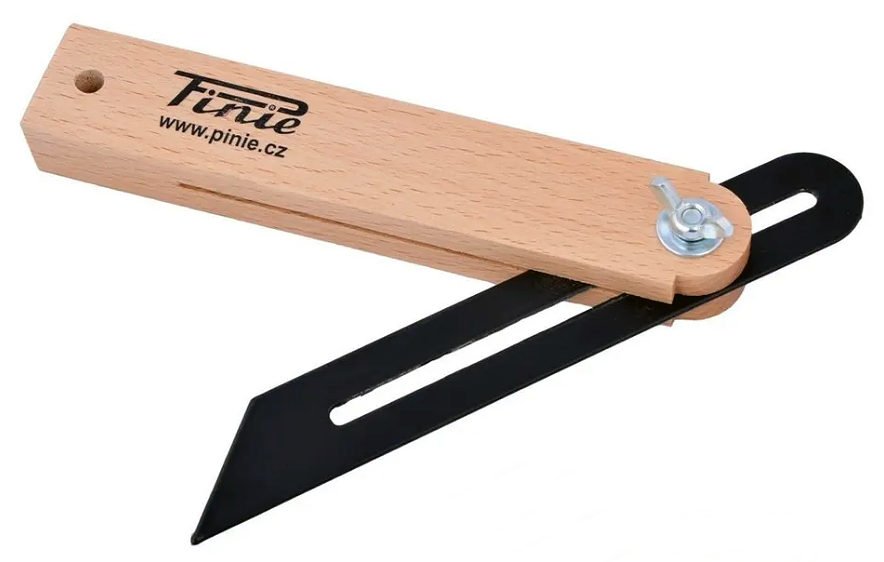

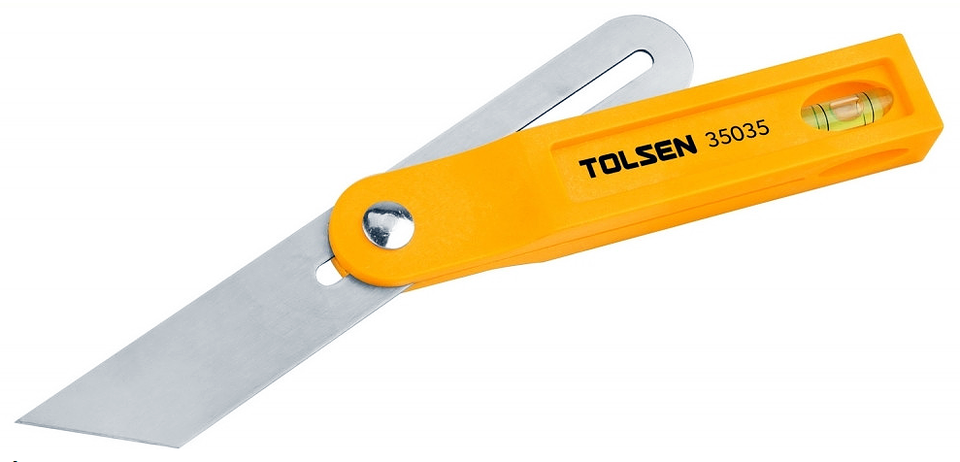
Sliding bevels come in various designs. A simple one consists of two parts held together by a clamping screw or wing nut. The thicker part, the stock, is pressed against the workpiece; the thinner part, the blade, guides the marking. Loosening the screw allows the angle between the two parts to change.
To use the tool, loosen the wing nut and fit the bevel to the angle, pressing its blade and stock against the two sides. Then tighten the nut: this is essential to keep the angle from changing. Transfer the resulting template to the workpiece and copy the angle with a pencil, marker or chalk. An ordinary sliding bevel copies an angle but does not measure it in degrees.
The blade or stock may have a longitudinal slot, allowing the parts to slide into a T shape. Sliding bevels can be made from any suitable material: metal, wood or plastic.
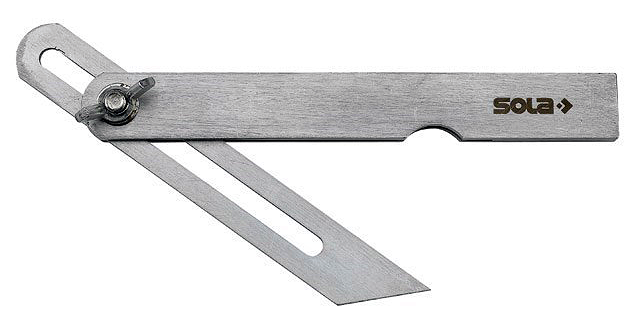

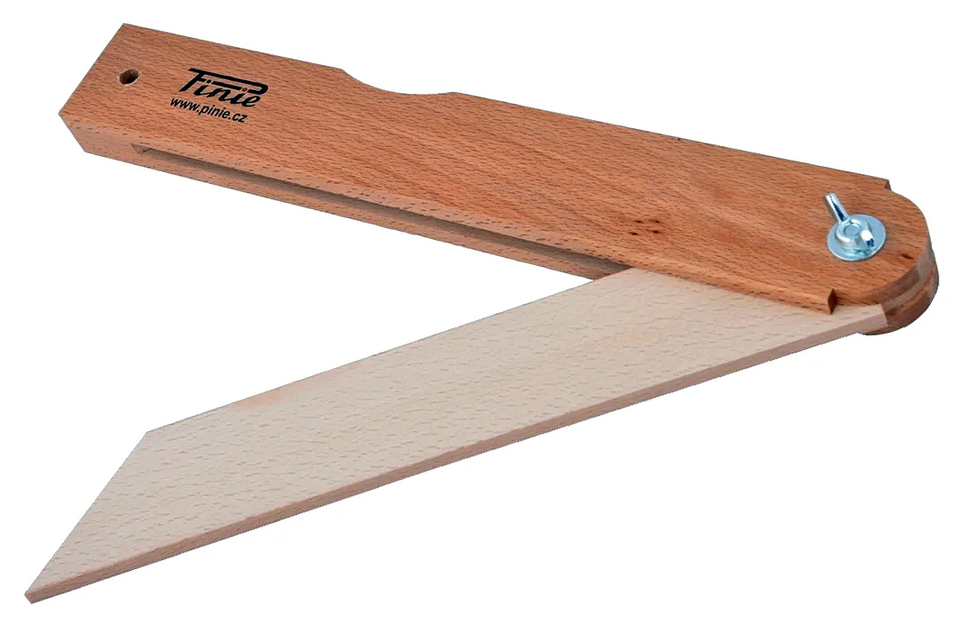

Some have an angular scale between the two parts.
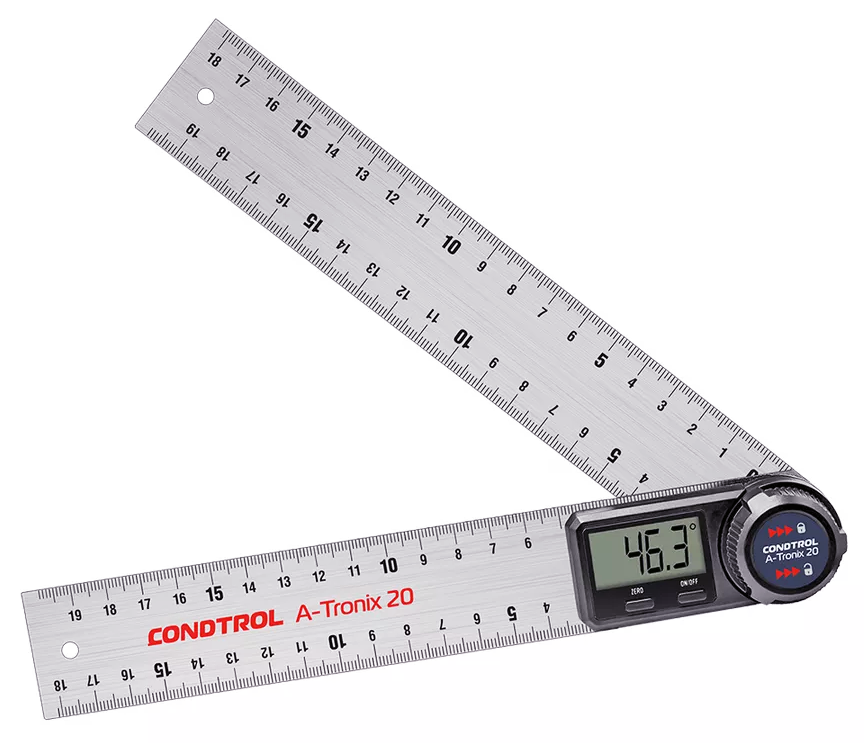
The most versatile version is the digital angle gauge: a sliding bevel that also measures angles. Its joint contains electronics that display the angle formed by the tool’s parts. It can measure angles in degrees and transfer them to workpieces.
A ruler scale on the blade is very convenient. Some sliding bevels also have a bubble level.
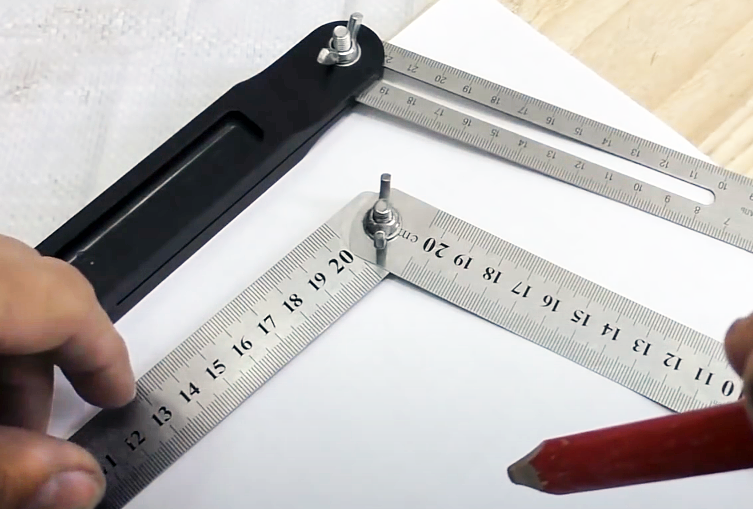
You can even make your own sliding bevel, for example from rulers.



Further reading
- Nikitin, N. N. Geometry: A Textbook for Grades 6–8. Moscow: Prosveshcheniye, 1969. 216 pp. [In Russian.]
- Nikitin, N. N., and A. I. Fetisov. Geometry: A Textbook for Grades 6–9 of Seven-Year and Secondary Schools. Moscow: Uchpedgiz, 1956. 234 pp. [In Russian.]
- Prochukhayev, V. G. Measurement in the Secondary-School Mathematics Course. Moscow: Prosveshcheniye, 1965. 140 pp. [In Russian.]