

“Mathematics with Mansur-abyy”
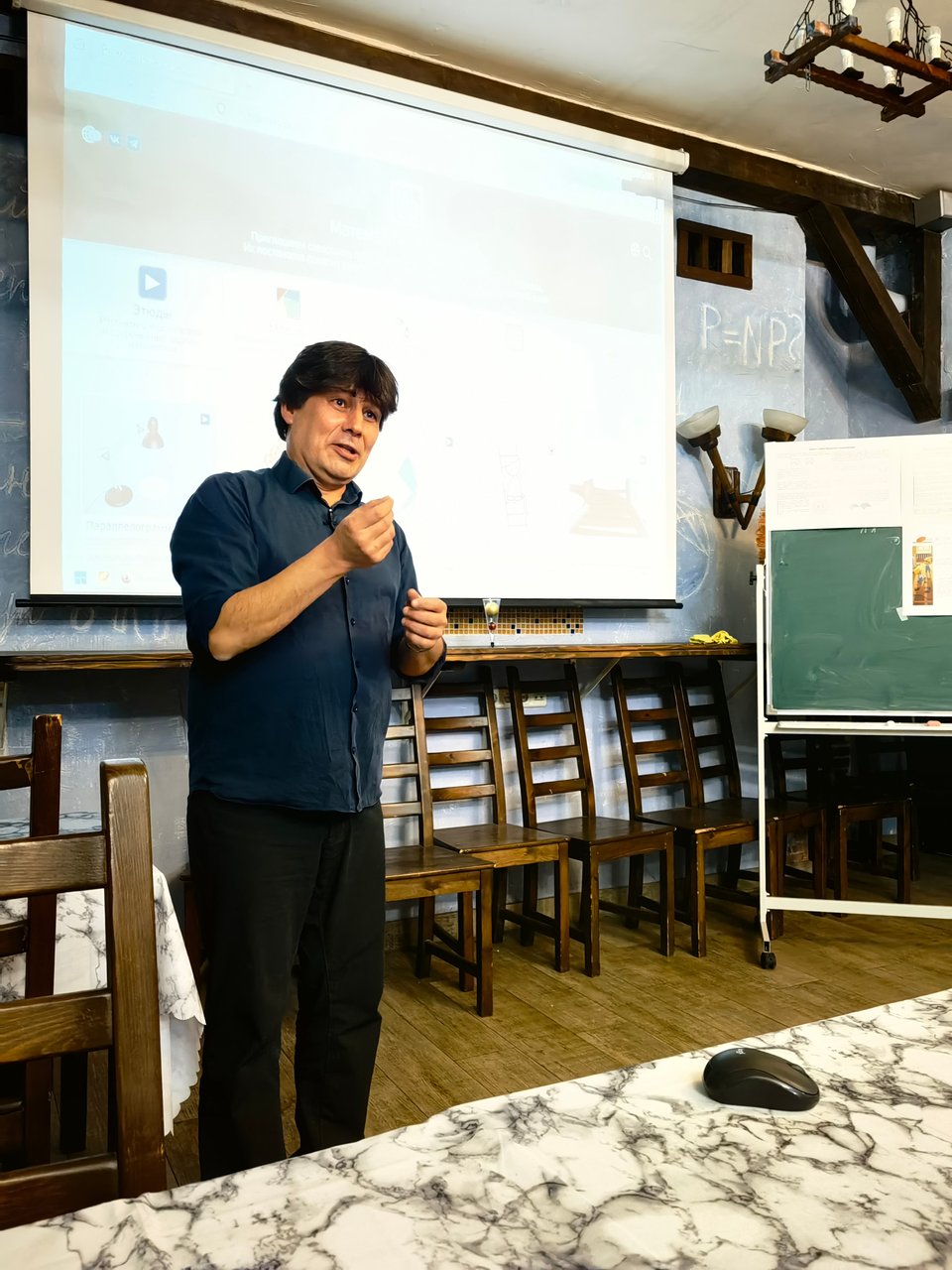
On 30 January 2025, the Moscow Center for Continuous Mathematical Education (MCCME) held the 155th meeting of its continuing seminar for mathematics teachers. The traditional annual report of the Laboratory for the Popularization and Promotion of Mathematics at the Steklov Mathematical Institute of the Russian Academy of Sciences was discussed. The author also attended and made notes on interesting mathematical etudes that mathematics teachers may find useful in their lessons.

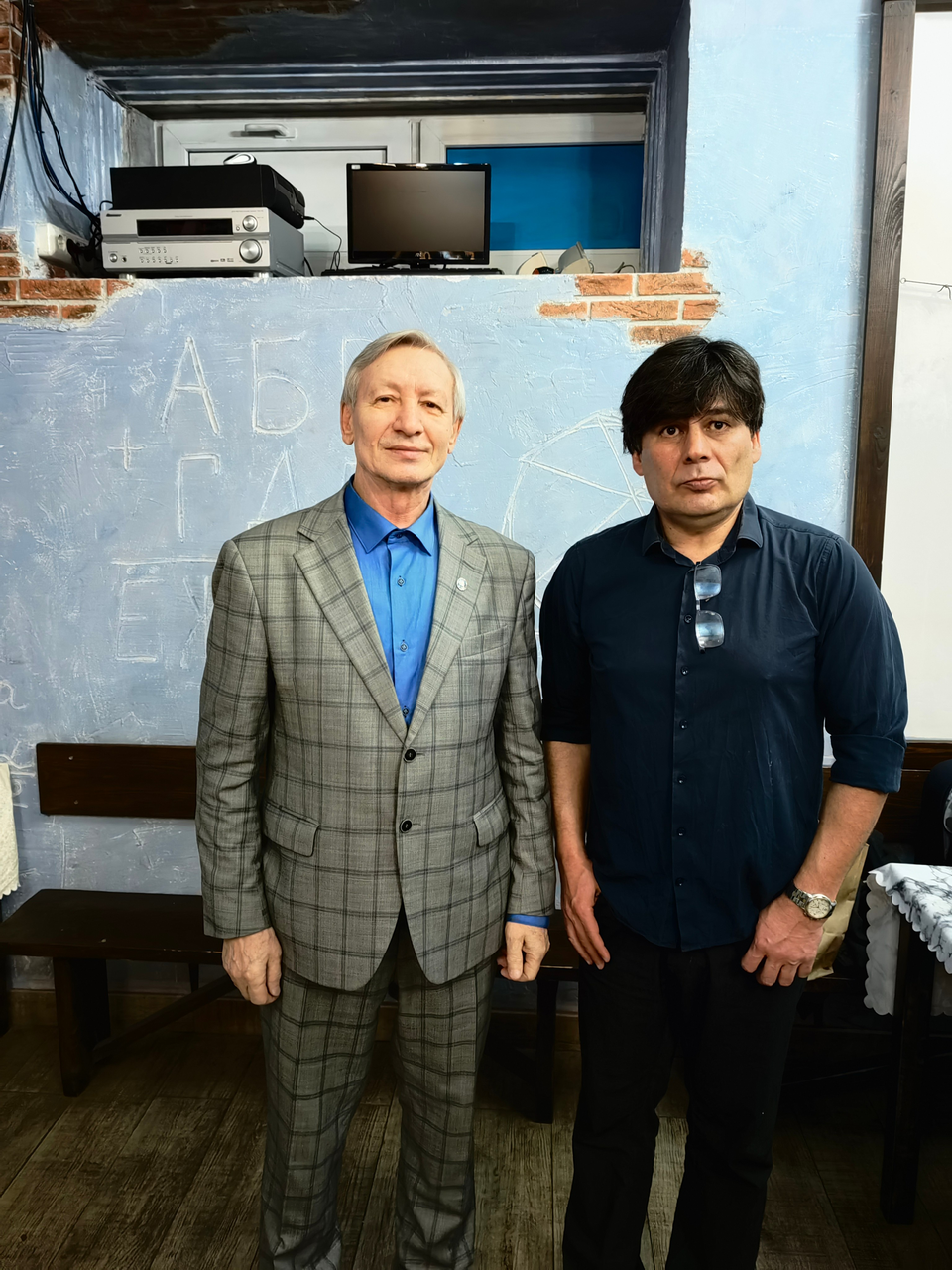
Nikolay Nikolayevich Andreyev, head of the Laboratory for the Popularization and Promotion of Mathematics, presented “Mathematical Etudes: The Year 2024”. He described what had been completed or begun in 2024 and shared future plans.
Among the interesting items were new etudes.
1. Lobachevsky Geometry: An Interactive Poincaré Disk Model
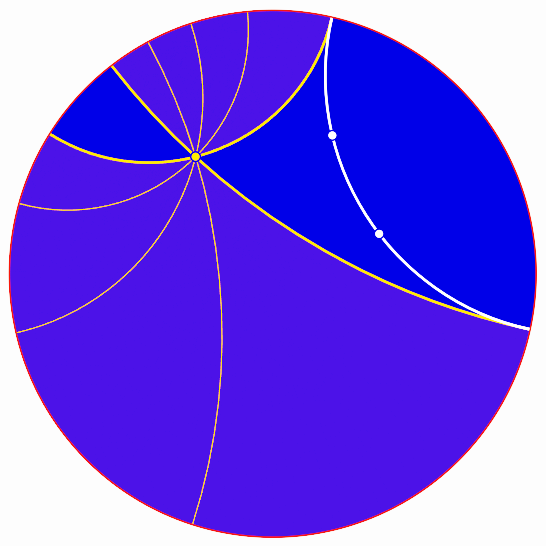

Nikolay Ivanovich Lobachevsky (1792–1856) formulated the rules of non-Euclidean geometry, but knew no realization or model of such a geometry.
2. The Pseudosphere: A Surface of Constant Negative Curvature
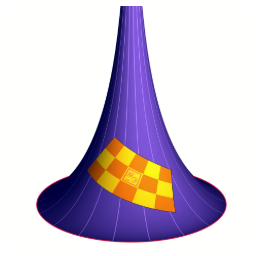

The pseudosphere, or Beltrami surface, has constant negative Gaussian curvature. This constancy at every point has an interesting mechanical interpretation: a small piece of the surface can be moved along the surface, bending as it goes while remaining in contact with it.
3. “Symmetrical Figure” Puzzles
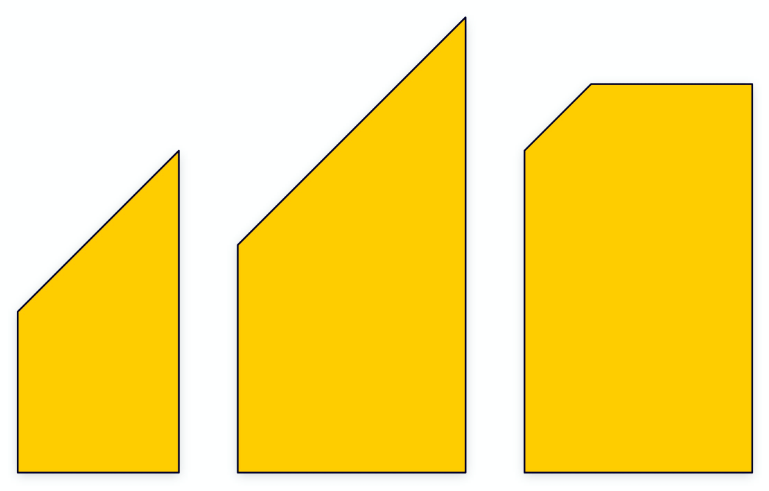

The concept of symmetry — reflectional and rotational, including central symmetry — underlies interesting and challenging geometrical puzzles.
4. Ellipse, Hyperbola, Parabola: Folding a Sheet of Paper
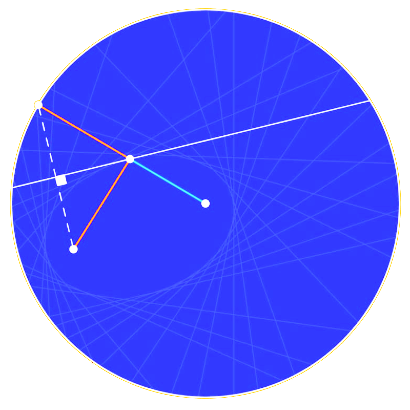

Any smooth curve can be seen by drawing a multitude of its tangents rather than the curve itself. The demonstration shows how to reveal conic sections — an ellipse, hyperbola or parabola — without calculation or drawing, simply by folding a sheet of paper.
5. The Cardioid and Nephroid
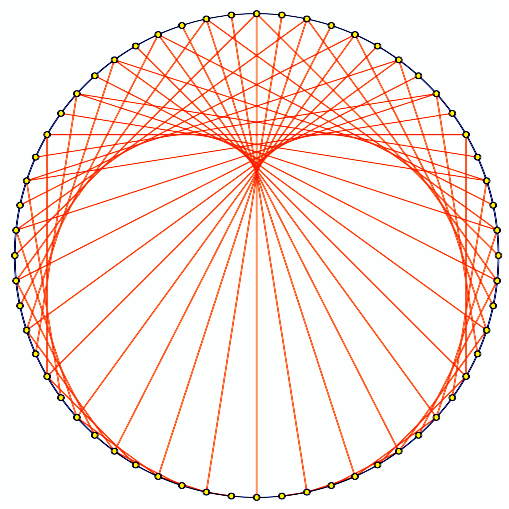

The cardioid and nephroid are special cases of cycloids, more precisely epicycloids.
6. The Parabola: String Art
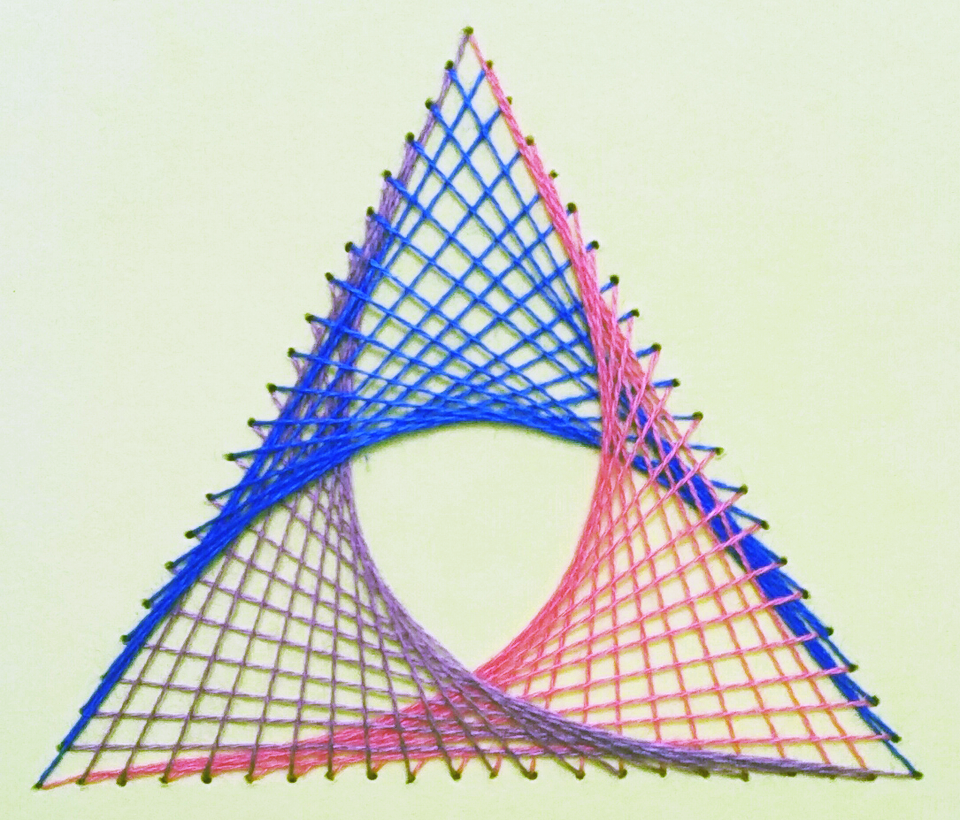

Only straight threads are stretched out, yet a picture emerges. This technique is called string art, curve stitching, izonit or embroidery on cardboard. These terms appear in discussions of children’s creativity and of art, and even of science: string art lets us see the cardioid and nephroid and better understand the physical phenomenon of the caustic and its mathematical foundation, the geometrical concept of the envelope.

You can attend events at the Moscow Center for Continuous Mathematical Education at 11 Bolshoy Vlasyevsky Lane. Information about events is available on the MCCME website.