

Much of the classical mathematical literature in Sanskrit was written in verse. This may seem strange to a modern reader: we usually associate mathematics with tables, symbols, formulas and diagrams rather than poetic metre. In medieval India, however, verse was a familiar way to preserve and transmit scientific knowledge.
A rule had to be short enough to memorise and precise enough to use for practical calculation. Commentaries, examples and a teacher’s explanation were then added. A Sanskrit mathematical text is therefore often structured as a combination of a concise rule, oral discussion and problems, rather than like a modern textbook.
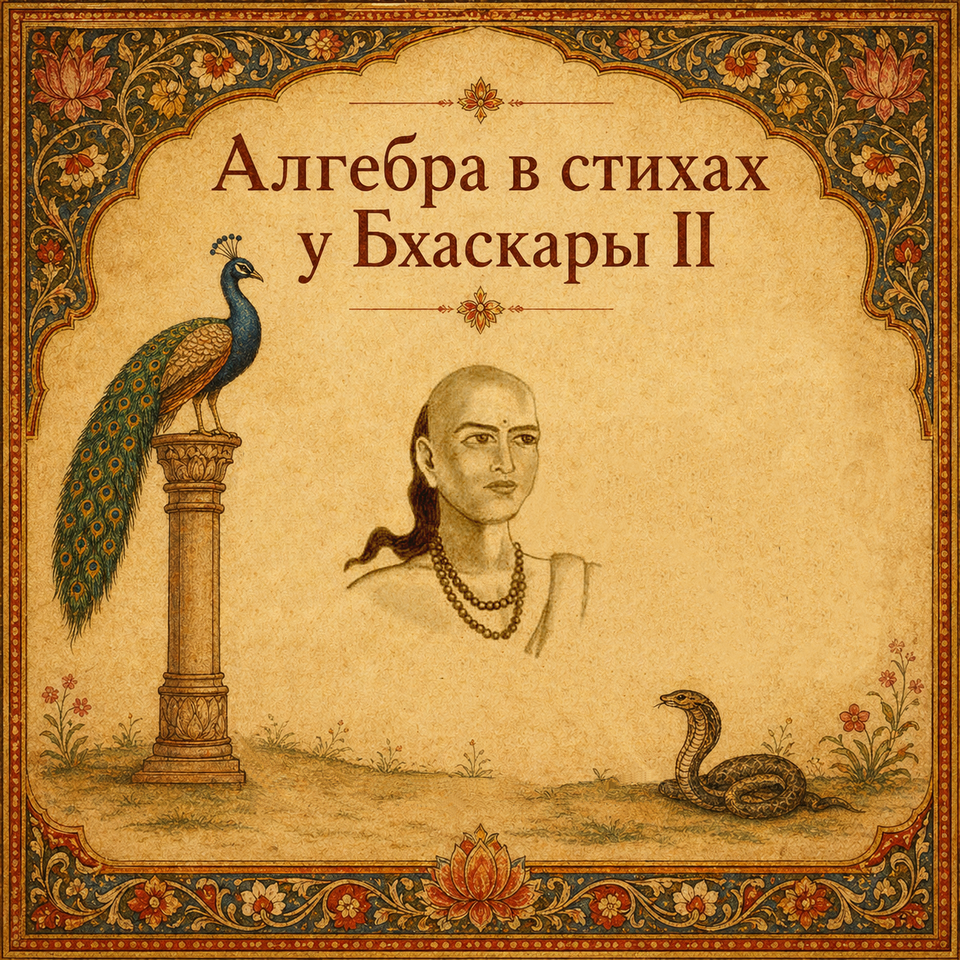
One of the outstanding masters of this tradition was Bhaskara II, or Bhaskaracharya, the twelfth-century Indian mathematician and astronomer. His principal work, Siddhanta Shiromani, “The Crown of Learning”, is usually dated to around 1150. It consisted of four parts, two of which are especially important in the history of mathematics: Lilavati, on arithmetic, and Bijaganita, on algebra.
For Bhaskara, arithmetic and algebra were not disconnected disciplines. Britannica, the oldest and one of the most authoritative general encyclopedias in English, published since 1768, quotes his idea that all calculation is pervaded by the “rule of three”, or proportion. This is more than an attractive metaphor. It illustrates the style of the Indian mathematical tradition: rather than building a formal theory with axioms and proofs, an author often identified a basic computational idea from which dozens of commercial, geometric and astronomical problems could grow.
The problems in Lilavati and Bijaganita do not sound like the dry instructions of a modern exercise book. They address another person: “tell me quickly”, “O mathematician”, “wise calculator”, “beautiful one”. Britannica notes that problems in such books are often written in the second person, as though the author were speaking to a student or female pupil.
This lively tone later gave rise to a famous legend: that Lilavati was written for Bhaskara’s daughter. According to this account, her father wished to comfort her after an unhappy prediction and created the book for her. The sources are cautious, however: this is a later tradition, not a firmly established biographical fact. MacTutor, the authoritative online history-of-mathematics archive created at the University of St Andrews in Scotland, explicitly states that there is no evidence for the story, and that it is not even entirely clear whether Lilavati was Bhaskara’s daughter.
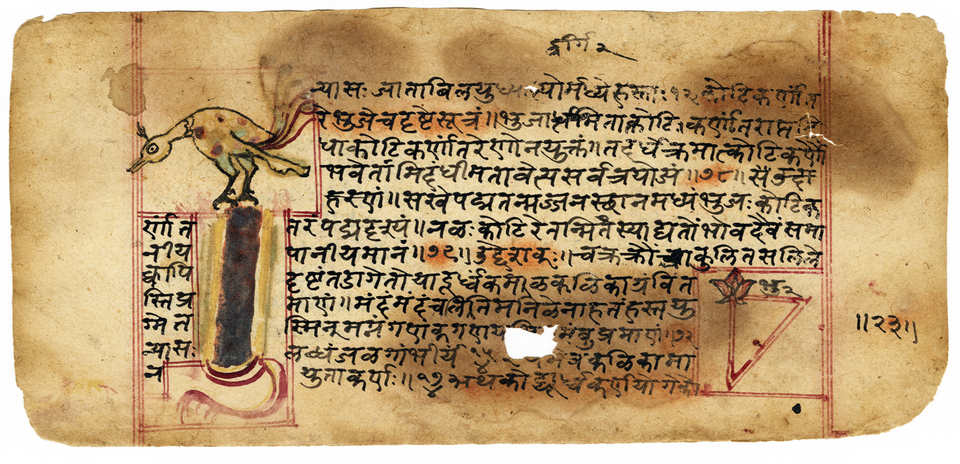
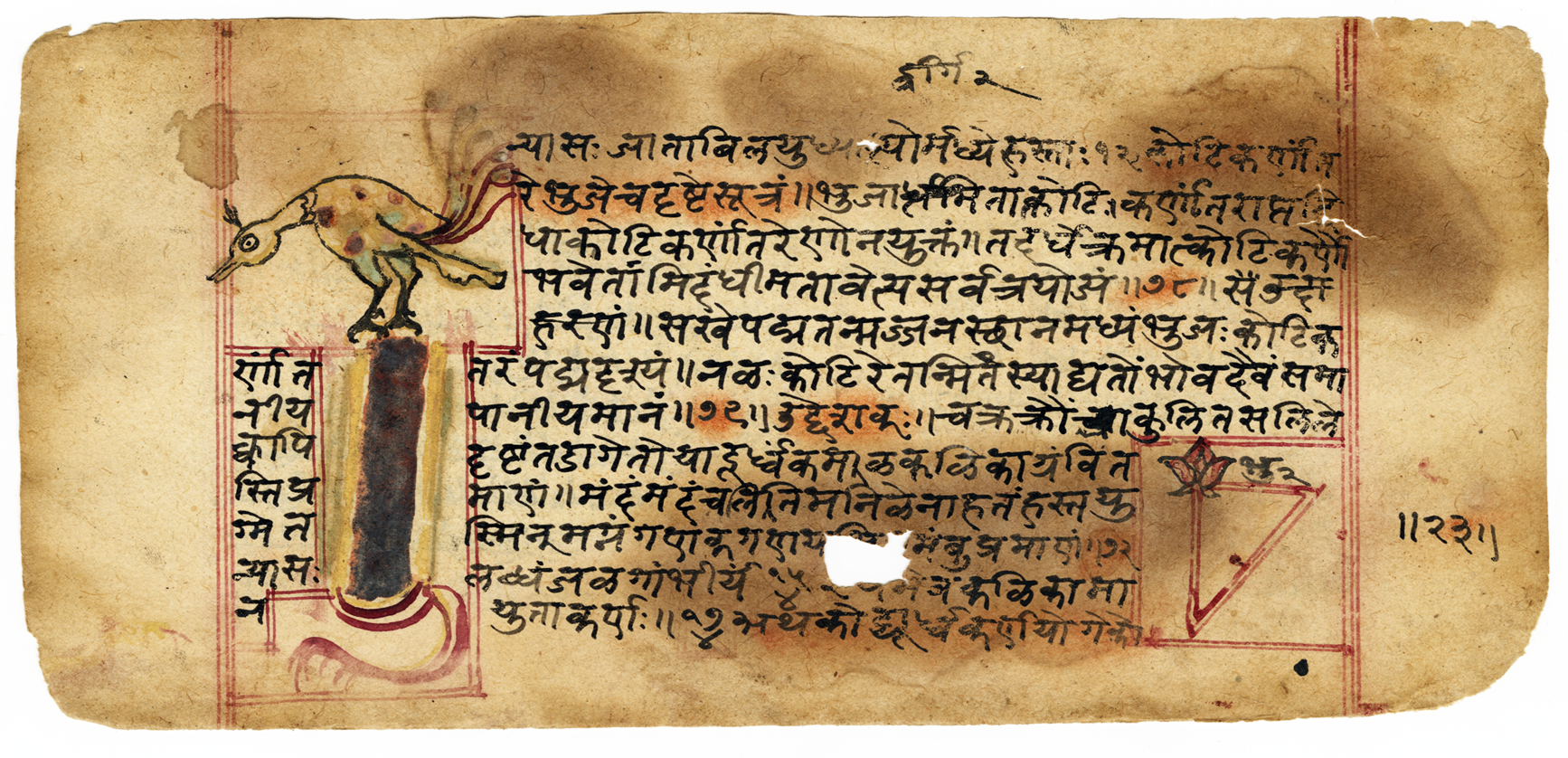
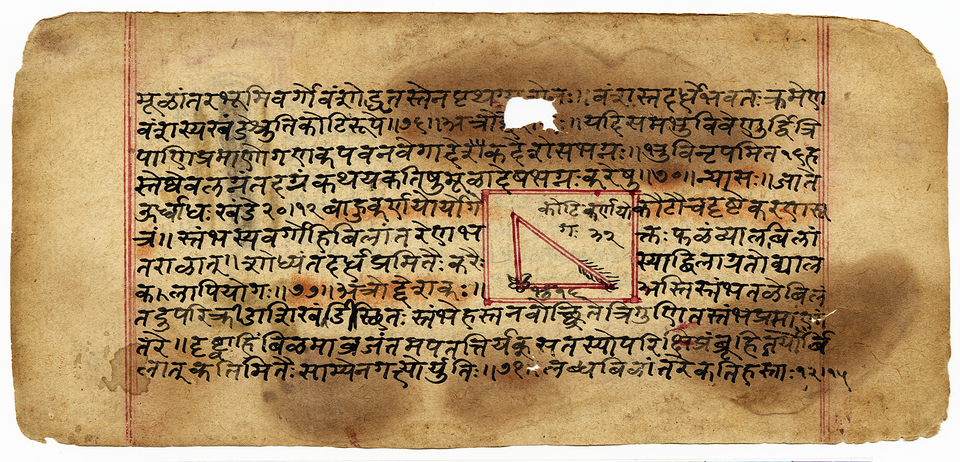
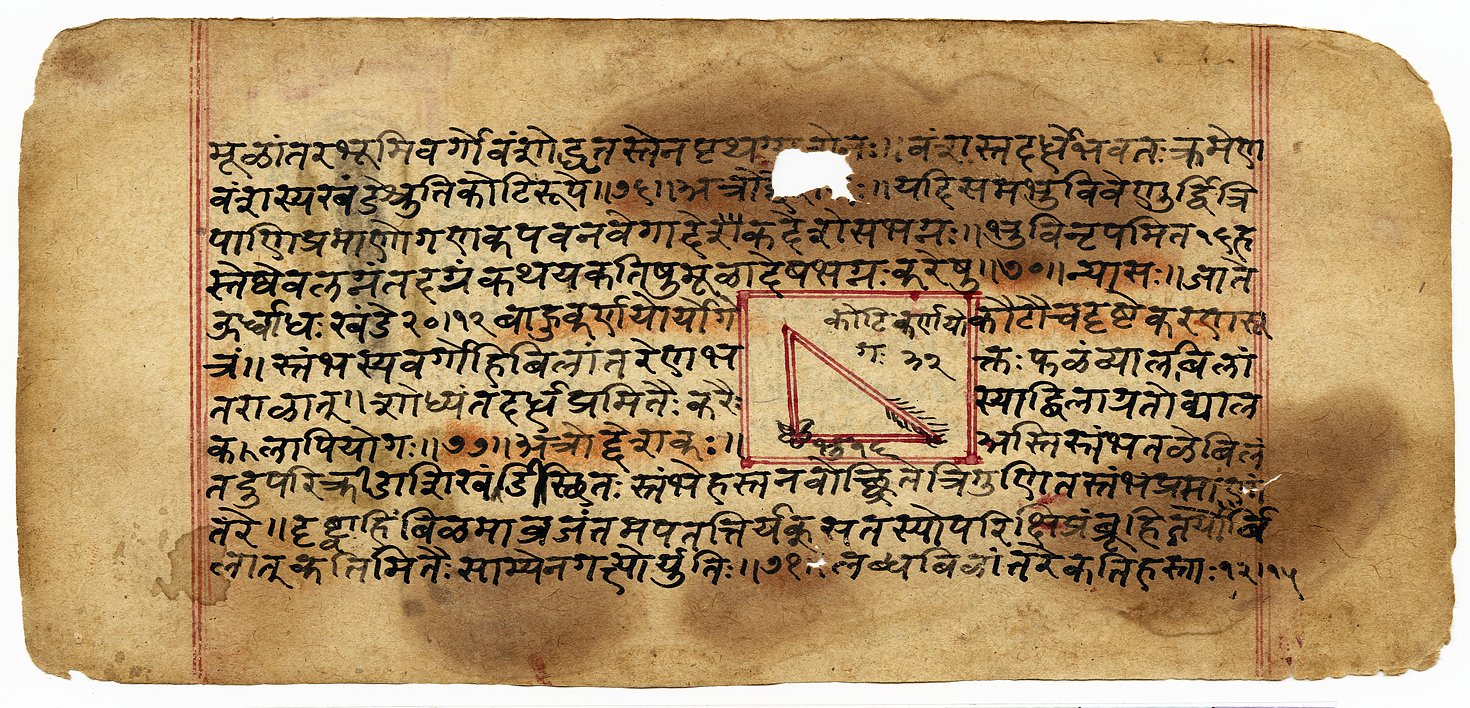
The famous “peacock-and-snake problem” is a good example of mathematics becoming a problem in verse. MAA Convergence, the Mathematical Association of America’s peer-reviewed online journal devoted to mathematical history and its use in teaching, presents it from a seventeenth-century manuscript and notes that the rule appears in verse 151 and the problem in verse 152.
The story is almost a fable. A snake’s hole lies at the foot of a pillar 9 hastas high. A peacock sits on top. A snake crawls towards the hole from a distance three times the pillar’s height. The peacock swoops down obliquely towards it. Find the distance from the hole at which they meet, assuming that the peacock and snake move at the same speed.
Note. A hasta, from the Sanskrit hasta, is a traditional Indian measure of length equal to the length of the forearm, from the elbow to the tip of the middle finger. English translations often render it as a “cubit”, approximately 45 cm.
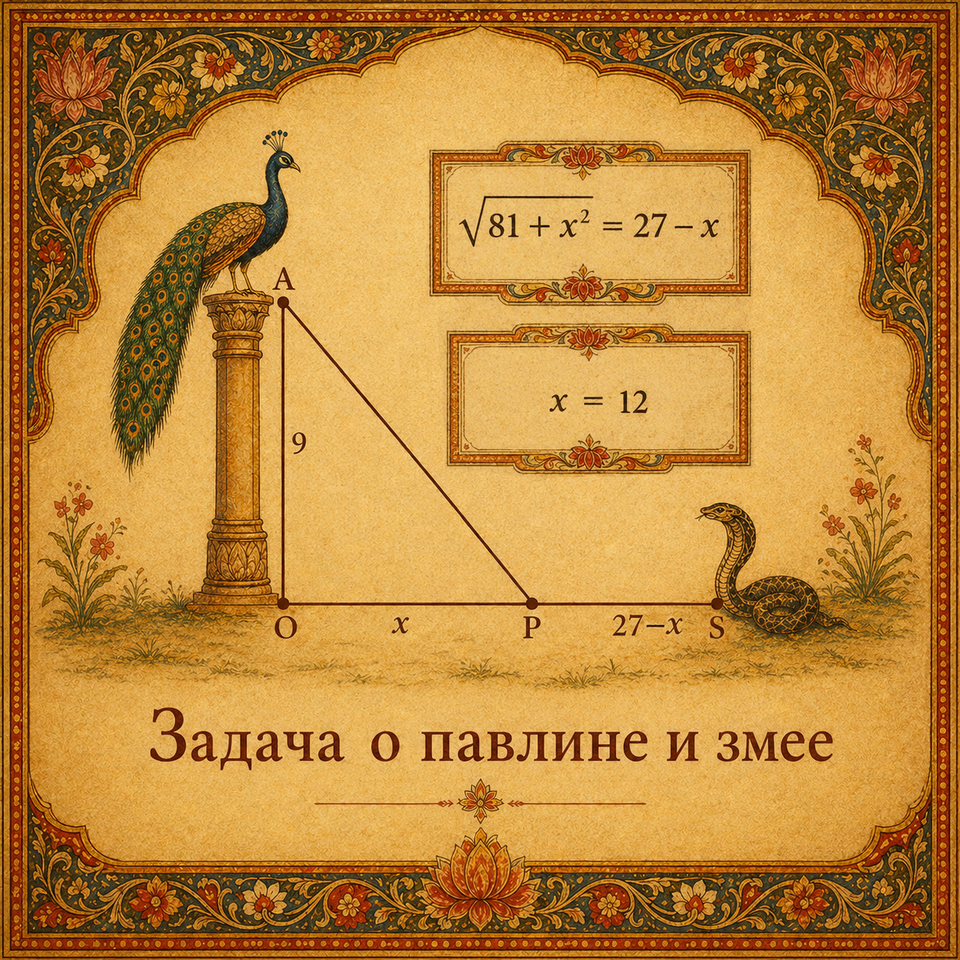
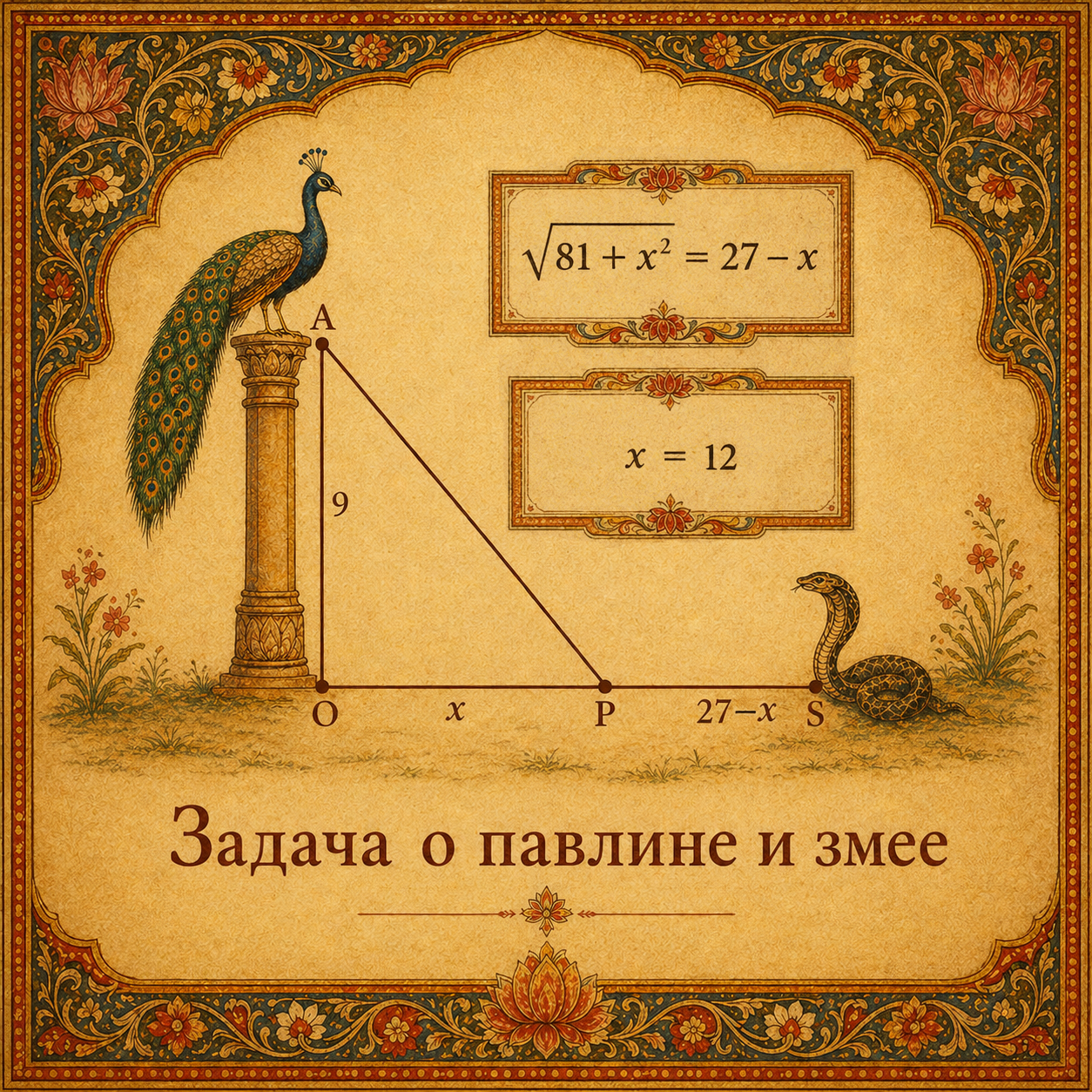
Solution. In modern notation, the problem is solved using a right triangle.
Let x be the distance from the hole O to the meeting point P of the peacock and snake. The pillar’s height is 9, and the snake is at a distance
from the pillar’s base. The snake’s path to the meeting point P is therefore
The peacock flies from the top of the pillar A to the meeting point P along the hypotenuse of the right triangle OAP, whose legs have lengths 9 and x. Its path is thus
Since the problem assumes equal speeds for the peacock and snake, their distances travelled are equal:
Square both sides:
Cancel x²:
They therefore meet 12 hastas from the hole.
Behind the lively picture of a peacock and a snake lies an ordinary equation that can now be solved with school mathematics.
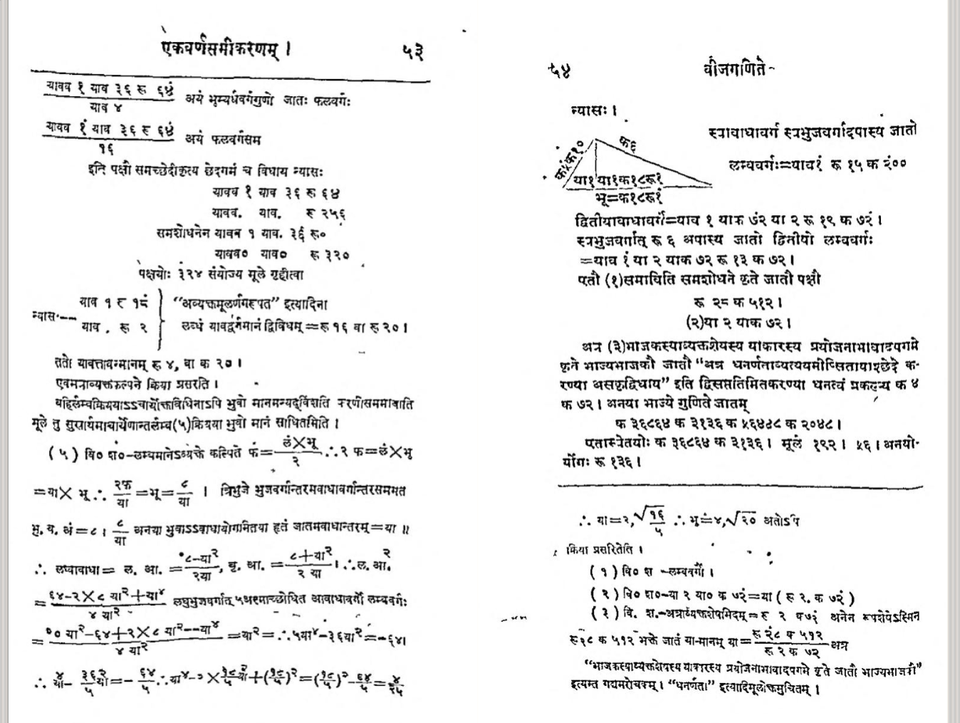
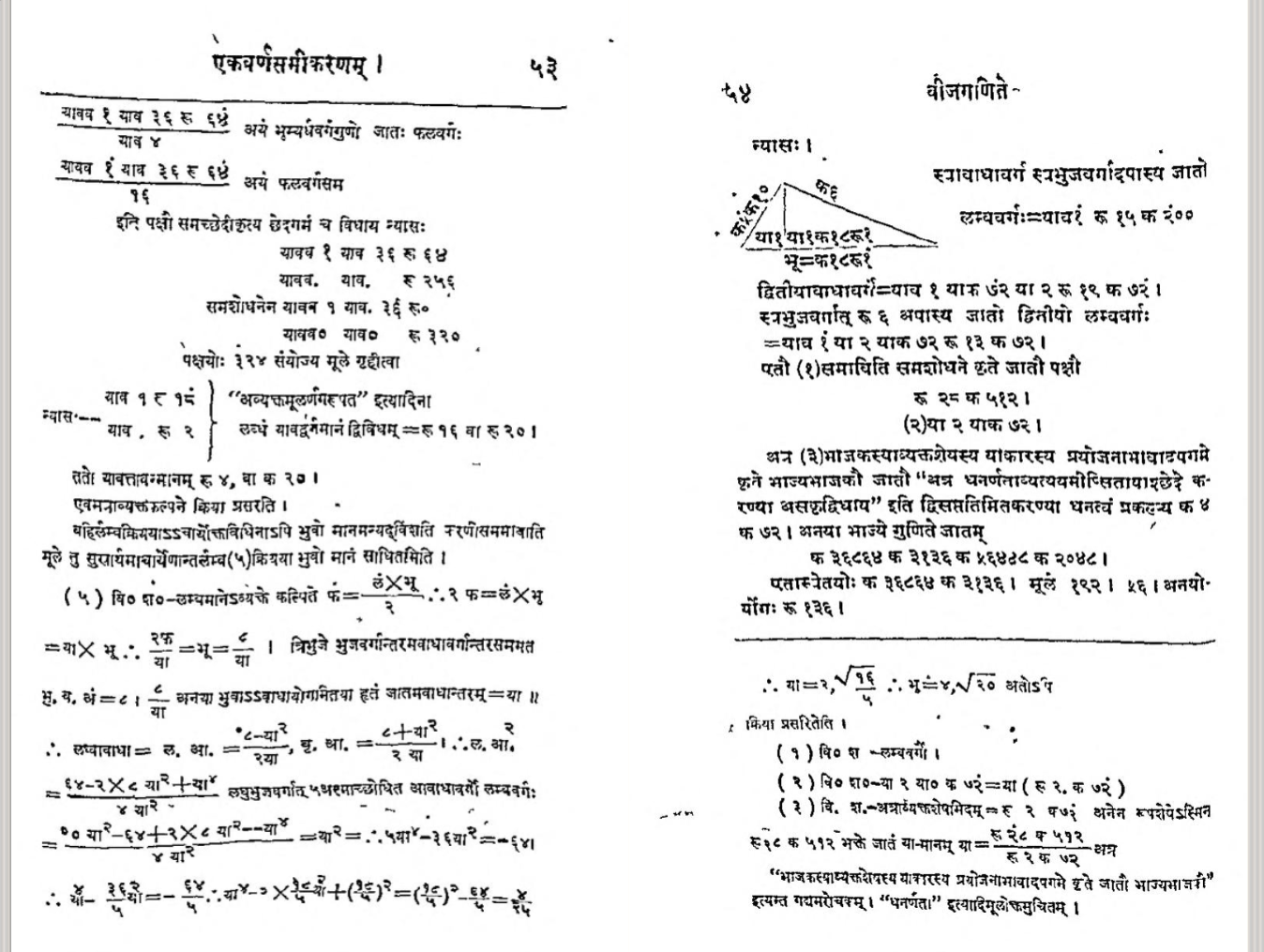
While Lilavati shows the poetic side of arithmetic and geometry, Bijaganita is much closer to algebra in the strict sense. MacTutor lists its topics: positive and negative numbers, zero, unknowns, surds, meaning roots of nonsquare numbers, linear and quadratic equations, equations with several unknowns, and indeterminate equations.
The book displays a feature important in the history of algebra: Bhaskara accepts multiple solutions to an equation wherever they are mathematically possible.
A characteristic example is the monkey problem, which MacTutor recounts almost word for word. In V. Lebedev’s Russian verse translation, rendered here in English, it becomes a little scene:
Divided into two groups, The monkeys entertained themselves.
The square of an eighth of their number Played merrily in the grove;
Twelve, with joyful cries, Filled the fresh air with their voices.
Tell me, how many monkeys Were there altogether in the grove?
Here we can see particularly clearly how verse creates a mathematical puzzle: “the square of an eighth of their number” must be understood as the square of one eighth of the whole troop, or (x / 8)².
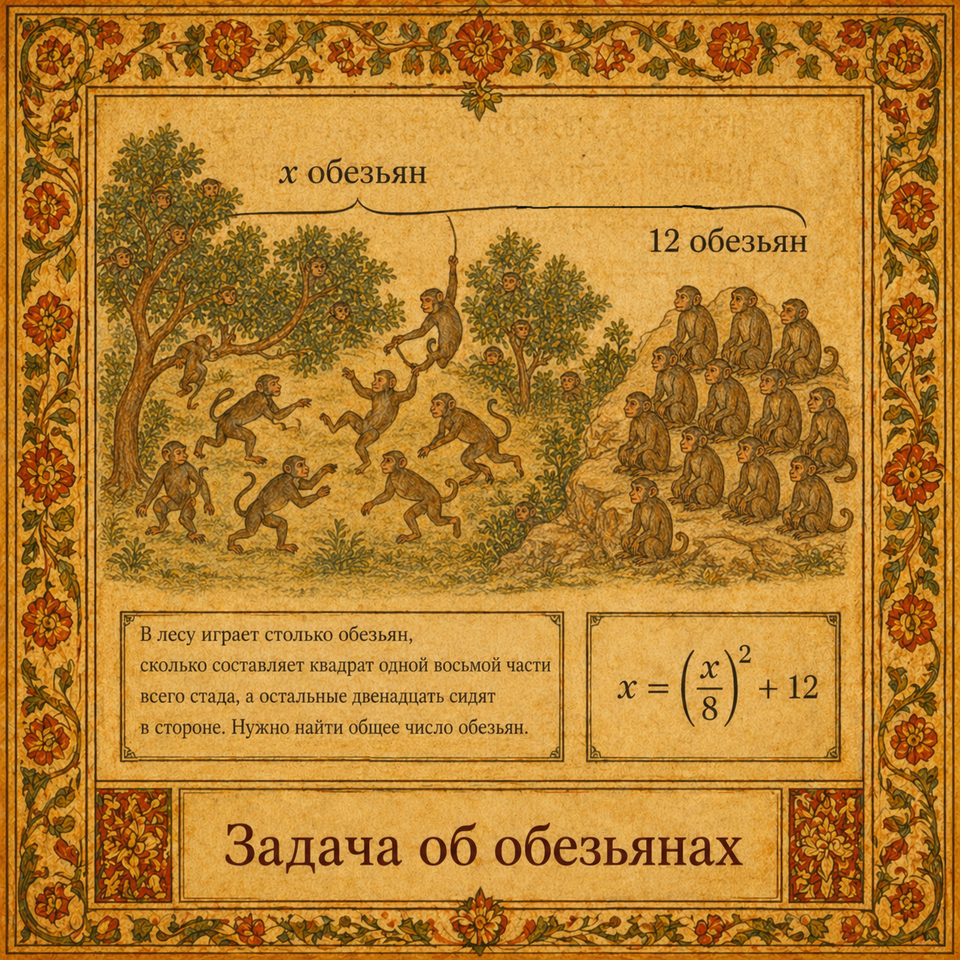

Solution. In modern notation, let x be the total number of monkeys. The number playing is (x / 8)², and the number remaining is 12.
We obtain the equation:
Multiply both sides by 64:
or
Calculate the discriminant:
Thus √D = 32, so x = (64 ± 32) / 2.
This gives two answers: x = 16 or x = 48.
MacTutor specifically notes that Bhaskara regarded both solutions as valid. This matters: it goes beyond computational skill to show a more mature understanding of the nature of a quadratic equation.
Another intriguing feature of Bhaskara’s work is its combination of practical calculation and figurative language. To a modern reader, a problem in verse may seem ornamental, secondary to the “real mathematics”. In the Indian tradition, however, it was more than a decorative addition: it was a way to package knowledge.
First the verse was memorised. Then came commentaries, examples and the teacher’s oral explanation. The same book could therefore place percentages, progressions, areas and indeterminate equations alongside almost literary stories of birds, snakes, animals, jewels and merchants.
Afterword
The later history of Lilavati is also revealing. It was not one of many forgotten books, but a medieval text with a long life. Many manuscripts and commentaries survive, and the book was translated into Persian in the early modern period. The researchers S. R. Sarma and M. Zamani examine in detail the Persian translation made by the poet Faizi at Akbar’s court. This was more than a successful twelfth-century textbook: it continued to live in other languages, schools and intellectual settings.
Bhaskara II’s story also challenges the familiar opposition between “poetry” and “exact science”. In Sanskrit mathematics, verse did not obstruct calculation. It helped knowledge live on in memory, schools, commentaries and oral tradition.
Lilavati and Bijaganita are therefore interesting as more than monuments of Indian mathematics. They remind us of another form of scientific culture, in which rules could be recited as well as applied.