

Later there were scientific schools comparable in strength to Lusitania and more enduring; there were mathematicians no less authoritative than N. N. Luzin. Yet never again in Moscow was an entire stage in the development of mathematics personified and named after one man.
L. A. Lyusternik
In the 1920s, the leading role in the theory of functions passed to the Russian school, represented by Nikolai Nikolayevich Luzin (1883–1950) and his pupils.
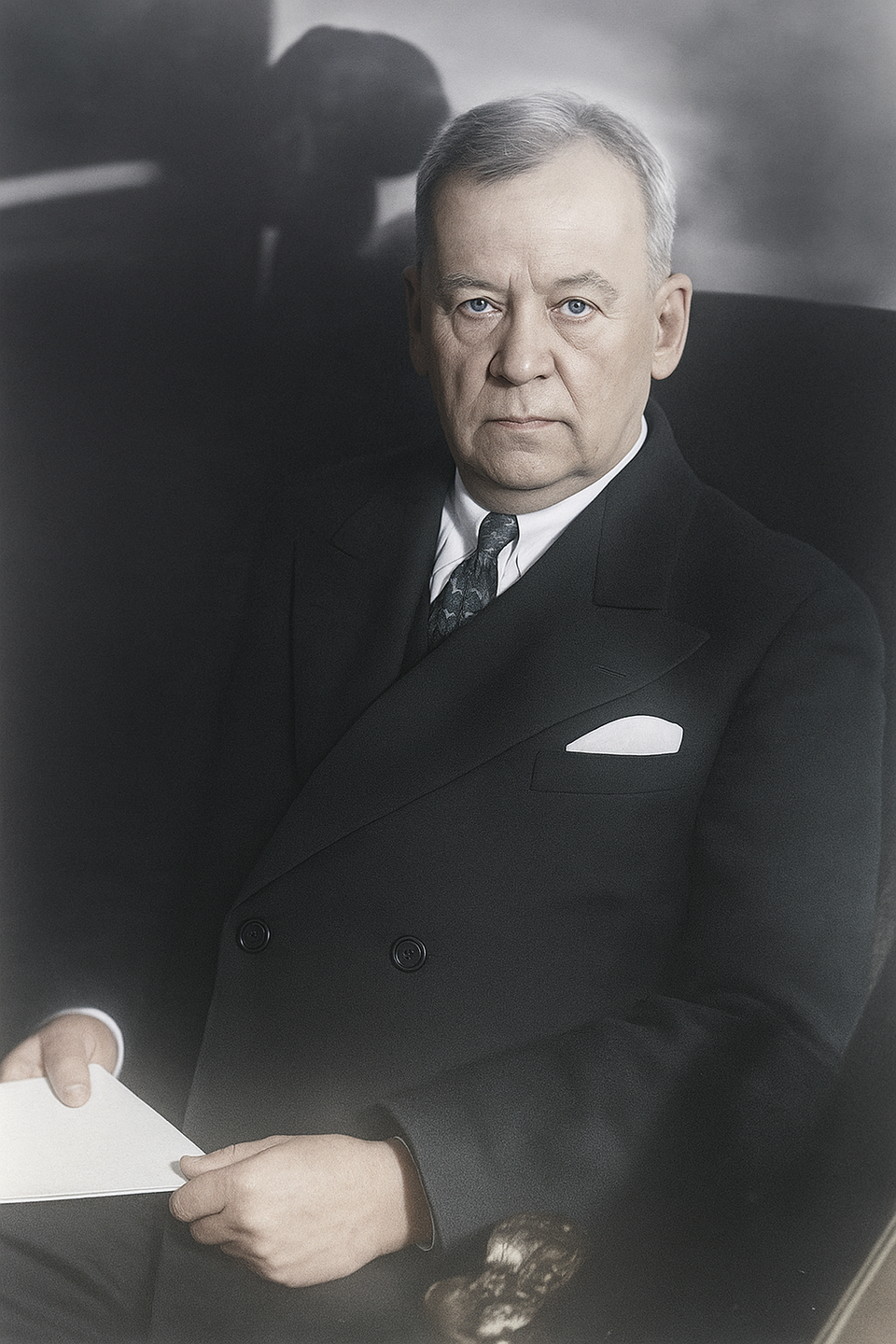
Luzin, an outstanding mathematician and founder of the Moscow school of descriptive function theory, forms one of the links between pre-revolutionary Russian and Soviet mathematics. He studied at Moscow University, where his principal teacher was Dmitri Fyodorovich Egorov, then at the Sorbonne, and undertook further study in Göttingen. He studied with Borel, Poincaré, Hadamard, Darboux and Lebesgue. His celebrated Integral and Trigonometric Series (1915) set the direction of function theory for many years.
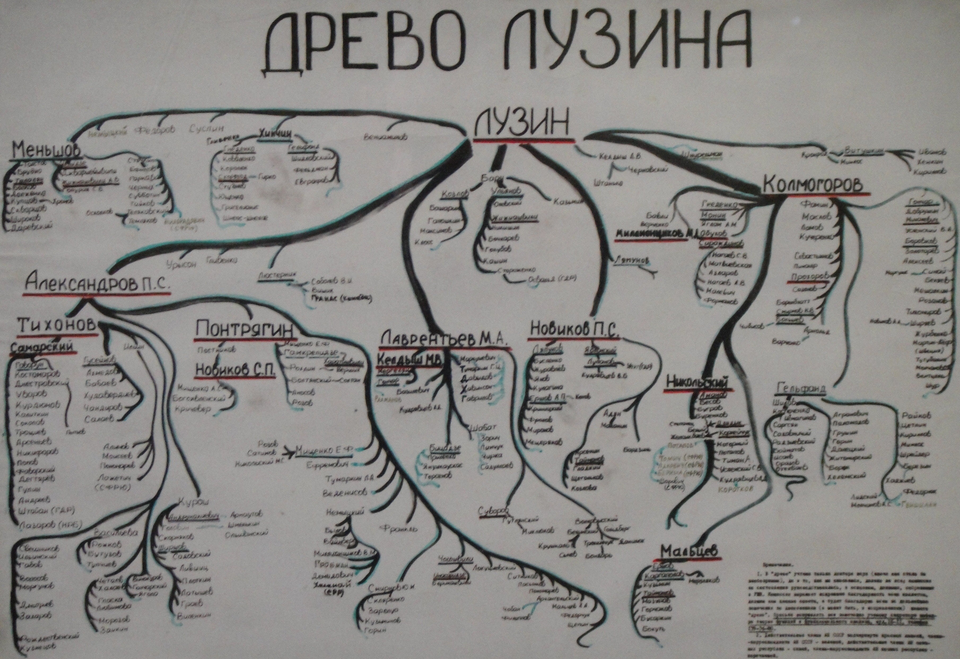
Luzin worked at Moscow State University from 1922. After his election as an academician in 1929, he headed the function-theory department of the Steklov Mathematical Institute of the USSR Academy of Sciences. His pupils from different generations, the core of Lusitania, included P. S. Alexandrov, M. Ya. Suslin, D. E. Menshov and A. Ya. Khinchin; somewhat later came P. S. Urysohn, A. N. Kolmogorov, N. K. Bari, L. A. Lyusternik and L. G. Shnirelman. Still later, in the mid-1920s, P. S. Novikov, L. V. Keldysh and M. A. Lavrentyev joined. They formed the foundation of the Moscow mathematical school. No mathematical school anywhere possessed such a constellation of outstanding scholars.
Scientific history rarely sees schools that both achieve breakthroughs in their fields and establish an entire scientific tradition. Nikolai Luzin’s Moscow mathematical school, known as Lusitania, was just such a phenomenon.
Founded in the late 1910s and continuing through the Civil War amid hunger and devastation, the school became an intellectual oasis where revolutionary ideas emerged in function theory, topology, set theory and other branches of mathematics. It ceased to exist in the mid-1930s through the natural development of its mathematics: its pupils had grown up. There was also an external cause: a political case was brought against the teacher, the “Luzin affair”, which is another subject.
According to the recollections of Luzin’s pupil Lazar Lyusternik, the word “Lusitania” was first heard in the autumn of 1920. Members of the school began making scientific discoveries.
Lusitania became a community of young people living an intense mathematical life even in Russia’s hardest years.
Yet Lusitania was more than science. It was a fellowship of pupils, theatrical rituals and mathematical jokes, sparkling with laughter and joy. Much of this was due to Nikolai Nikolayevich himself, the order’s commander. There was an atmosphere of intellectual carnival, a scientific theatre in which everyone was an actor and the teacher was foremost among them. Lyusternik called it “intellectual mischief” in his memoirs.
The pupils composed humorous anthems, for example:
Our god is Lebesgue,
Our idol, the integral.
We’ll narrow life’s horizons —
Such was the command
Of our commander Luzin.
\aleph_{17} — Aleph-17 — Luzin’s rank and the school’s emblem.
Lusitania introduced a hierarchy of members through “alephs”, the letter traditionally used to denote cardinality in set theory. Each newcomer received the rank “aleph-zero”. Every achievement added one to the index. P. S. Alexandrov and P. S. Urysohn received the high rank “aleph-5”. Luzin himself was awarded “aleph-17”, and its corresponding symbol became the school’s emblem.
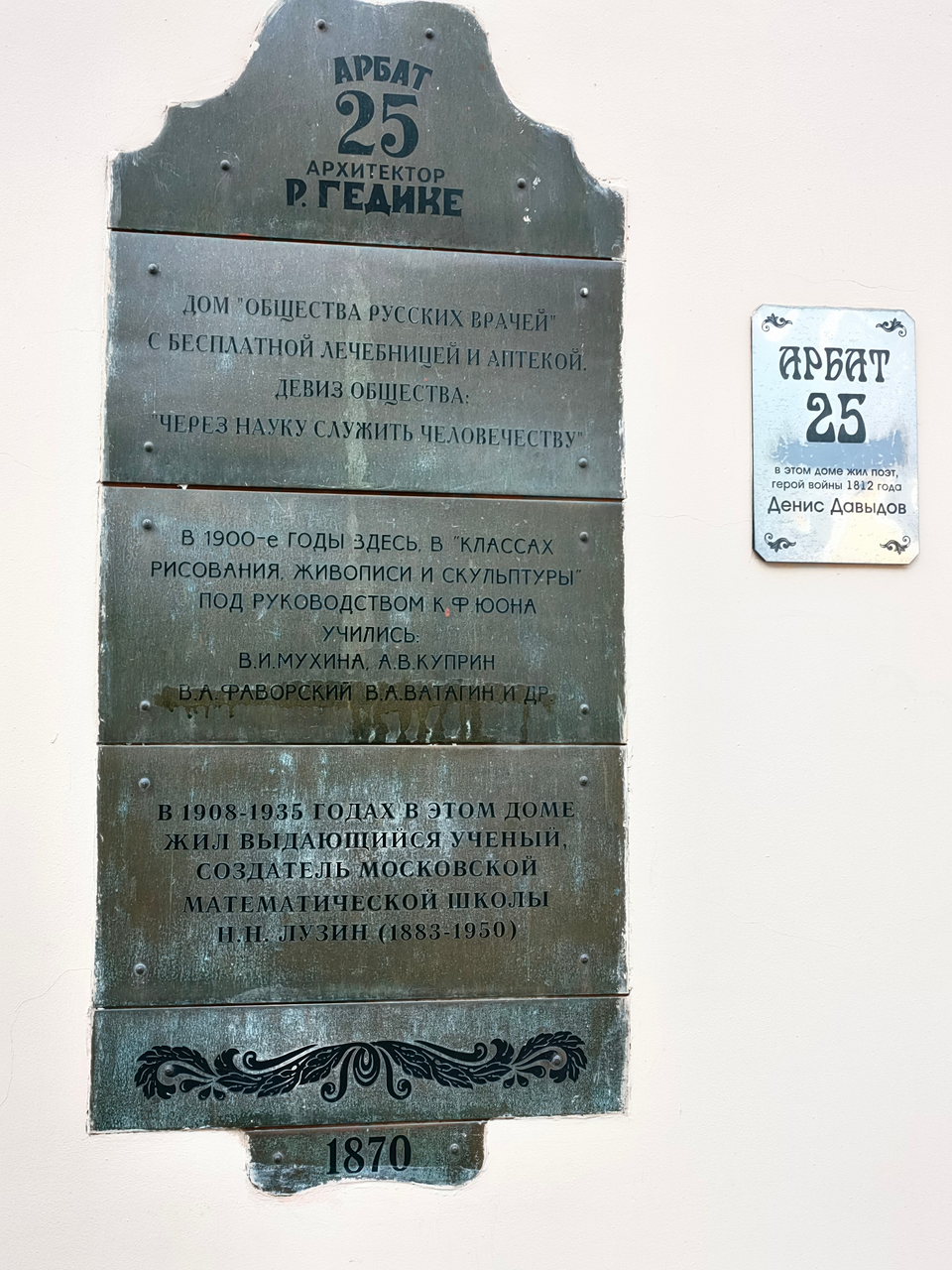
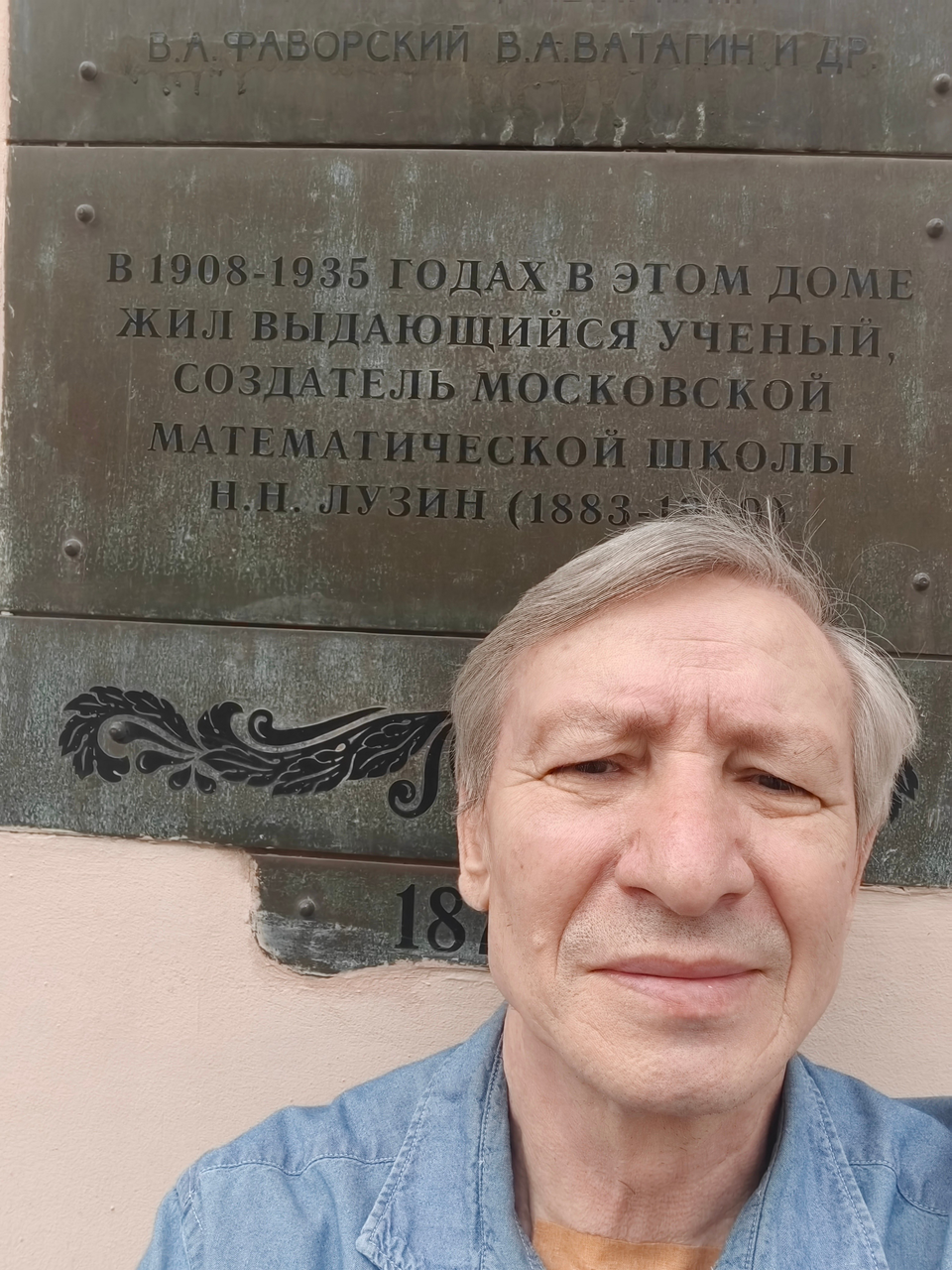
The pupils often gathered in Luzin’s apartment at 25 Arbat Street. The house survives and bears a commemorative plaque.


In any event, of twenty Lusitanians, half became academicians, corresponding members or founders of new scientific schools. Luzin’s achievements as a teacher are unique in scale: an exceptionally rare case in scientific history of a teacher nurturing more than ten outstanding scholars who probably surpassed him.
Some of Luzin’s pupils founded schools of their own:
- A. N. Kolmogorov’s school produced V. I. Arnold and I. M. Gelfand, E. B. Dynkin and A. I. Malcev, Ya. G. Sinai and A. N. Shiryaev, V. A. Uspensky and others.
- P. S. Alexandrov’s school produced L. S. Pontryagin, A. N. Tikhonov, A. G. Kurosh and others.
- M. A. Lavrentyev’s school produced M. V. Keldysh, A. I. Markushevich, B. V. Shabat and others.
- P. S. Novikov’s school produced S. I. Adian, A. D. Taimanov, S. V. Yablonsky and others.
The Mathematics Genealogy database lists more than 5 000 academic descendants of Luzin.

Sadly, this history also includes the political persecution of Academician Luzin and the investigation of his personal case by a commission of the Presidium of the USSR Academy of Sciences: the “Luzin affair” of 1936. The commission was to condemn his allegedly unworthy conduct: publishing his work abroad before publishing it in the USSR, foreign contacts, idealism, sabotage of science and other accusations. “The Presidium considers it possible to limit itself to a warning to N. N. Luzin.” Not all his pupils supported their teacher. Luzin was effectively isolated from major scientific activity. The affair became an ethical lesson for an entire generation of scholars.
Credit is due to the Presidium of the Russian Academy of Sciences, which, by Resolution No. 8 of 17 January 2012, revoked the USSR Academy’s resolution of 5 August 1936 on the Luzin affair.
Let us close with verses capturing Lusitania’s atmosphere:
Though your baggage may be light,
Forward! Trust yourself to win!
The great god, Professor Luzin,
Will show our scientific path!