


I am a mathematician. It is a fascinating and creative profession. Today I will tell you how to acquire a taste for mathematics and then come to love it.
How does one become a mathematician? Are there mathematically gifted children? How does their talent reveal itself? What problems should children tackle, and what mathematics is within their reach? What were great mathematicians like as children, and what could they do? Why did they become mathematicians? When and how did their talents emerge?
The first thing they learned was to notice the beauty of numerical patterns. “Mathematics is the queen of the sciences, and arithmetic is the queen of mathematics,” said the great German mathematician Carl Friedrich Gauss, recognizing the power of mathematical laws based on numbers.
The great Russian mathematician Andrey Nikolayevich Kolmogorov wrote that he experienced the joy of mathematical discovery early, noticing this pattern at the age of five:
This property of natural numbers was already known to the ancient Greeks, particularly Pythagoras: the sum of any number of consecutive odd numbers starting with 1 always gives a perfect square, or “square number”, as Pythagoras called it. Gifted children, however, could set themselves learning problems and try to solve them independently. Both great mathematicians also solved another problem in childhood: “Find the sum of the natural numbers from 1 to 100.” Can you solve it?
A young child who can do something their peers usually cannot is called a “child prodigy”. Gifted children, or Wunderkinder, from the German Wunderkind, literally “wonder child”, are children recognized under a particular system as exceeding the intellectual development of others their age.
Prodigies usually reveal their abilities early. These may concern any intellectual field, such as mathematics, physics or other subjects, or other human activities such as music, painting and sport. They may enter university, graduate and defend a dissertation while their peers are still at school. Musically gifted children write operas; those gifted at chess become champions.
It has been observed, however, that gifted children most often do not retain their abilities as adults. I will give examples of those whose talent developed and endured for many years. These are the children discussed below.
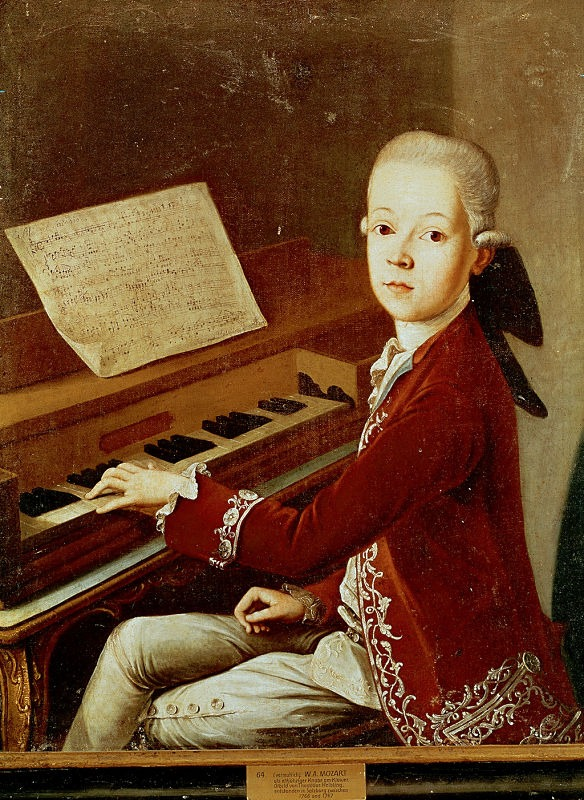

Wolfgang Amadeus Mozart (1756–1791) was an Austrian composer, pianist, violinist and organist, recognized as one of the greatest composers of all times and nations. He is perhaps the best-known child prodigy in world history.
At 4, he already played the piano with virtuosity, and at 5 he wrote his first pieces. At 8, when ordinary children cannot distinguish a double bass from a cello, he completed his first symphony. At 12, he wrote his first opera.
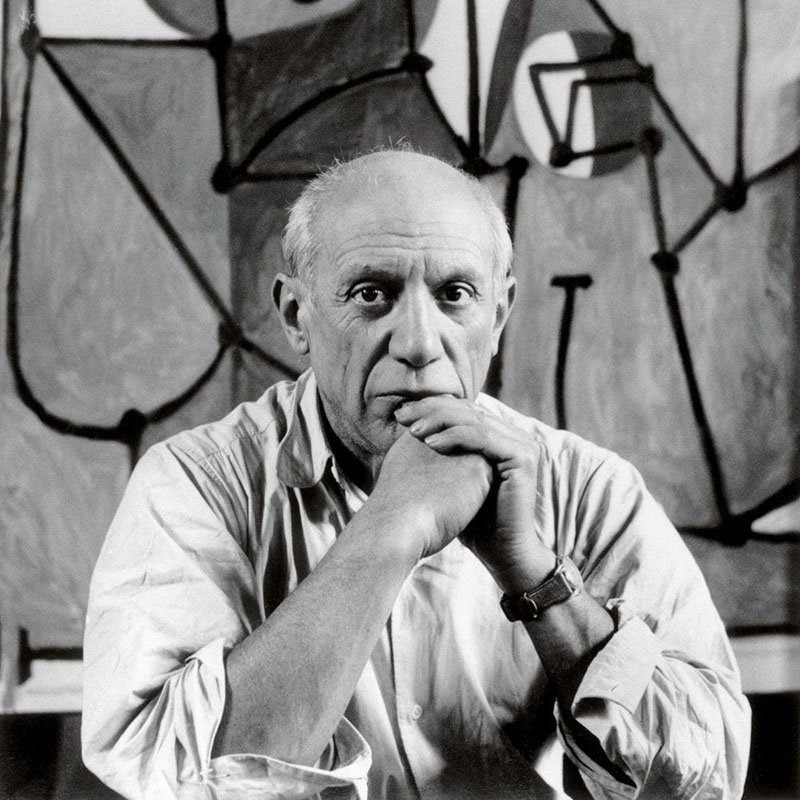

Pablo Picasso (1881–1973) was a Spanish painter, sculptor, ceramicist and designer. He is recognized as the greatest painter to have lived in the past hundred years.
Pablo began drawing before he learned to speak. Other school subjects were difficult for him, however, and he apparently never fully mastered the counting system throughout his long life.
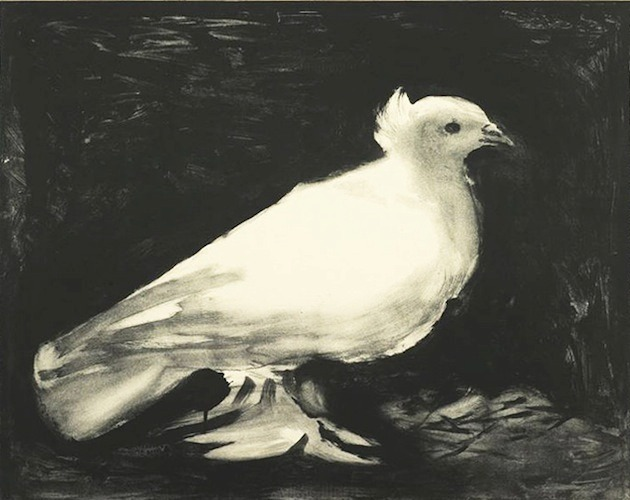

By 12, he was considered a mature artist with his own distinctive style. He passed the art school’s entrance examinations brilliantly in one day, although aspiring artists normally took a month. His first exhibition took place at 16, and by 20 he was world-famous.
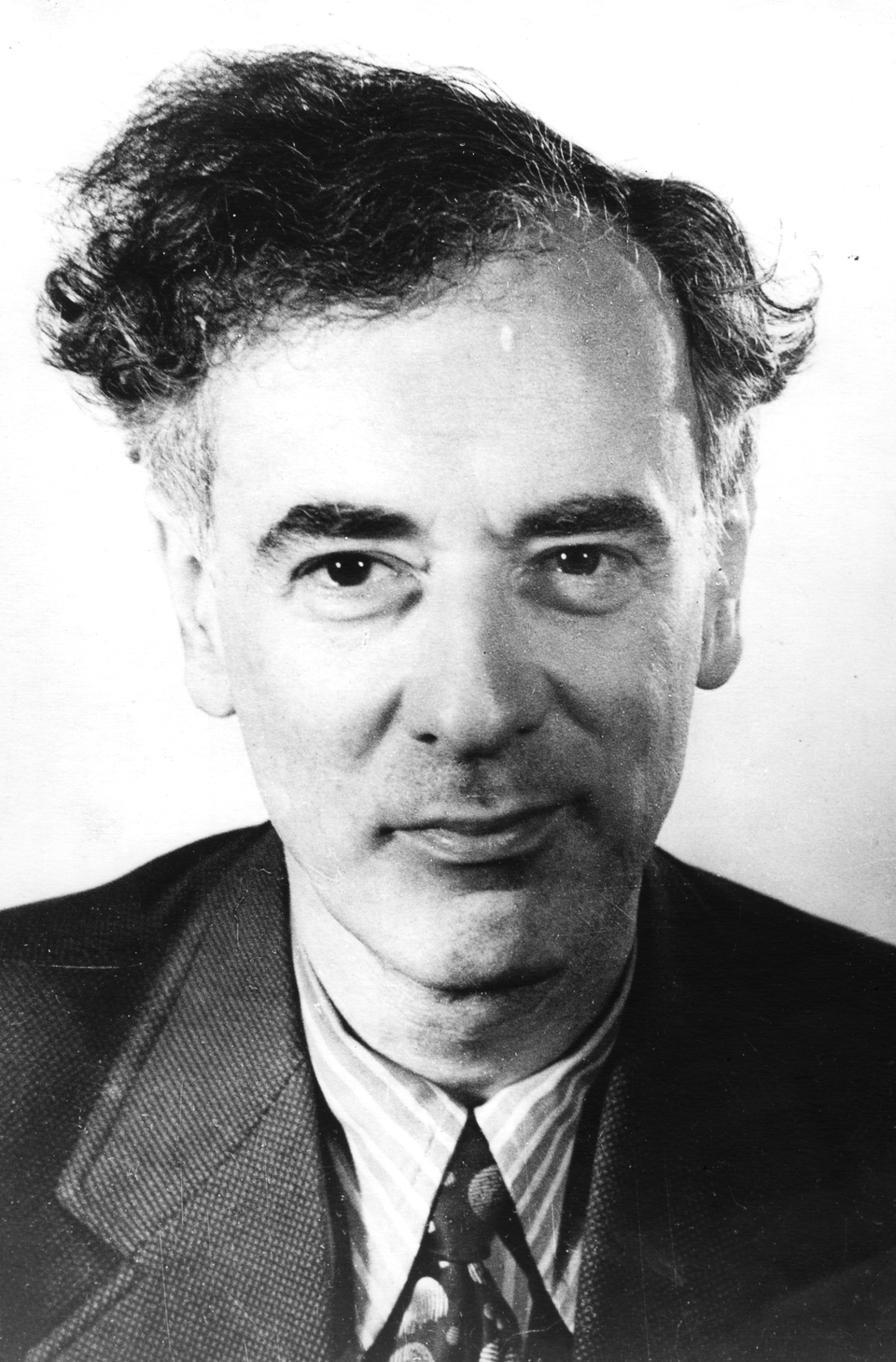

Lev Davidovich Landau (1908–1968) was a Soviet physicist, elected to the USSR Academy of Sciences in 1946 and awarded the Nobel Prize in Physics in 1962.
Landau finished school at 13 and graduated from Leningrad State University’s physics faculty at 19, having already published 4 scientific papers. At 26, he became a Doctor of Physical and Mathematical Sciences, and a professor a year later.
Now let us turn to mathematicians. Have there been mathematical prodigies? Yes, history includes them too.
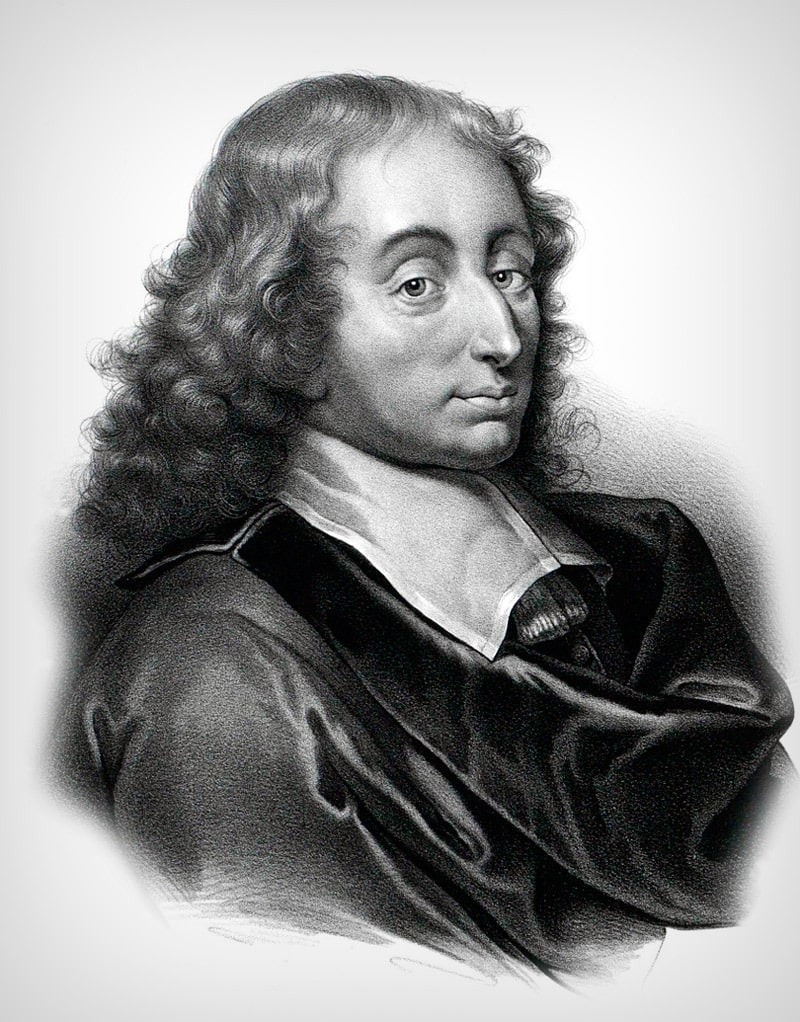

Blaise Pascal (1623–1662) was a French mathematician, mechanician, physicist, writer and philosopher. He was one of the founders of mathematical analysis, probability theory and projective geometry, a creator of early calculating machines, and the author of the fundamental law of hydrostatics.
Blaise was a gifted child. His father, himself knowledgeable about mathematics, educated him personally. From 14, Pascal attended weekly seminars of French mathematicians, where the most famous mathematicians of the time spoke.
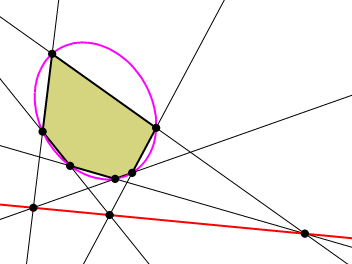

In 1640, at 17, Pascal’s first printed work appeared: Essay on Conic Sections. It contains his famous theorem: “If the vertices of a hexagon lie on a conic, the three intersection points of the lines containing opposite sides lie on one straight line.”
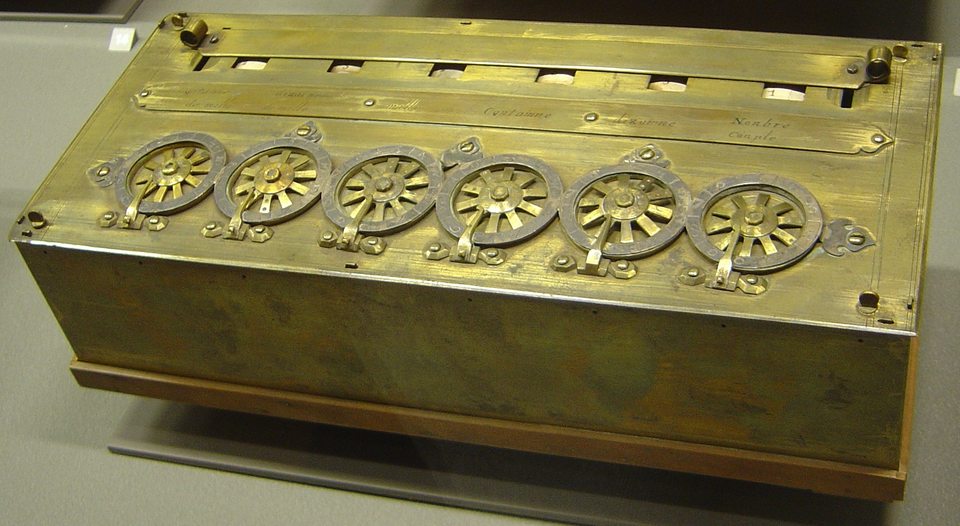

In 1642, at 19, Pascal began creating his adding machine, the Pascaline, aided, as he acknowledged, by knowledge acquired in his early years. About 50 versions were built under his supervision by 1652. The principle he invented underlay most mechanical calculators for almost three centuries.
The SI unit of pressure and the Pascal programming language are named after him.
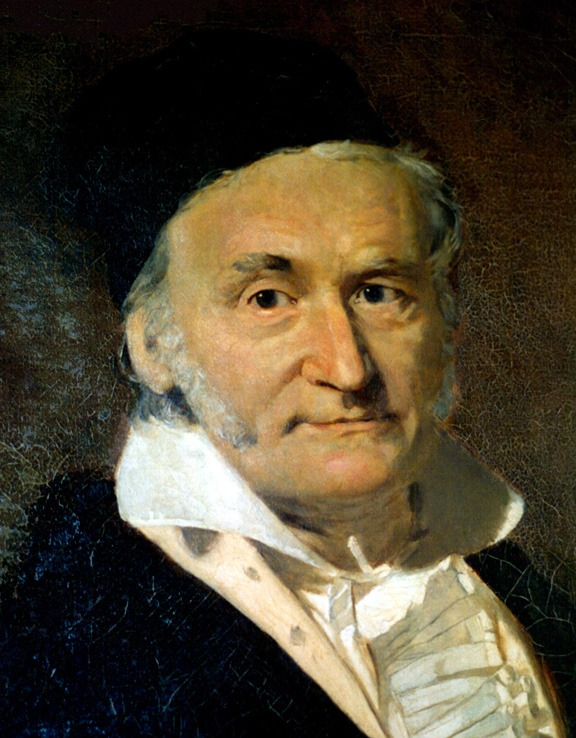

Carl Friedrich Gauss (1777–1855) was a German mathematician, mechanician, physicist and astronomer, considered one of the greatest mathematicians of all time and the “prince of mathematicians”.
The boy showed himself a prodigy at two. At three, he could read and write and even correct mistakes in his father’s calculations.
According to legend, his mathematics teacher asked the children to sum the numbers from 1 to 100 to keep them occupied for a long time. Young Gauss noticed that pairs from opposite ends have the same sum: 1 + 100 = 101, 2 + 99 = 101, and so on. He quickly obtained 50 × 101 = 5050.
He performed these calculations:
Gauss continued doing most calculations mentally into old age.


In 1796, at 19, he proved that a regular 17-gon can be constructed with a compass and straightedge. He treasured this discovery and requested a regular 17-gon inscribed in a circle on his grave. Moreover, he completely resolved the problem of constructing regular polygons, finding a criterion for the constructibility of a regular n-gon with compass and straightedge.
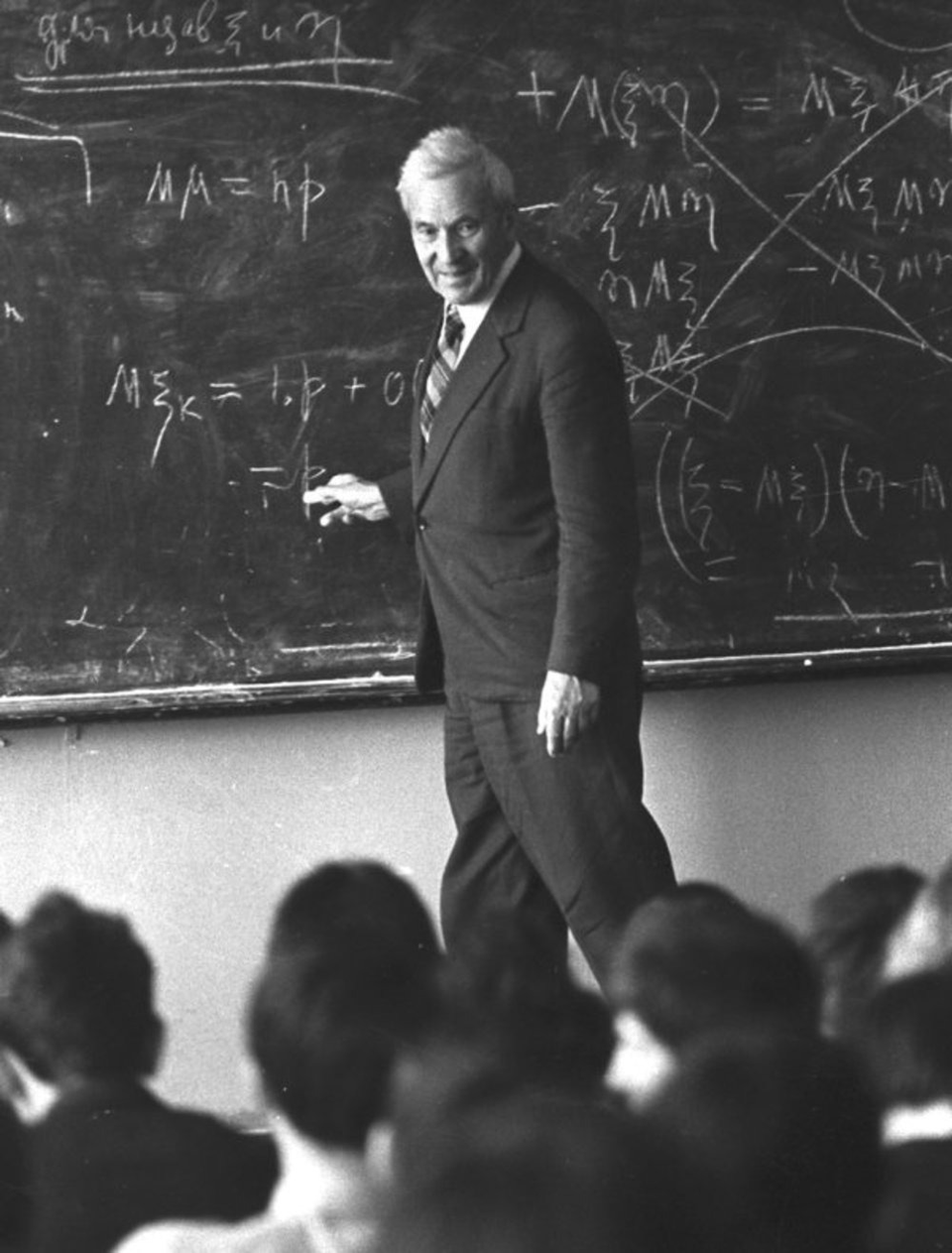

Andrey Nikolayevich Kolmogorov (1903–1987) was a Russian and Soviet mathematician, one of the leading mathematicians of the twentieth century.
He was raised in Yaroslavl and then Moscow by his mother’s sisters. One, Vera Yakovlevna Kolmogorova, formally adopted him. His aunts organized a school in their home for nearby children of different ages. They taught the children and produced a handwritten magazine, Spring Swallows, featuring pupils’ drawings, poems and stories. Andrey’s “scientific works”, arithmetic problems of his own invention, appeared there too.


Among them was the button problem: in how many ways can a four-hole button be sewn on? The children sewed on their own buttons, so the problem came “from practice”. Andrey’s favourite arrangements were two parallel lines and a cross; the problem required all four holes to be used.
Here, at five, the boy also published his first mathematical work. This is how he solved the problem of summing a hundred numbers, using a different method from Gauss:
Kolmogorov’s method was this: there are 50 odd terms and 50 even terms. The sum of the even terms exceeds the sum of the odd terms by 50, since 2 exceeds 1 by 1, 4 exceeds 3 by 1, and so on. The sum of the odd numbers from 1 to 100 is 50 squared, or 2500.
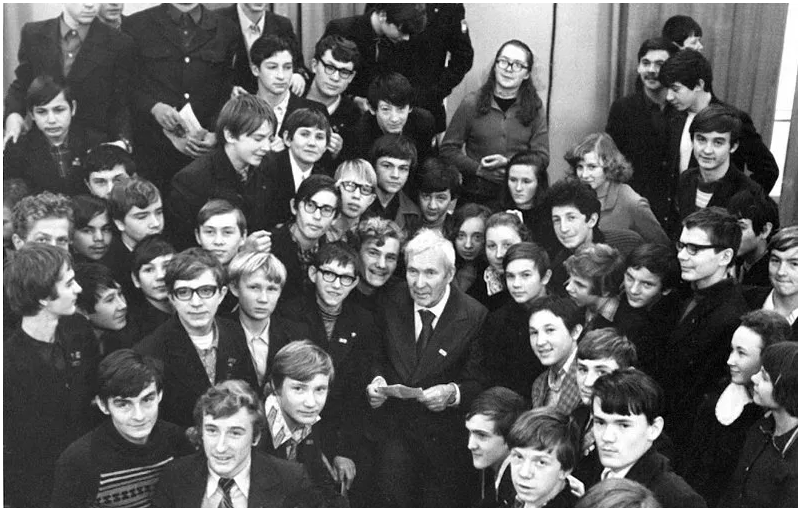

As an educator, he spent almost his entire life developing gifted children and young people, constantly analysing his own experience. He created secondary-school mathematics textbooks and the celebrated Moscow boarding school for gifted children.
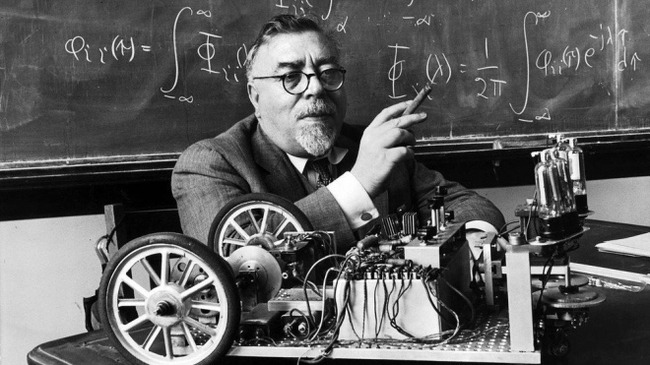

Norbert Wiener (1894–1964) was an American scientist, outstanding mathematician and founder of cybernetics and the theory of artificial intelligence.
“I grew into an unsociable and awkward adolescent with a highly unstable psyche,” Wiener writes of his life as a “wonder child” in Ex-Prodigy. His father, trained in the humanities, taught him school subjects and much beyond them. Most remarkably, he carried out one of the few successful experiments of this kind: he wanted to raise a gifted child, and did. At 4, Wiener had access to his parents’ library, and at 7 he wrote his first scientific treatise on Darwinism.
At 18, Wiener received a doctorate in mathematical logic from Harvard University. At 19, Dr Wiener was invited to the mathematics department of the Massachusetts Institute of Technology.


According to psychological research, by four a child displays 50% of the intellectual abilities that will eventually emerge; by six, 70%; and by eight, 90%. This is the age at which giftedness can be identified and special conditions created for its creative development. The state should take an interest in this.
Child prodigies are a great asset to society. Such people help their country achieve breakthroughs in science and art. Intellect is a nation’s principal wealth.