
(On the occasion of his 85th birthday)
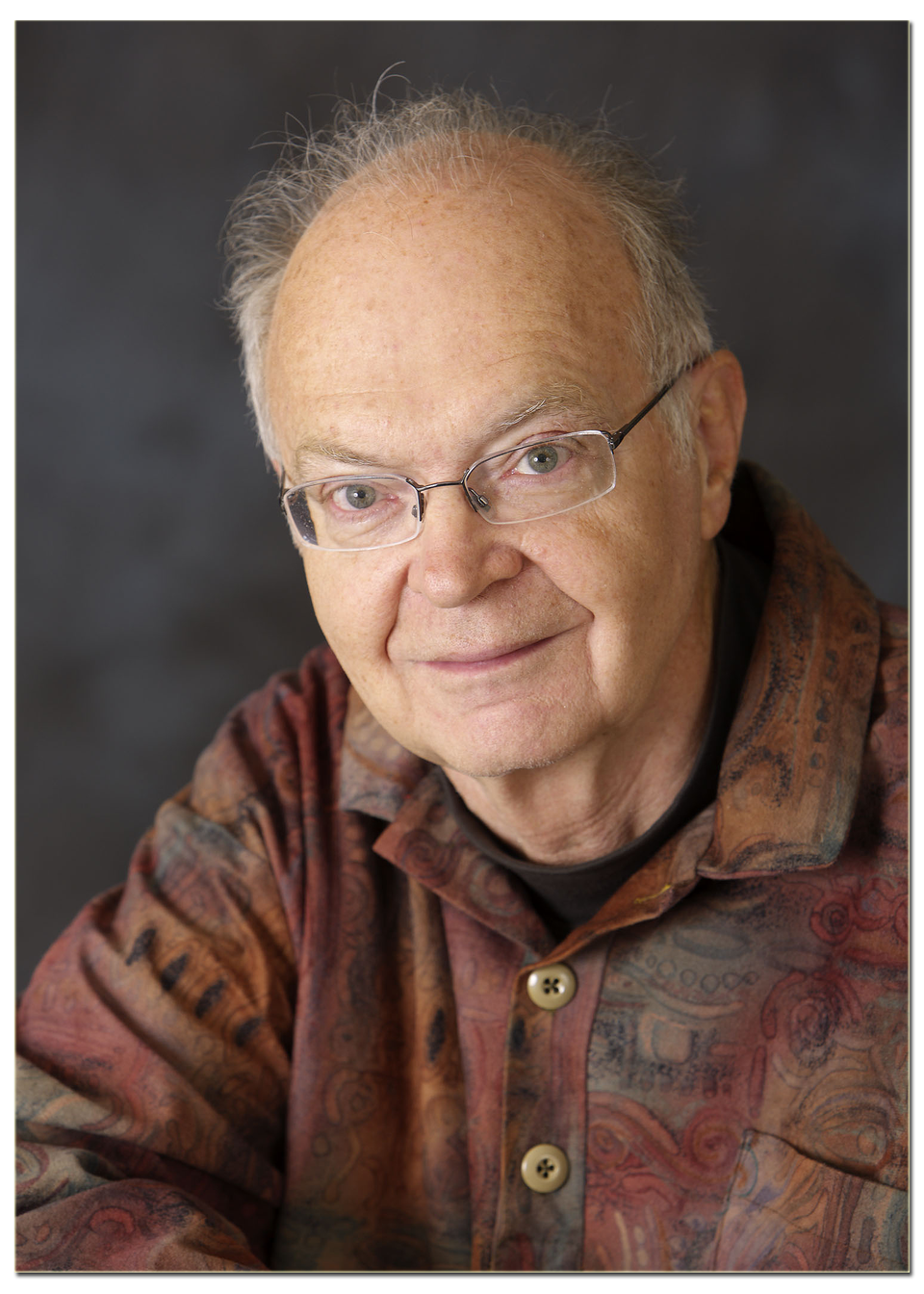

Mathematical formulas cannot “belong” to anyone! Mathematics belongs to God.
D. Knuth
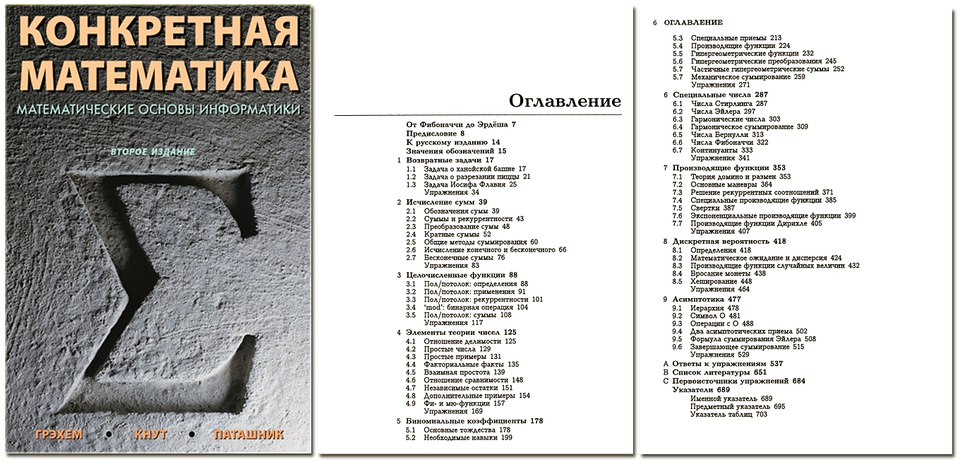
In an age when everything is undergoing digital transformation, the role of mathematics in that process needs particular emphasis. Otherwise, those trying to create something worthwhile in the IT industry will struggle to make their projects succeed. If you doubt this, consider the experience of the master of programming, Donald Knuth. First open the contents of his book Concrete Mathematics: A Foundation for Computer Science, then continue reading…
Donald Ervin Knuth, born on 10 January 1938 in Milwaukee, Wisconsin, USA, is an American mathematician and computer scientist, a PhD (1963), professor at Stanford University, member of the American Philosophical Society (2012), and a celebrated teacher and thinker on programming.
His motto is: “The best way to understand something fully is to try to teach it to a computer.”
He is the author of more than 20 books, including several programming classics, and over 160 articles, and the developer of several well-known software technologies. His books address a remarkable range of topics in computer science, from studying numerical patterns in biblical texts and tracing the origin and changing shape of the letter “S” to abstract mathematical problems. As a mathematics professor, he developed many distinctive courses.
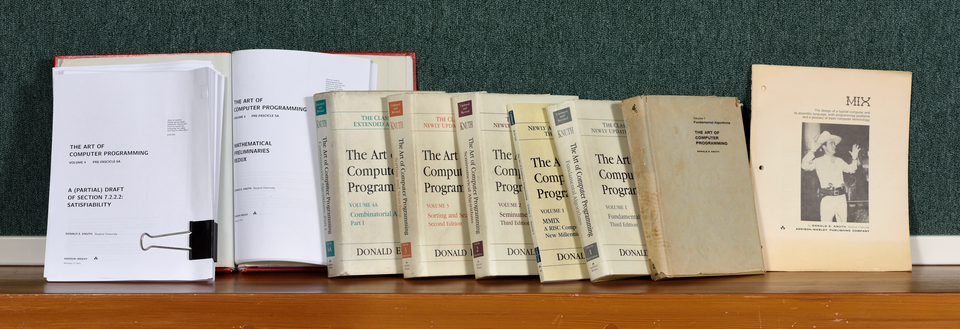
Knuth is also the author of the monumental three-volume The Art of Computer Programming, a fundamental monograph analysing the most important algorithms used in computer science. In 1999, it was recognised as one of the twelve best physics and mathematics monographs of the century.

He also co-authored Concrete Mathematics, a mathematics textbook by Donald Knuth, Ronald Graham and Oren Patashnik that examines the mathematical foundations of computer science, especially algorithm analysis.

From an early age, Donald showed an aptitude for mathematics, physics and music. He graduated with honours from the mathematics department of the Case Institute of Technology in 1960. At the same time, his substantial achievements in programming earned him a master’s degree. Three years later, he received his doctorate from the California Institute of Technology. He taught mathematics there while also consulting on software development for the Burroughs Corporation. In 1968, he moved to Stanford University.
The work of Andrey Petrovich Ershov (1931–1988), later his friend, greatly influenced the young Donald Knuth. Ershov was a Soviet scientist, a pioneer of theoretical and systems programming, founder of the Siberian school of computer science, and a member of the USSR Academy of Sciences.

In the spring of 1977, Donald Knuth abruptly changed his occupation. While examining the galley proofs of a revised edition, he suddenly felt that printing needed a fundamental transformation. He decided to devote some time to combining mathematics and computer science with the task of improving the appearance of books. The project ultimately lasted 9 years!
Knuth invented TeX, the first publishing system, and METAFONT, a system that uses classical mathematics to shape the appearance of typefaces. They are intended for setting and laying out scientific and technical books, especially in physics and mathematics. TeX has been called one of the most important inventions in the history of printing. Some have compared its significance to Johannes Gutenberg’s Bible.
“I cannot go to a restaurant and simply order food, because I start studying the typefaces on the menu.”
D. Knuth
Examples of TeX source and the corresponding formulas:
$$\frac{\sqrt{3}}{\alpha^2+x^2\cdot(a-b)}$$
$$
\begin{matrix}
{\overbrace{\bigodot}\overbrace{\bigodot}
\choose \underbrace{\overbrace{\smile}}}
\end{matrix}
$$
Examples of formula notation in TeX. From an article by G. Feldman in Kvantik, no. 11, 2014.
Donald Ervin Knuth is a member of the American Academy of Arts and Sciences (1973),
the US National Academy of Sciences (1975),
and the US National Academy of Engineering (1981).
A member of the American Guild of Organists (1965),
the American Mathematical Society (1961),
the Association for Computing Machinery (ACM) (1959),
the Mathematical Association of America (1959),
and the Society for Industrial and Applied Mathematics (1965);
a Fellow of the British Computer Society (1980);
and an honorary member of IEEE (1982).
A foreign member of the Royal Society of London (2003),
and a member of the Russian Academy of Sciences (2008).
An honorary doctor of many universities,
including Saint Petersburg State University (1992).
Among Donald Knuth’s many awards in programming and computational mathematics, the most significant are:
the Turing Award (1974),
the National Medal of Science (1979),
the Harvey Prize (1995),
the Kyoto Prize (1996),
and the Faraday Medal (2011).
An award bearing his name recognises contributions to the foundations of computer science.