“All is number” sums up the Pythagorean view that numbers explain the world around us. Let’s explore a more concrete idea: how square numbers emerge from a “Pythagorean circle”.
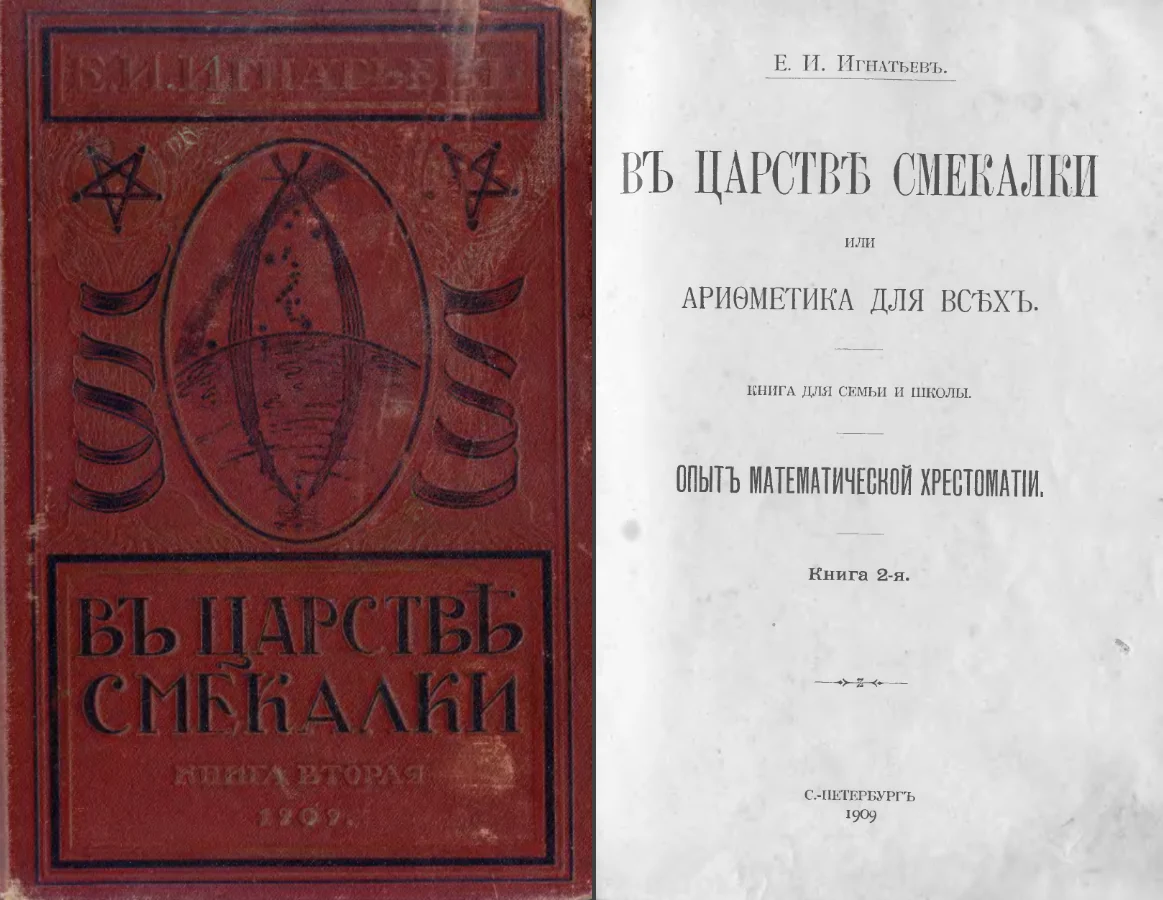
Here is an old puzzle from Yemelyan Ignatiev’s In the Realm of Ingenuity, adapted from the Russian:
Write consecutive numbers around a circle, starting at 1 and continuing up to a number of your choice: 1, 2, 3, 4, …, n. Once you reach n, continue around the circle in descending order until you reach 1 again: n − 1, n − 2, …, 2, 1. The sum of all the numbers in the circle is the square of n: that is, n multiplied by itself.
For example, to find the square of 7, arrange the numbers as shown:
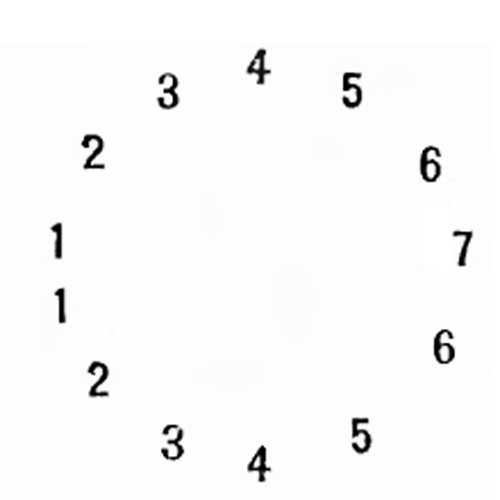
Adding them gives 49=7^2, just as promised.
Try it yourself with 10. Then see if you can explain, or prove, why the method works.
Proof
The sum of the integers from 1 to n-1 is \frac{n(n-1)}{2}. The circle contains two copies of this sequence and one additional number, n. Thus:
Historical note
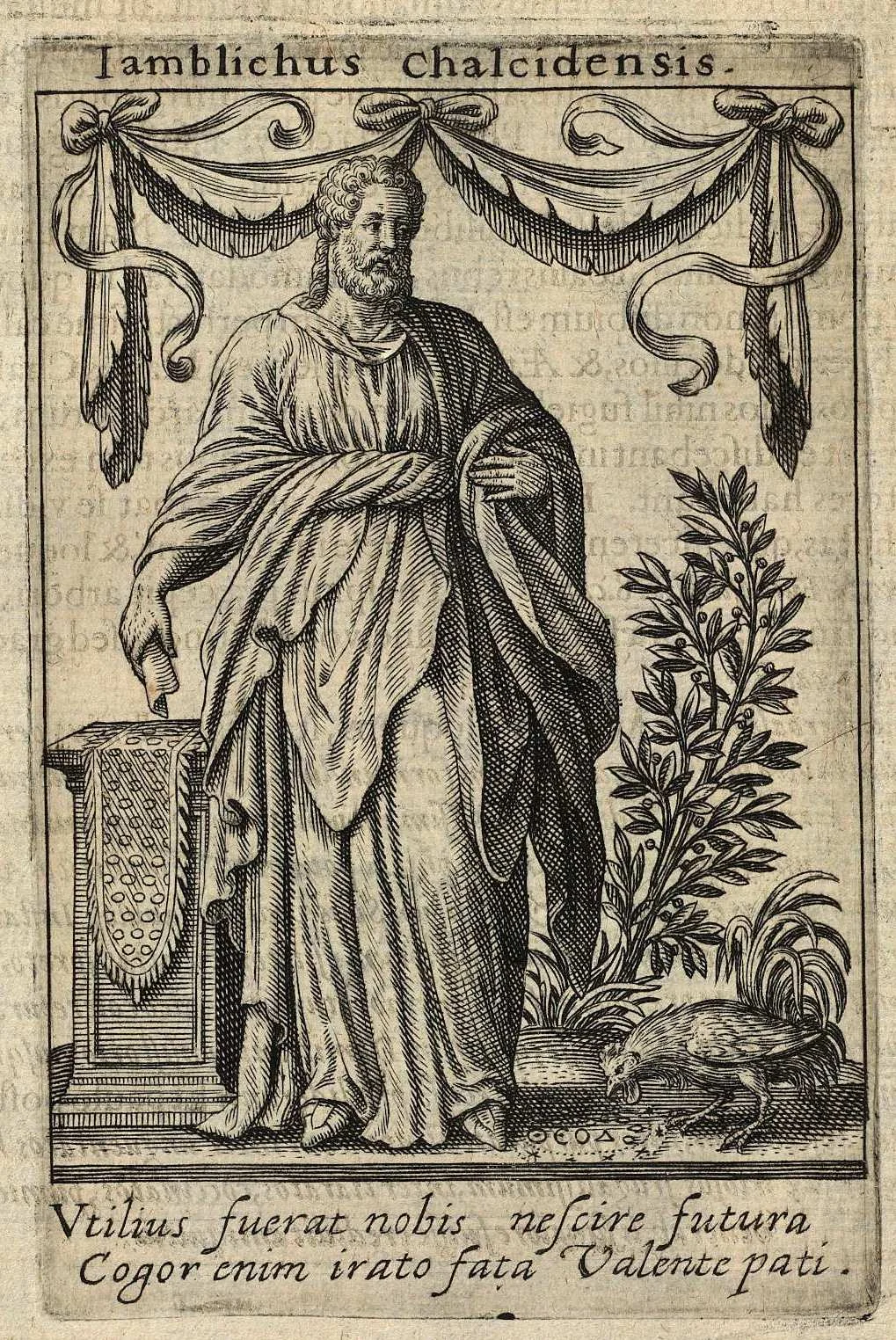

Iamblichus of Chalcis (c. 245–325 CE) was a Neoplatonist philosopher and the author of On the Pythagorean Life.
Previously published as “The Pythagorean Number Circle” (Russian original).
Notes
Yemelyan Ignatyevich Ignatiev (1869–1923) was a Russian and Soviet mathematics educator and popular science writer. His best-known work, In the Realm of Ingenuity, appeared in three volumes between 1908 and 1911.
Iamblichus. On the Pythagorean Life. Translated from Ancient Greek into Russian by I. Yu. Melnikova. Moscow: Aleteia, 2002. 192 pp.