

“A proof through allotrion is one that takes something extraneous rather than a thing’s own property.”
Aristotle, Organon
The word “allotrion”, from the Greek ἀλλότριος, “alien” or “extraneous”, once belonged to ancient science but is almost forgotten today. It appeared in texts on logic, philosophy and geometry. It denoted something external, unrelated to the essence of the subject itself.
Aristotle mentions allotrion in discussions of logical category errors, when a proof rests on something extraneous that does not belong to the subject, rather than on its essence.
In Book V of Euclid’s Elements, the term is used in the context of proportionality:
“If magnitudes are proportional, they cannot be allotrions to one another.”
Here it stresses incompatibility: one cannot compare what is incomparable.
Medieval scholars such as al-Farabi and Ibn Sina (Avicenna) used the word in metaphysics and medicine. For al-Farabi, allotrion was an “alien element of a proof” that disrupted its logical structure. For Avicenna, it was an “uncharacteristic” symptom, one not typical of a disease.
In the twelfth and thirteenth centuries, the term appears in Thomas Aquinas’s debates about attributes “alien” to God. Roger Bacon called false premises in scientific reasoning allotrions.
Gradually, the word fell out of scientific use. By the seventeenth century it had disappeared as scholars sought greater precision: mathematicians preferred expressions such as “invalid assumption”.
Its counterparts in logic today are “false premise” and “irrelevant argument”.
Allotrion in mathematics education
Interestingly, the term nevertheless survived into the twentieth century thanks to the German mathematician and educator Walter Lietzmann (1880–1959).
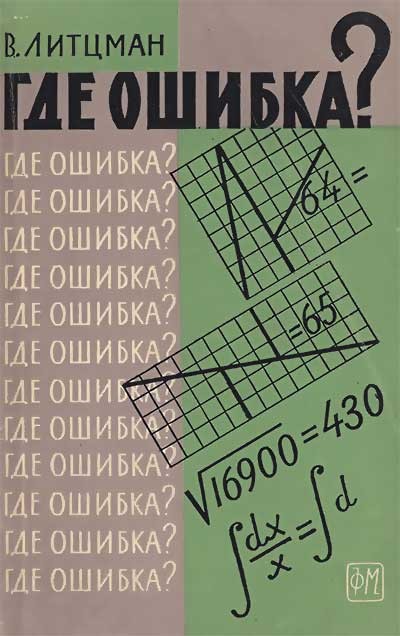
In his books Where Is the Error? (1952) and Amusing and Entertaining Topics on Numbers and Figures (1963), he uses allotrion in a teaching context to describe pupils’ false inferences.
Lietzmann also applies the word to anything “outside the curriculum”: unusual or unfamiliar material that captures attention. In his view, precisely such things stay firmly in the memory when connected with the main teaching material.
He included among allotrions:
- excursions into interesting areas of science;
- digressions into the history of mathematics;
- cultural and historical commentary.
Thus allotrion, which emerged from Greek logic, found new life in teaching methods.
Historical background
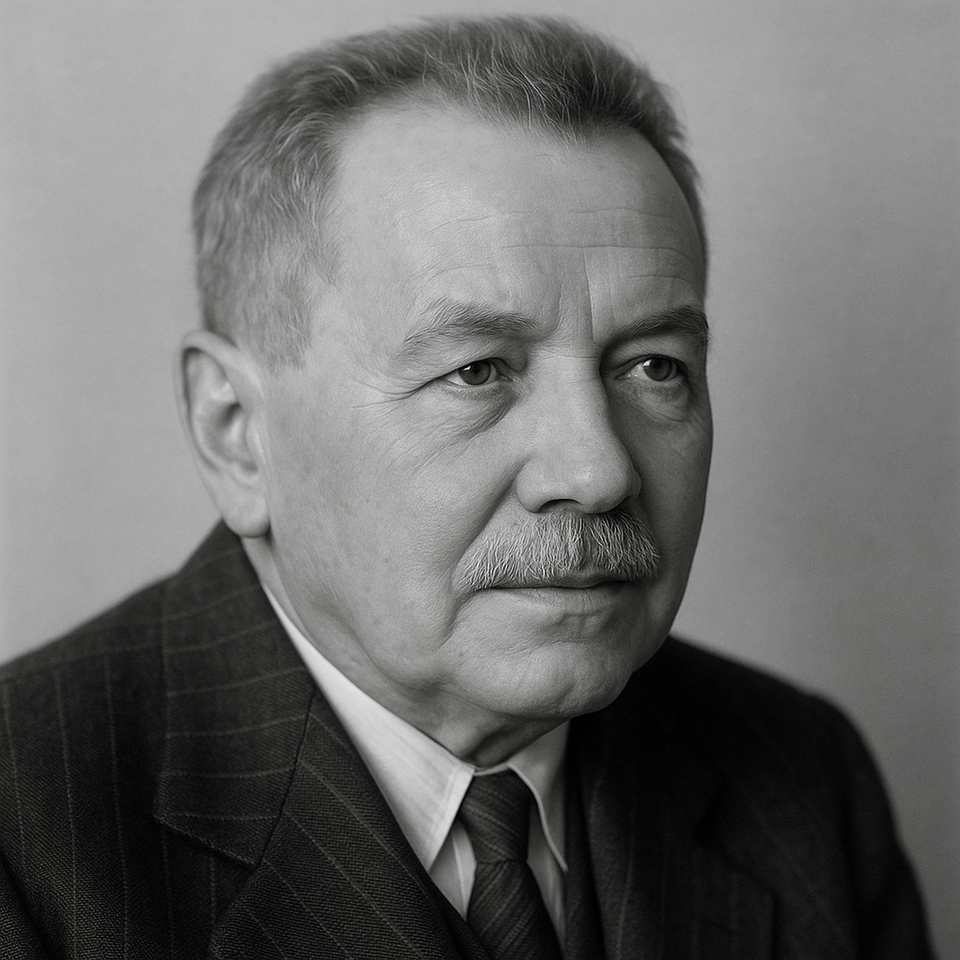

Walter Lietzmann (1880–1959) was a German mathematician, educator and populariser of science. A student of David Hilbert, he graduated from the University of Göttingen in 1903. He worked at a higher secondary school and at the University of Göttingen, becoming professor of mathematics education in 1920.
He took part in the school reform initiated by F. Klein. He was president of the German Mathematical Society from 1937. Several of his books were translated into Russian: Giants and Dwarfs in the World of Numbers (1959), The Pythagorean Theorem (1960), Old and New Topics on the Circle (1960), Where Is the Error? (1962), and Amusing and Entertaining Topics on Numbers and Figures (1963).
Allotrion is a vivid example of how an ancient term can acquire a second life. It passed from philosophy into teaching methods, from logic into the culture of learning, into set theory and even poetry. Perhaps it will appear again in our conversations about mathematics.