

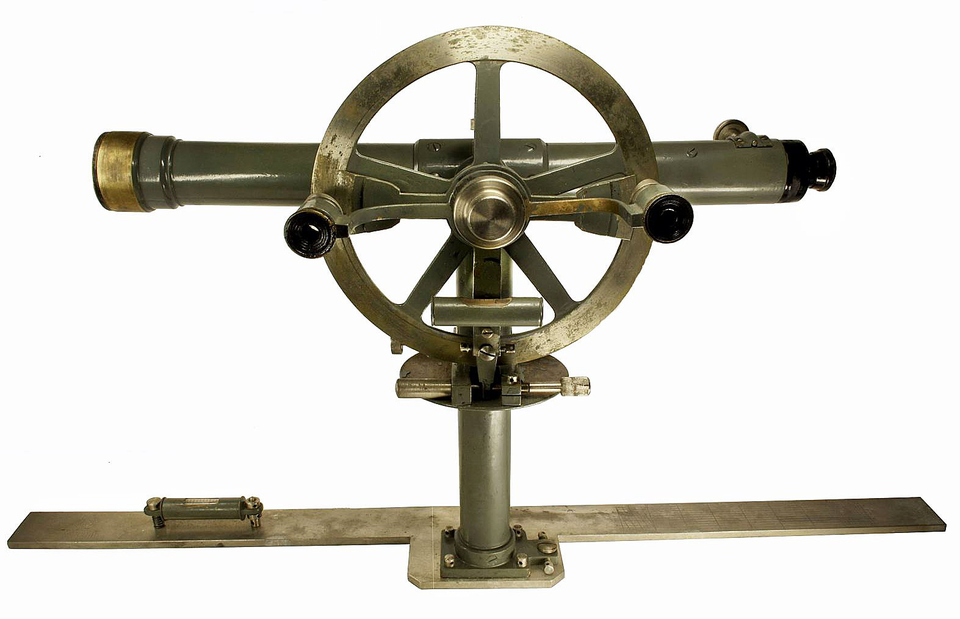

The telescopic alidade (German kippregel, from kippen, “to tip”, and regel, “rule”) is a mechanical or optical surveying instrument for measuring differences in elevation, distances and vertical angles, and for constructing directions graphically and plotting them on a terrain plan.
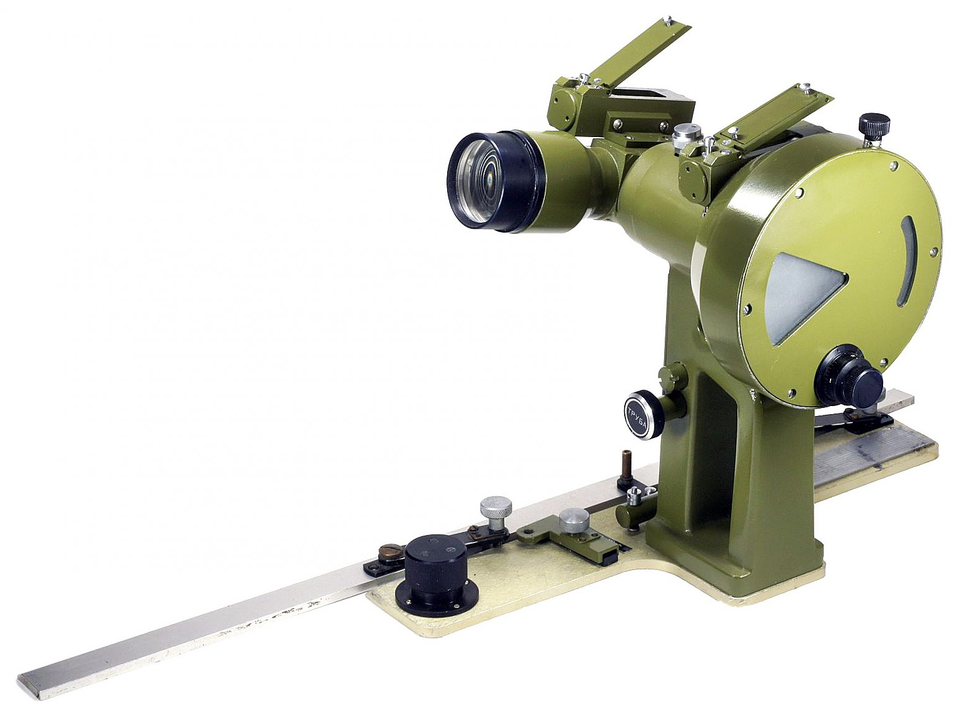

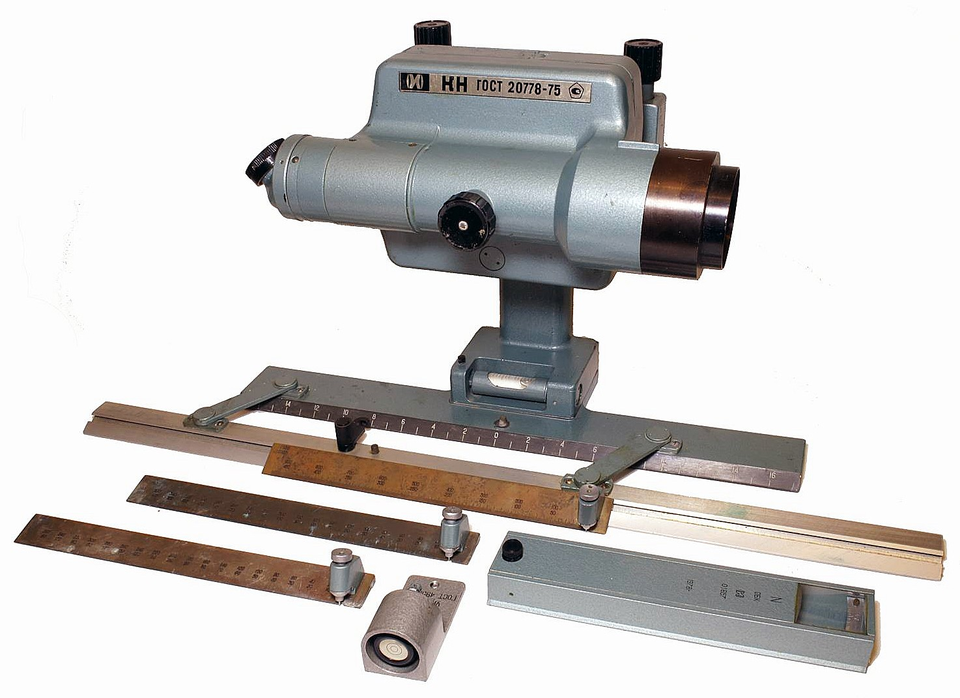
The alidade forms part of a plane-table surveying set — the plane table being a drawing table used in the field — for topographic surveys. An alidade usually includes:
• a supporting column;
• a telescope with stadia hairs, or a sight;
• a vertical circle, graduated in degrees, for determining angles of inclination;
• a tubular spirit level used for levelling;
• a graduated rule for plotting survey points on the plane-table board.
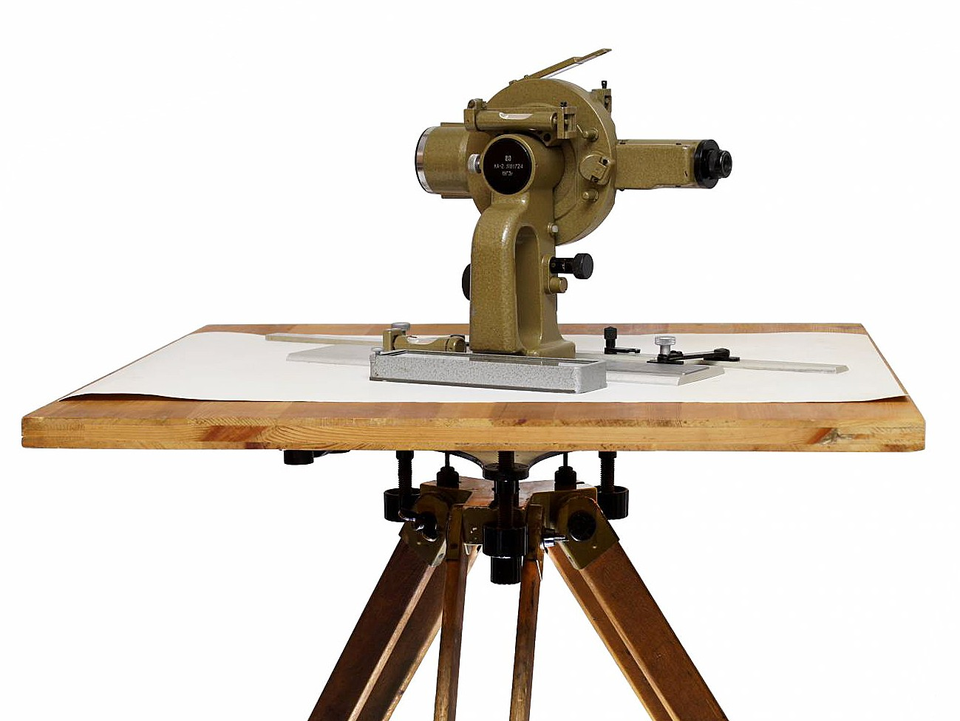

The alidade is used to sight survey points. The stadia hairs give the distance to a point. Its difference in elevation is determined from the vertical angle and distance. The rule is used to plot the line towards the point and its distance on the board.
Plane-table surveying with an alidade is used, for example, in railway surveys to prepare plans of bridge crossings and difficult terrain.
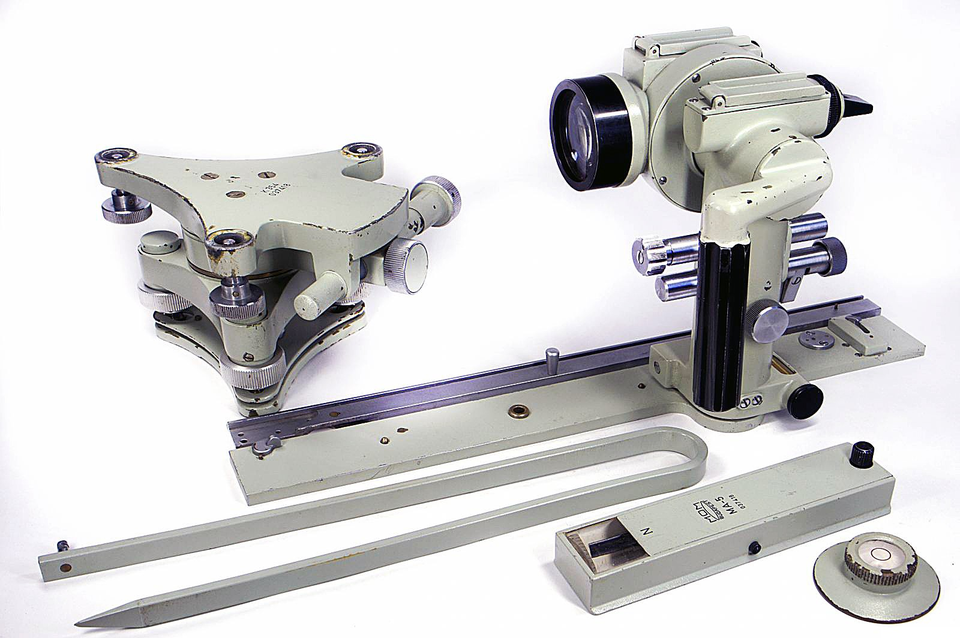

In our country, a nomographic alidade was also mass-produced in two versions from 1976 onwards.

Further reading
- Great Soviet Encyclopedia. Vol. 12 / Chief editor A. M. Prokhorov. — Moscow: Sovetskaya Entsiklopediya, 1970–1978.
- Zakharov, A. I. Surveying Instruments: A Handbook. — Moscow: Nedra, 1989. — 314 pp.
- Znamensky, M. A. Measurement Work in the Field. — Moscow: Uchpedgiz, 1960. — 192 pp.
- Prochukhaev, V. G. Measurement in the Secondary-School Mathematics Course. — Moscow: Prosveshcheniye, 1965. — 140 pp.