
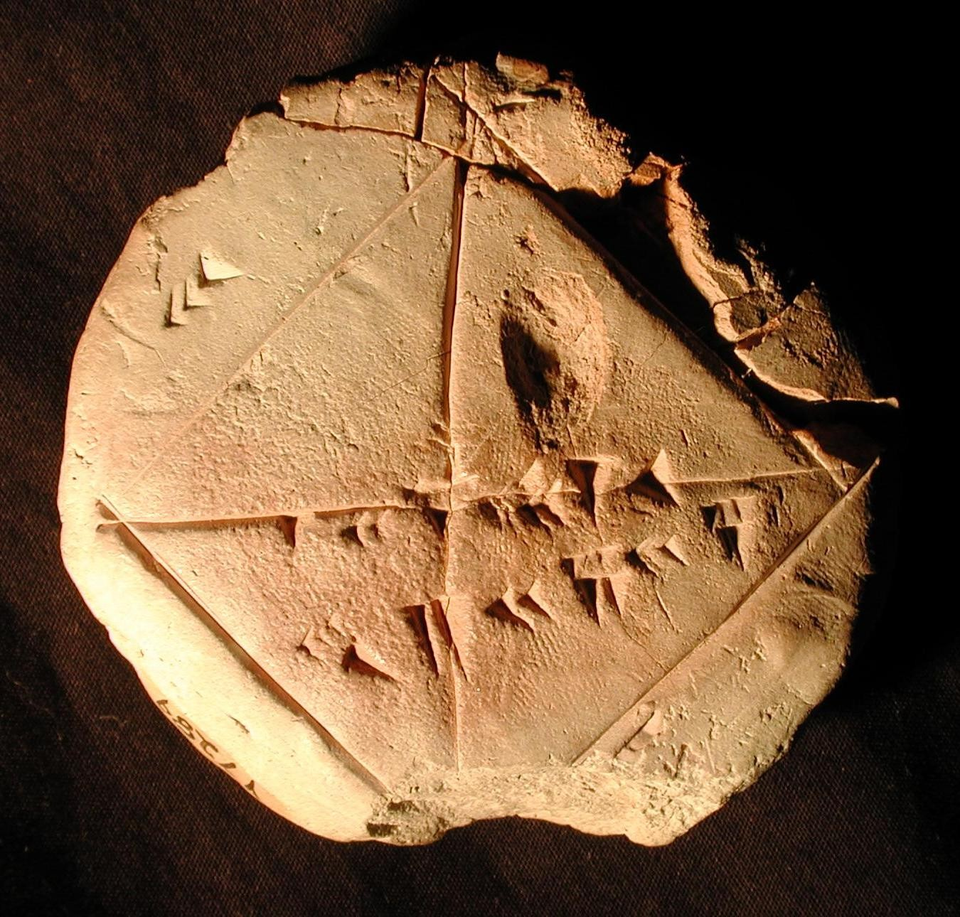

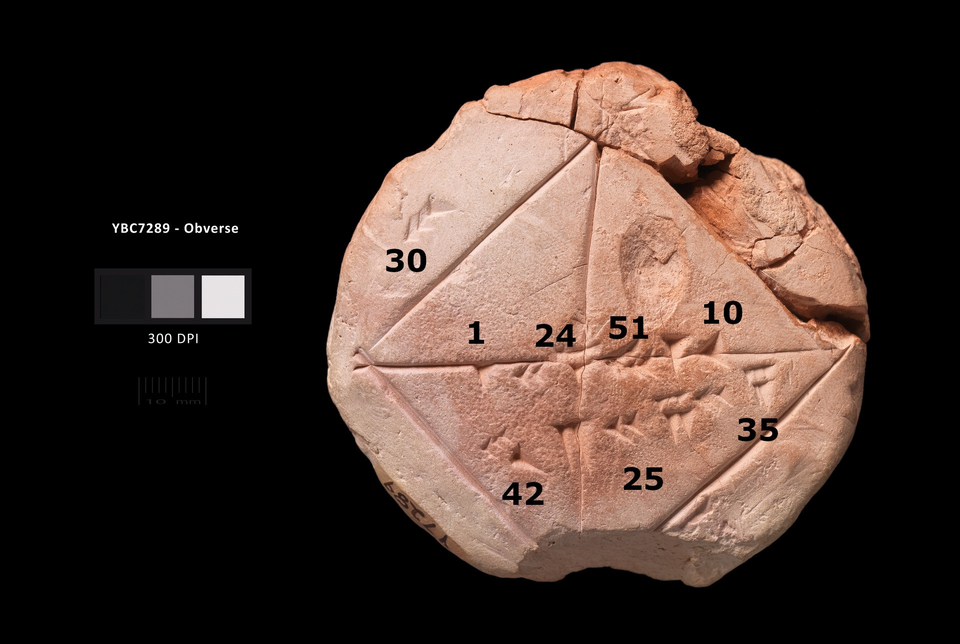
Sometimes the whole history of mathematics fits on a palm-sized piece of clay. Such is tablet YBC 7289 from the Yale Babylonian Collection. This Old Babylonian tablet bears mathematical writing and dates to approximately 1900–1600 BCE.
The CDLI digital catalogue of cuneiform texts classifies it among mathematical texts concerning the calculation of diagonal lengths, while the Yale collection’s website explicitly calls it a school tablet with an approximation to √2. MAA Convergence, a journal on mathematical history and teaching, likewise suggests that it is a learning exercise by a novice scribe. MacTutor, a university archive on the history of mathematics, discusses YBC 7289 specifically in the context of Babylonian geometry.
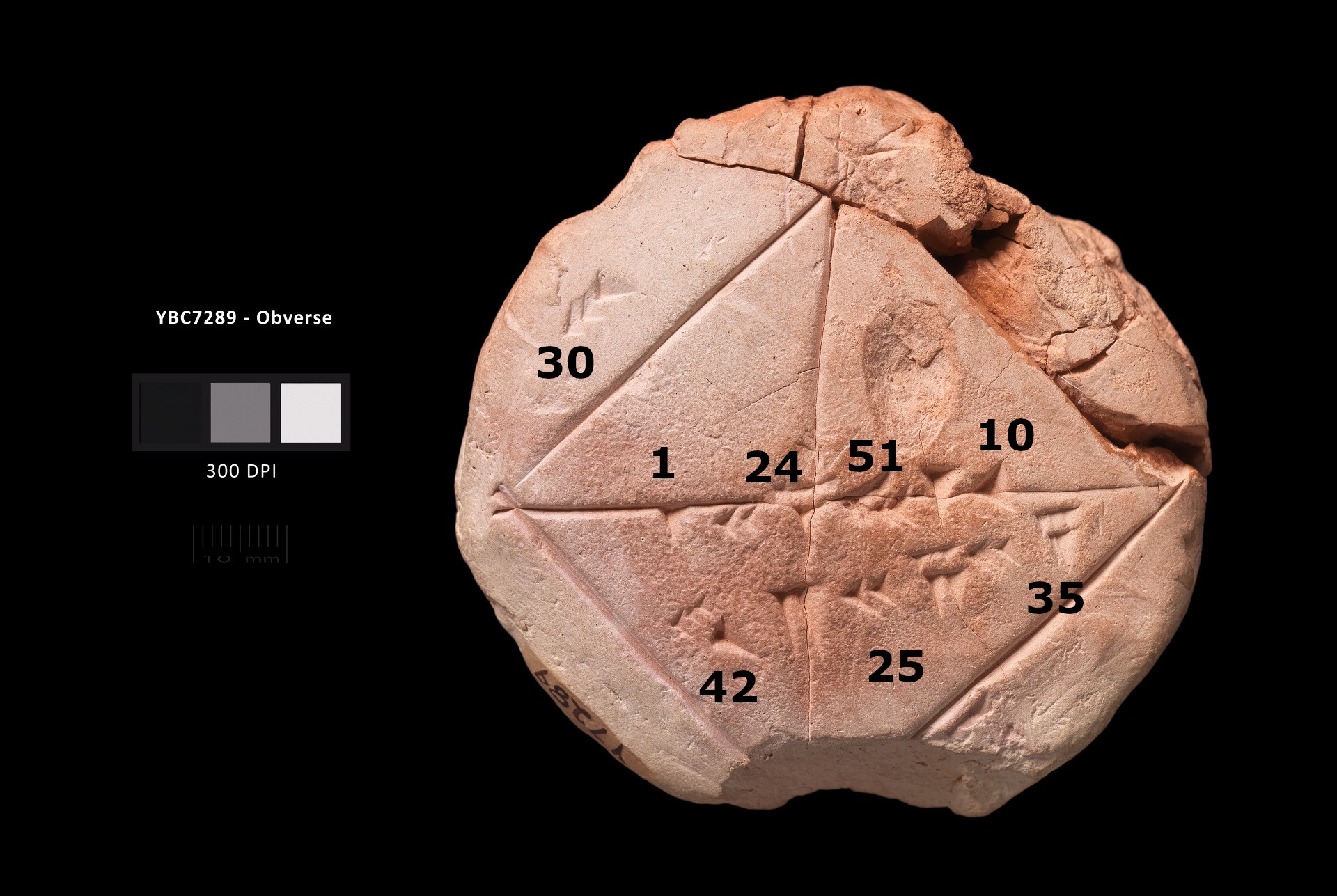
The obverse shows a square with its diagonals drawn. One side bears the number 30, and two sexagesimal numbers appear along a diagonal: 1;24,51,10 and 42;25,35. The usual reading today is that the first is the square’s diagonal coefficient — an approximation to √2 — and the second is the diagonal length for a square of side 30. This is the usual interpretation offered by CDLI, MacTutor and MAA.
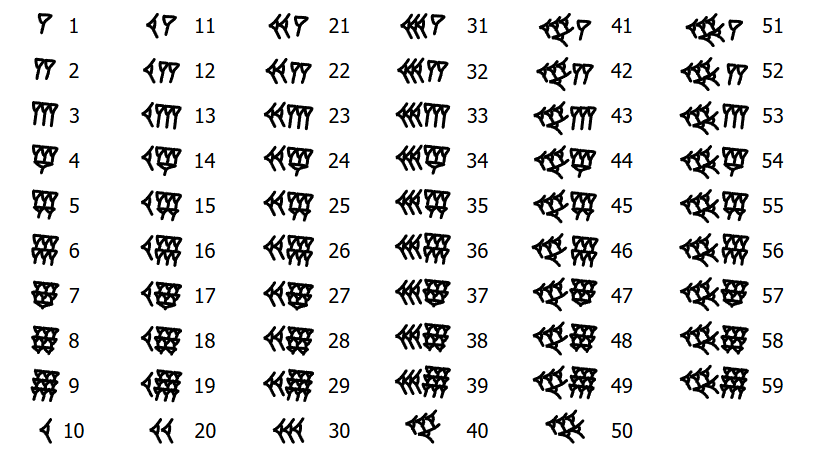
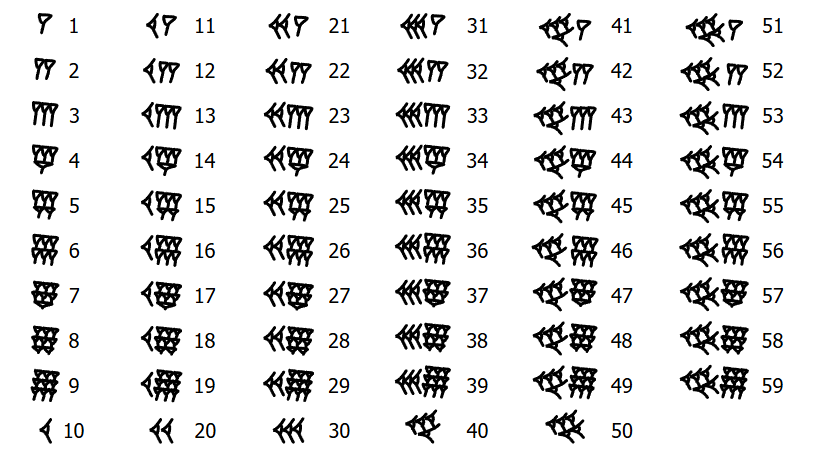
To appreciate the tablet’s beauty, we need to recall how Babylonian numeration worked. Many people know that it was sexagesimal, or based on 60. In modern transcription, 1;24,51,10 means
1 + 24/60 + 51/60² + 10/60³
Converted into decimal notation, this is approximately 1,4142129629, while √2 ≈ 1,4142135623. The difference is only about −5,99 × 10⁻⁷. For such an early period, this is astonishing accuracy.
The mathematical meaning is clear. If the square’s side is a, its diagonal is d = a√2. The tablet labels the side 30, so the diagonal must be 30√2.
Replacing the exact √2 with the Babylonian approximation 1;24,51,10 gives
In decimal notation, this is 42,426388888…, precisely the number written along the tablet’s diagonal. We therefore have a clear mathematical record of a geometric problem rather than a random set of signs: here is the square, its side, the diagonal coefficient and the diagonal itself.
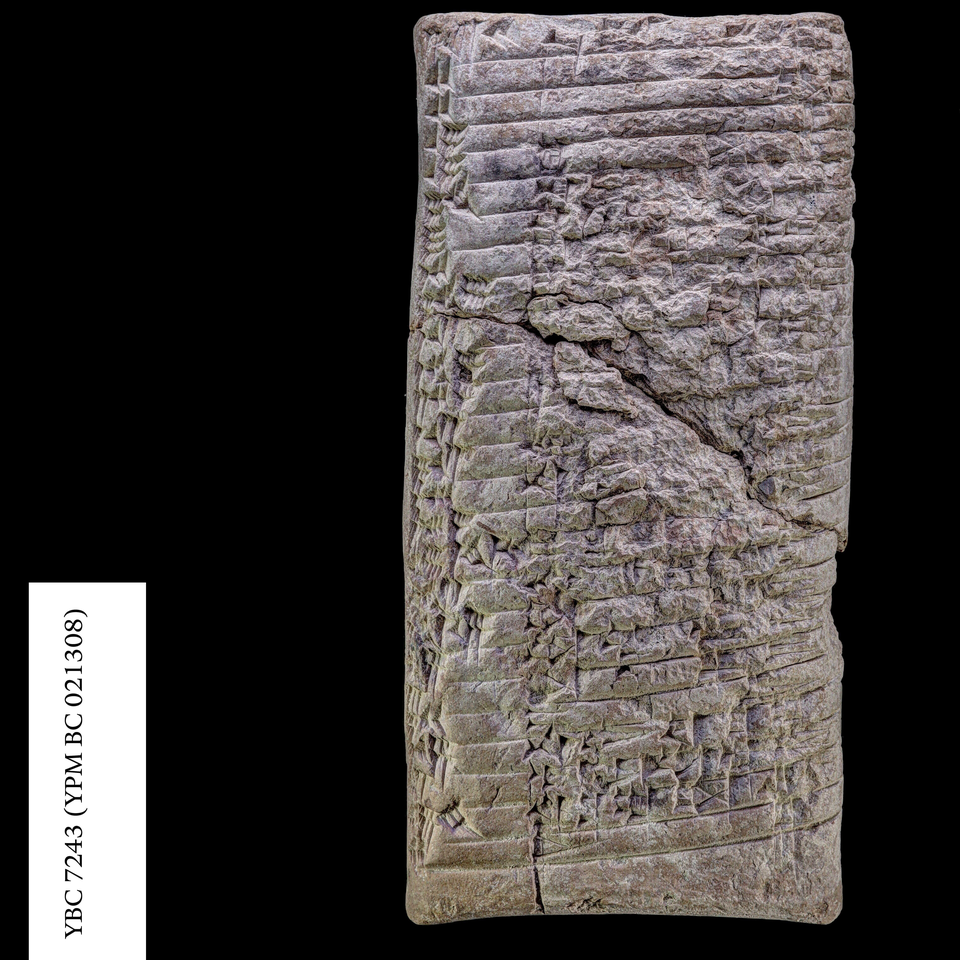
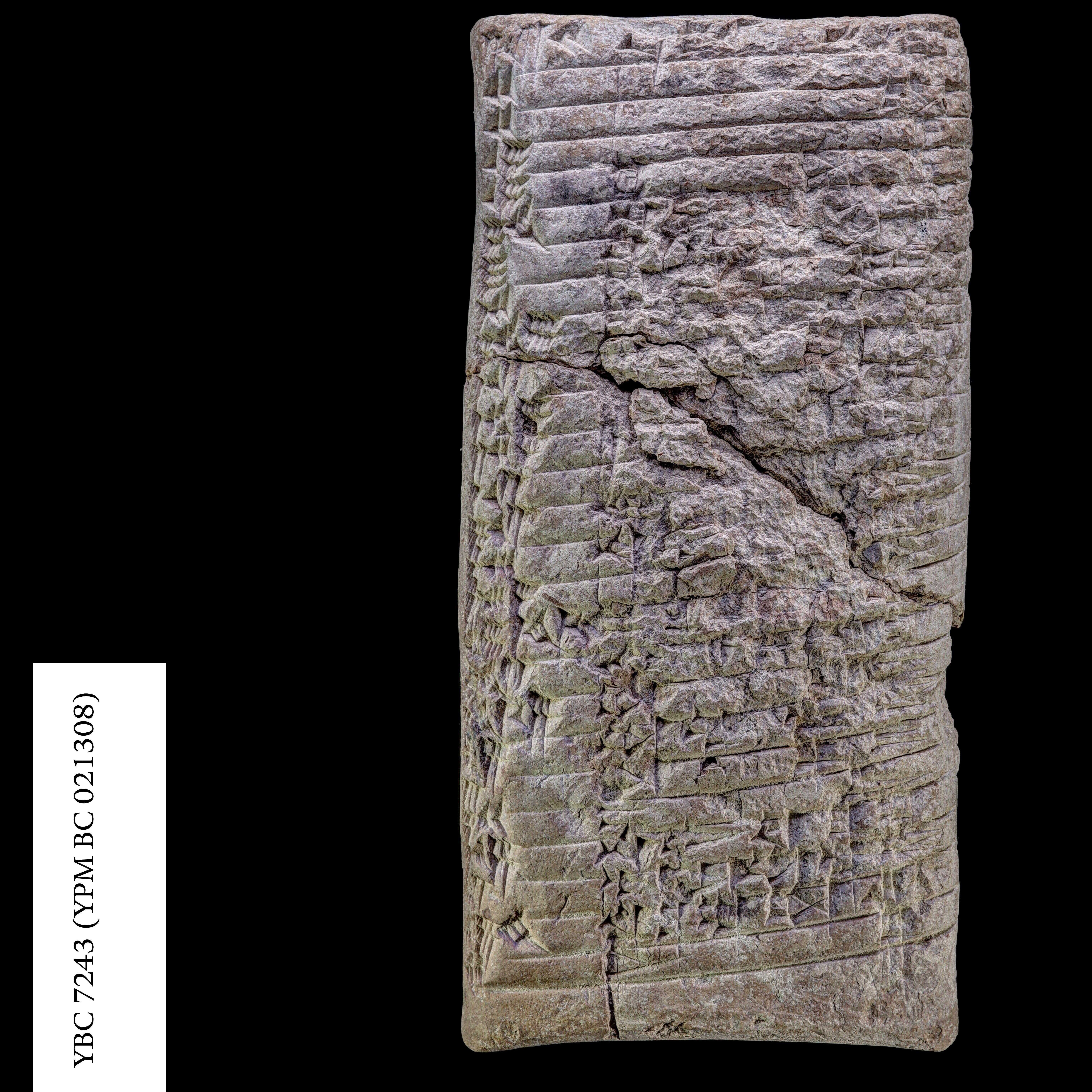
One point matters particularly for mathematical history: the Babylonians apparently used tables of precomputed coefficients. David Fowler and Eleanor Robson’s article shows that 1;24,51,10 was no isolated discovery on a single tablet. It also occurs in the coefficient list YBC 7243, which reads “1;24,51,10 — the diagonal of a square”. This strongly supports interpreting YBC 7289 as a school exercise in which a pupil used an already known reference coefficient. All this was four thousand years ago!
What exercise might an Old Babylonian pupil have been given?
Suppose a Babylonian scribe knows that a square’s side is 30 and its diagonal coefficient is 1;24,51,10. The task is to find the diagonal length.
The solution is simple:
Converting the coefficient into decimal notation gives:
This is the number 42;25,35. In other words, the lower inscription along the square’s diagonal is simply the result of multiplying its side by the diagonal coefficient.
Why is this number associated with √2? Because the Pythagorean theorem gives, for a square of side a,
and hence d = a√2.
Setting a = 1 makes the diagonal coefficient √2 itself. The tablet’s 1;24,51,10 can therefore be read as a Babylonian approximation to √2. MacTutor explicitly discusses YBC 7289 in the context of Babylonian geometry and the calculation rule for a square’s diagonal.
There is another elegant point. Fowler and Robson show that 1;24,51,10 is the best four-place sexagesimal approximation to √2. Their article gives examples of the squares of neighbouring numbers, showing that 1;24,51,10 comes closest. They also discuss the coarser approximation 1;25, found in other Old Babylonian texts, and possible procedures for refining it. But we should not attribute to ancient scribes anything the sources cannot establish with certainty. In a later article, David Buckle emphasizes that plausible reconstructions can be proposed using known Babylonian methods, but no complete, unambiguous rule for computing this approximation survives.
The more honest statement is therefore that the tablet shows the Babylonians using a very accurate value of √2, while the way they obtained it remains a subject of research. If anything, this makes the story more interesting. Ancient knowledge has not always survived as a ready-made set of instructions. Sometimes we have a brilliant result but do not know the calculation process.
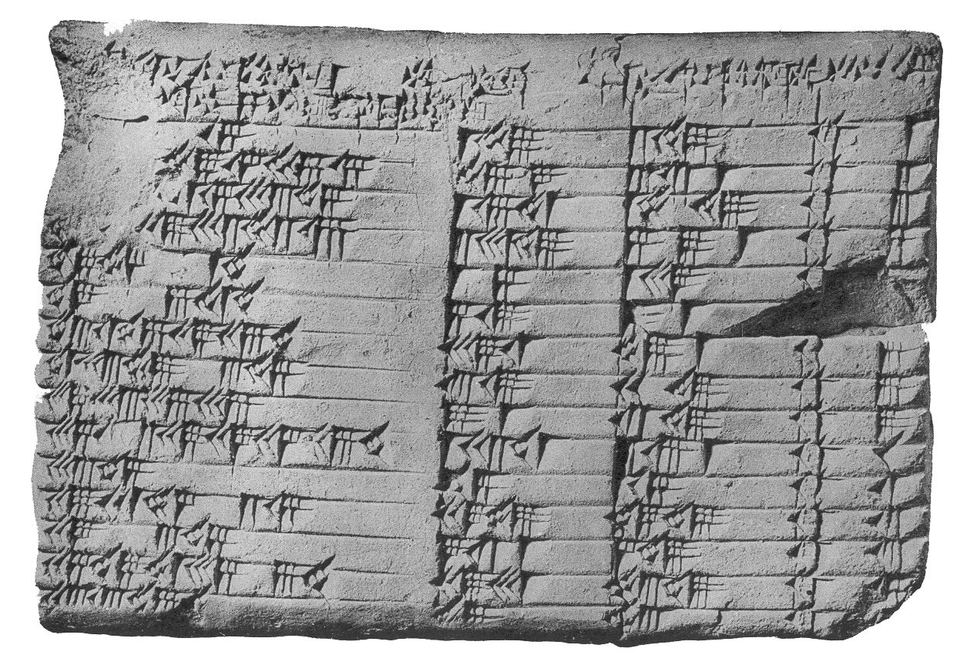
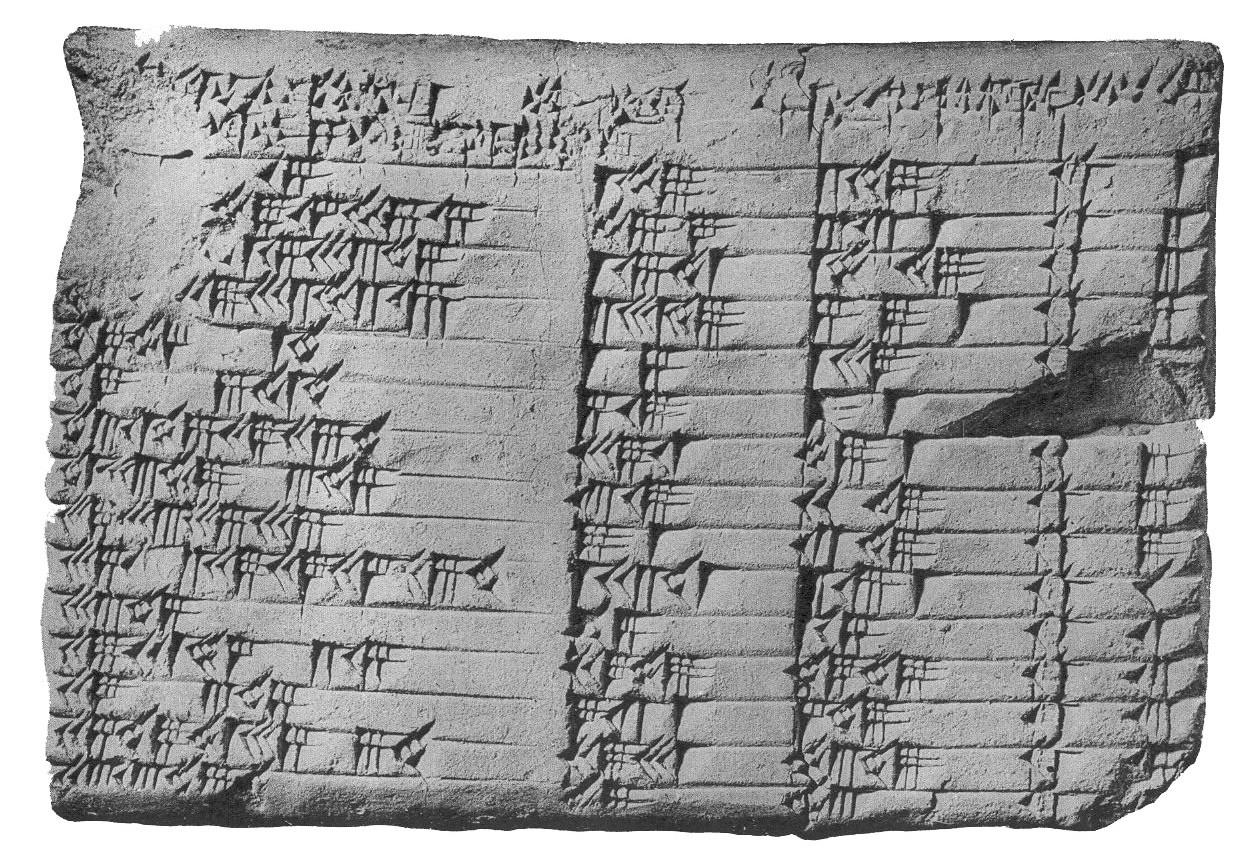
According to CDLI, the reverse of YBC 7289 may once have carried another erased or unfinished example involving a right triangle. This fits the broader picture: Old Babylonian tablets were often working or teaching documents rather than “monuments of science”. Both MAA and Fowler and Robson emphasize this context of scribal schools, exercises, coefficient lists and geometric problems. We have part of a broad computational culture, rather than a solitary miracle.
Another subtlety is worth bearing in mind. Babylonian notation did not itself indicate where to imagine the sexagesimal “point”. Some researchers have therefore discussed alternative readings of the tablet’s numbers, including as reciprocal quantities. Fowler and Robson mention this possibility. Nevertheless, the ordinary reading — a diagonal of a square with side 30 — is considered the most natural. Historically, this matters: different interpretations exist, but they do not erase the tablet’s central meaning.
Afterword
YBC 7289 is a fine example of ancient mathematics suddenly seeming modern in spirit. A small school tablet, a few cuneiform signs and a square with diagonals give us more than a scribe’s notes: they record an accurate numerical approximation to an irrational quantity.
The tablet’s story also shows that long before Greek, Arab and classical European mathematics, and long before familiar school symbolism, people could work with numerical relationships at a very high level. The story of √2 began with wet clay, rather than a board and chalk.