

Some episodes in the history of mathematics resemble investigations more than rigorous theorems. A piece of testimony seems astonishing. Books and dictionaries repeat it. Then it emerges that everything may have begun with a misunderstanding, a joke or a misinterpreted method of counting.
One such episode concerns the Māori, the indigenous Polynesian people of Aotearoa, New Zealand. In the XIX century, an unusual idea appeared in European literature: supposedly, Māori had once counted by elevens rather than tens.
At first this sounds almost unbelievable. Decimal counting seems most familiar: ten fingers, ten units in a ten, then hundreds and thousands. Yet the history of science shows that what is “natural” to one observer is not always the only possibility.
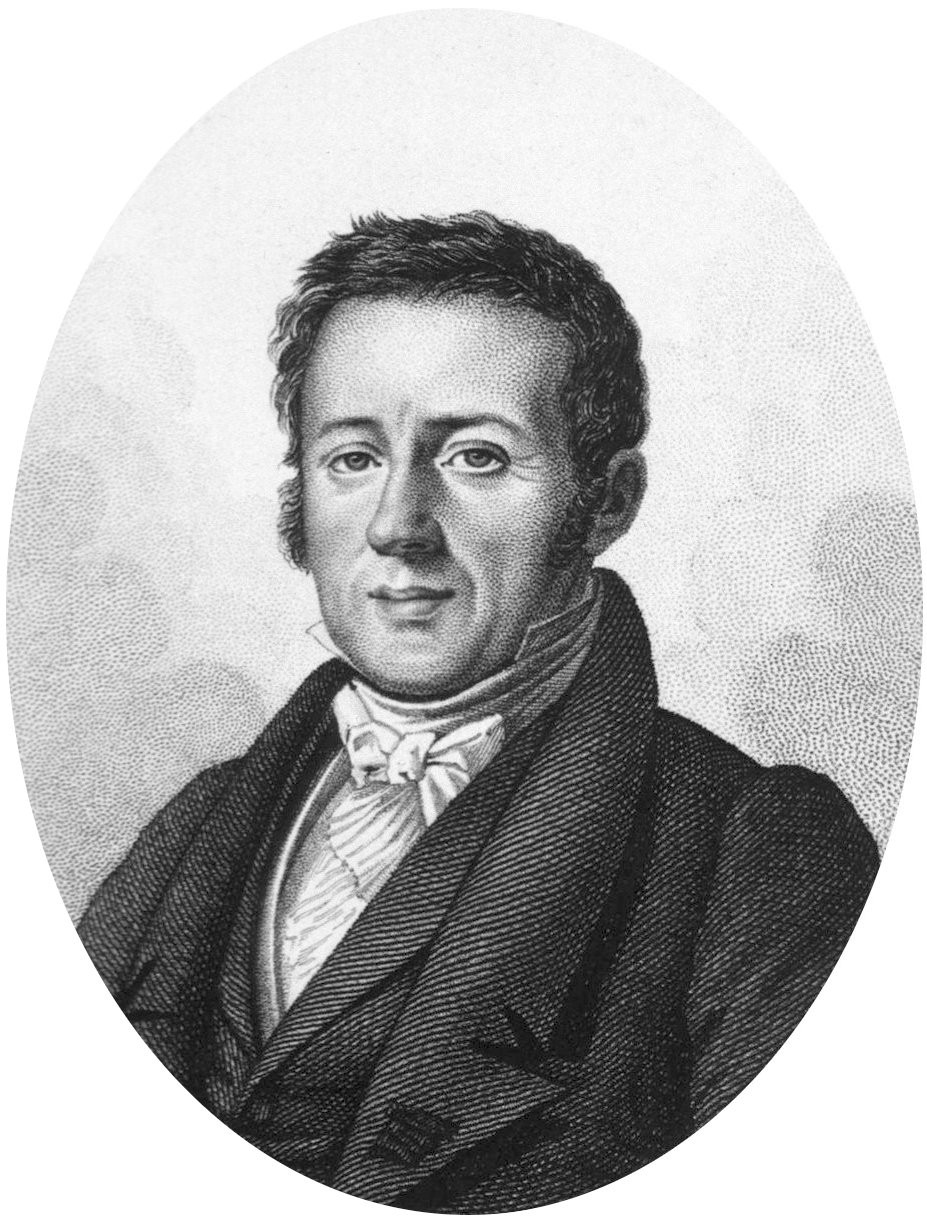
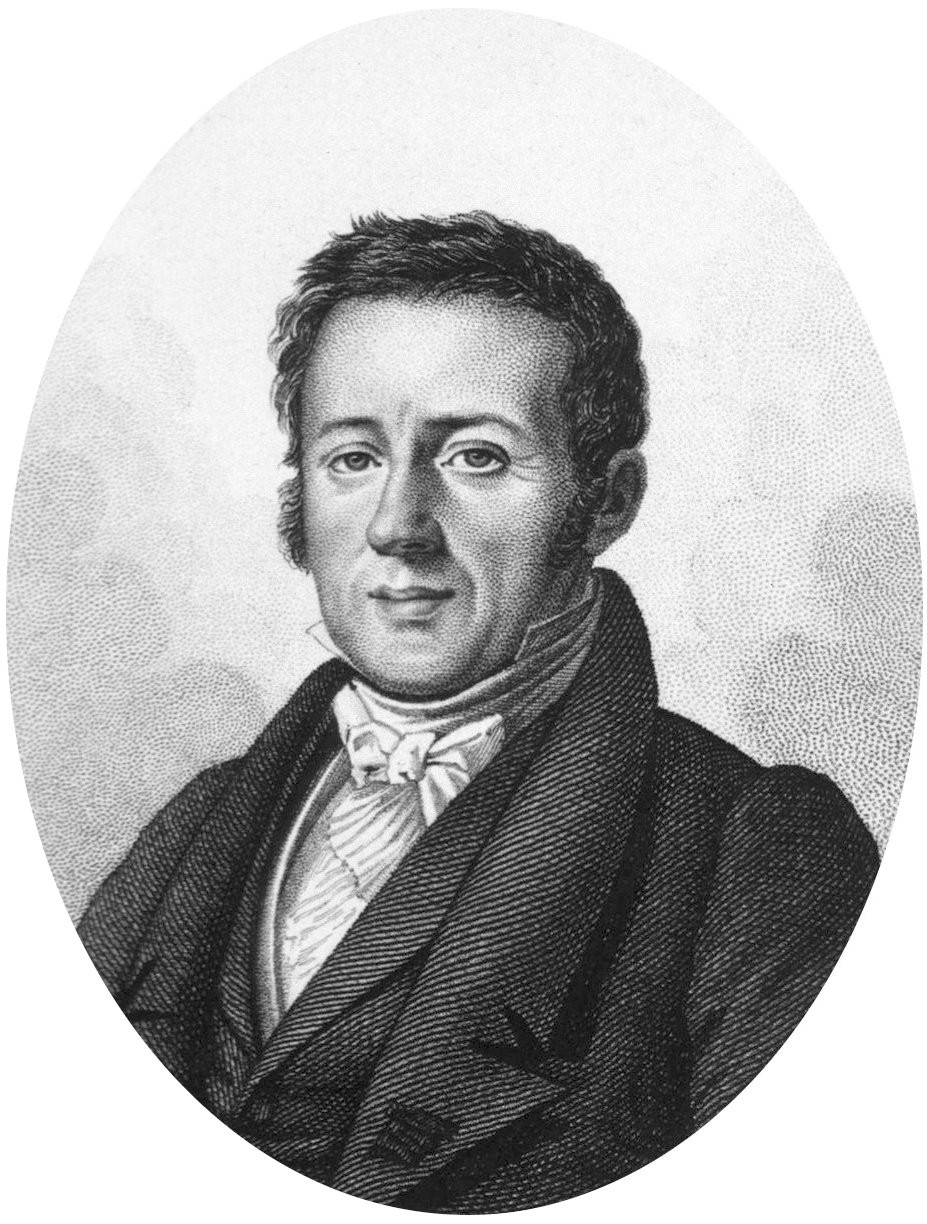
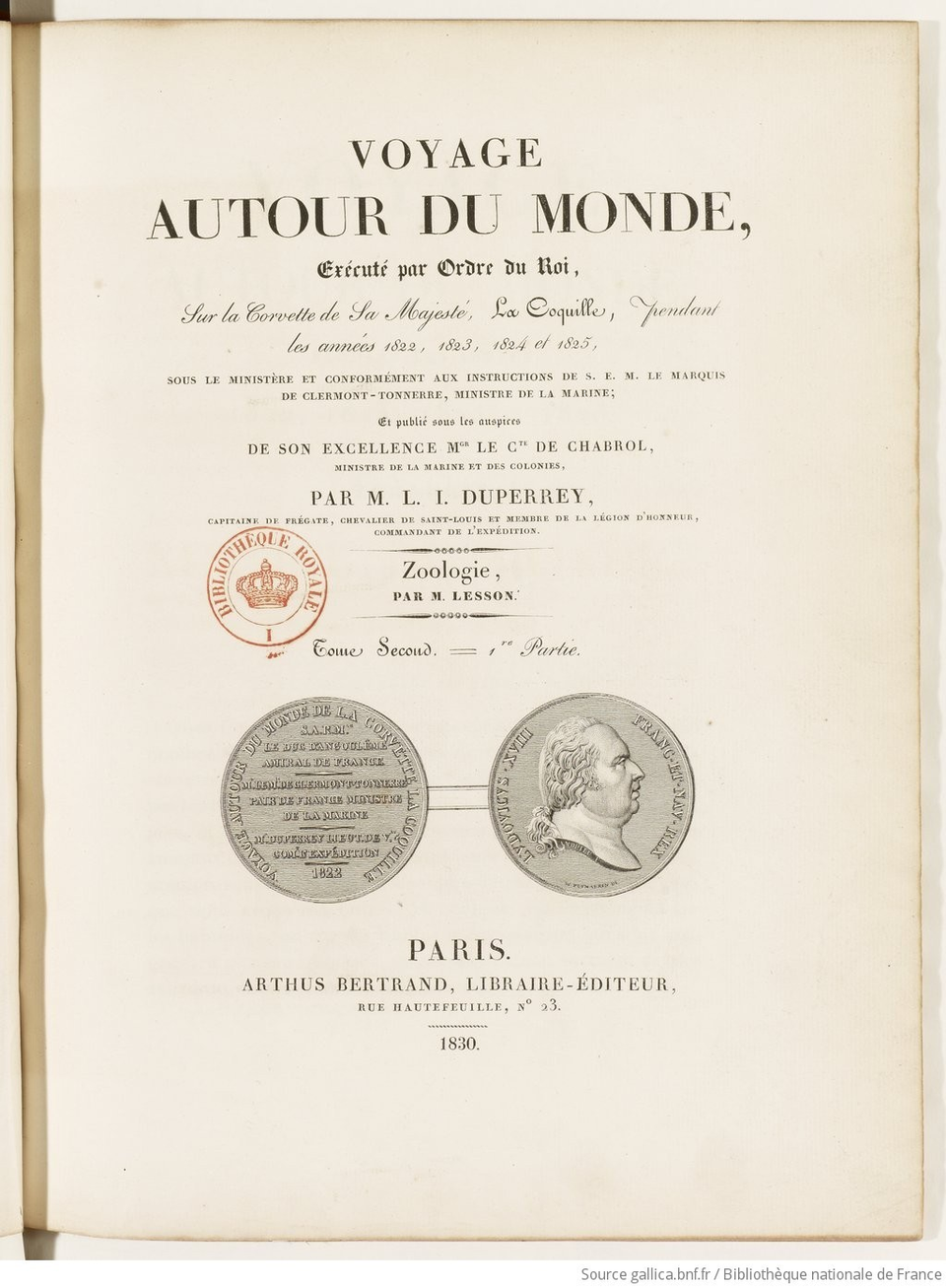
In 1822–1825, the French corvette La Coquille sailed around the world under Louis-Isidore Duperrey. In April 1824, the expedition was in New Zealand’s Bay of Islands. Its members included the physician and naturalist René-Primevère Lesson and the young naval officer Jules Poret de Blosseville.
Their names later became associated with an unusual report: that Māori arithmetic was based on the number 11. Retellings included numeral forms supposedly corresponding to 11, 121 and 1331 — the powers of eleven.
Some European authors found this so strange that the story took on a life of its own. It passed from one work to another, entering surveys and discussions of numeral systems and appearing to offer a rare example of a base-eleven system.
But this is where the real historical mathematical intrigue begins.
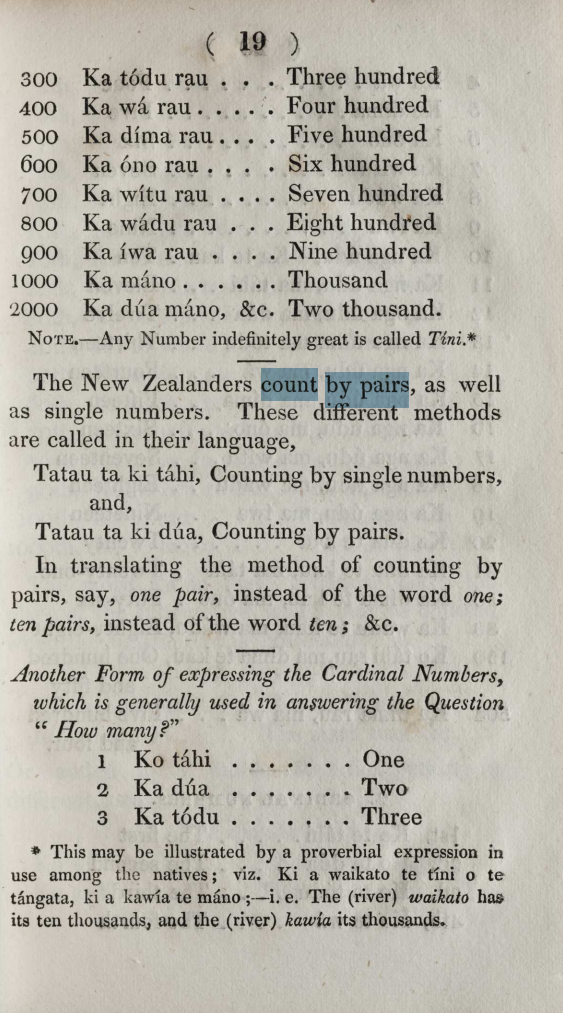
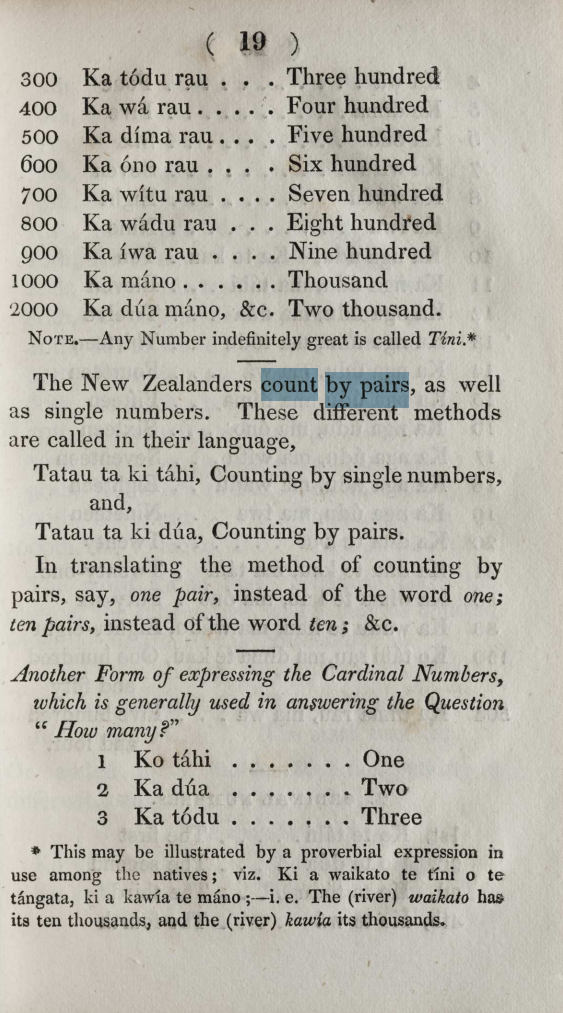
Early Māori grammars and dictionaries do not confirm a base-eleven system. Thomas Kendall and Samuel Lee’s grammar of 1820 already describes numerals in ordinary decimal terms: ten, twenty, a hundred, a thousand. It also expressly notes, however, that Māori could count pairs as well as individual objects.
This detail matters. When someone counts pairs, ten counting units may mean twenty physical objects. An outside observer, particularly one with little understanding of the language and context, can easily mistake this for an “unusual” system, even though its internal logic is perfectly coherent.
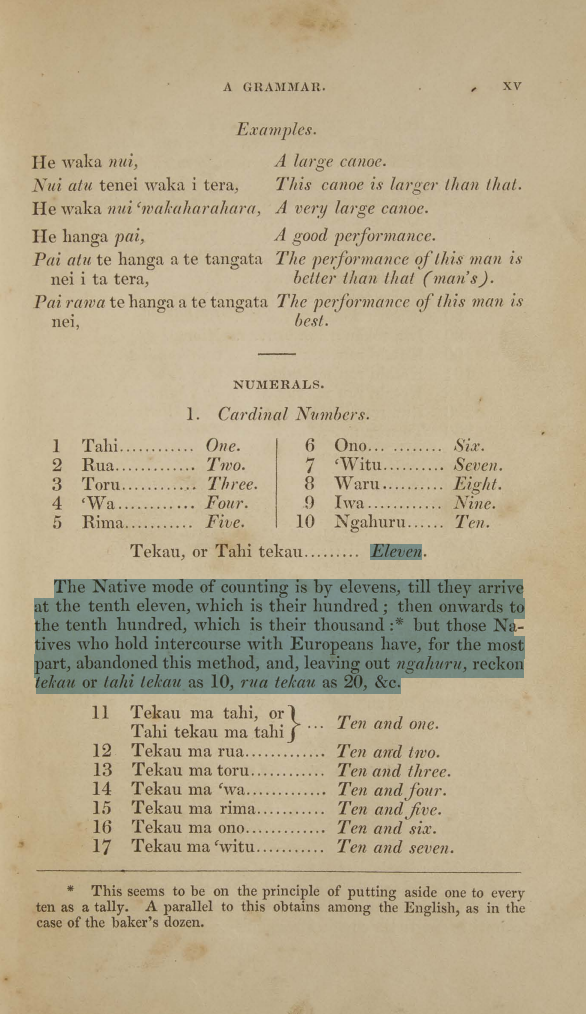
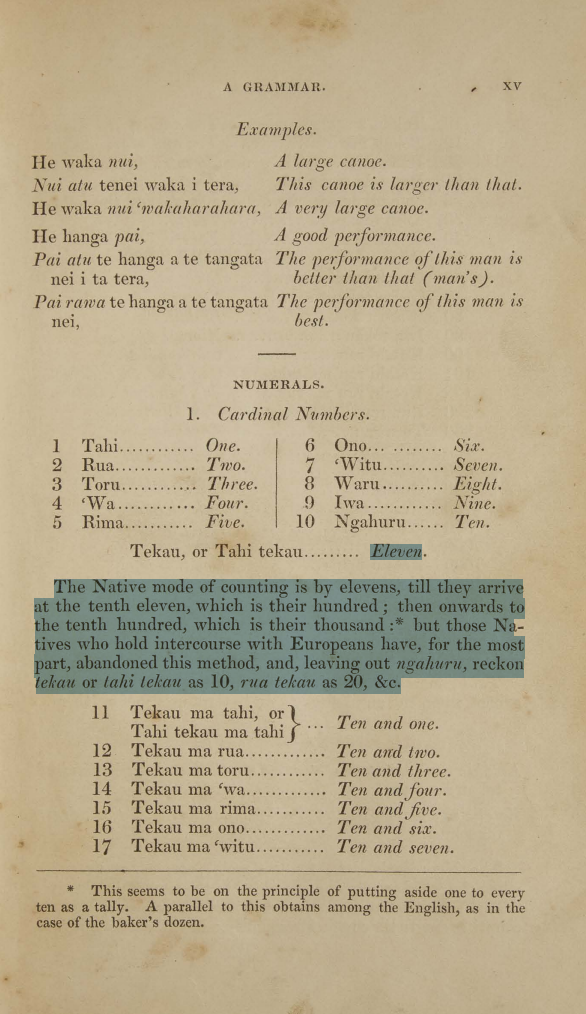
William Williams’s dictionary of 1844 contains an even more revealing passage. It explicitly mentions “counting by elevens”, but offers an explanation alongside it: perhaps one object in every ten was set aside as a marker. Thus, already in the XIX century, a more careful author saw that this need not mean base 11; it might be a particular way of grouping objects and recording a count.
What might have happened in practice?
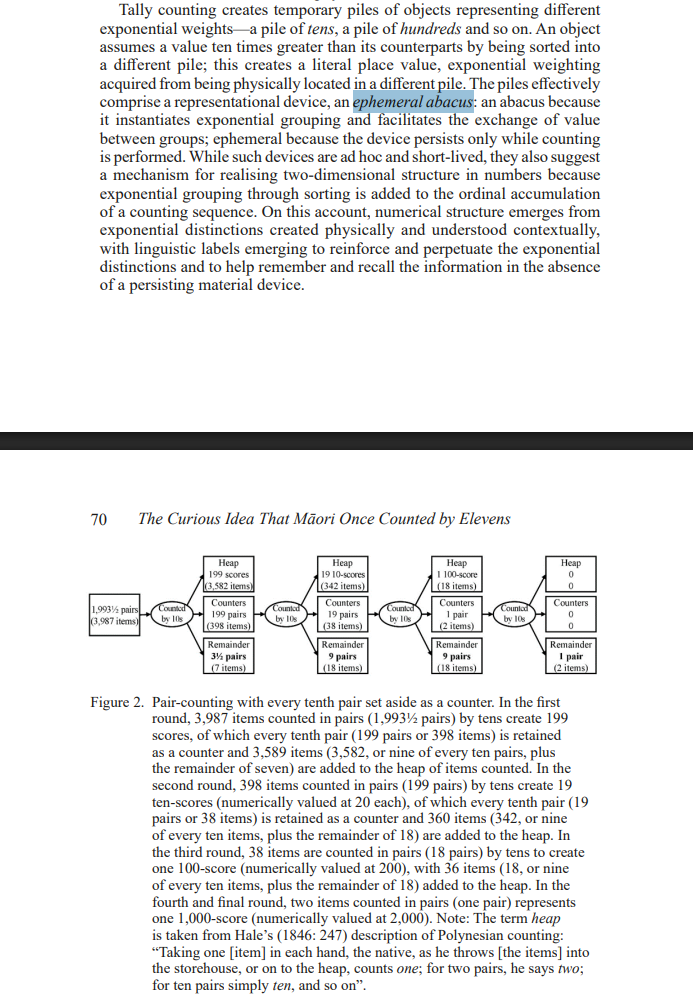
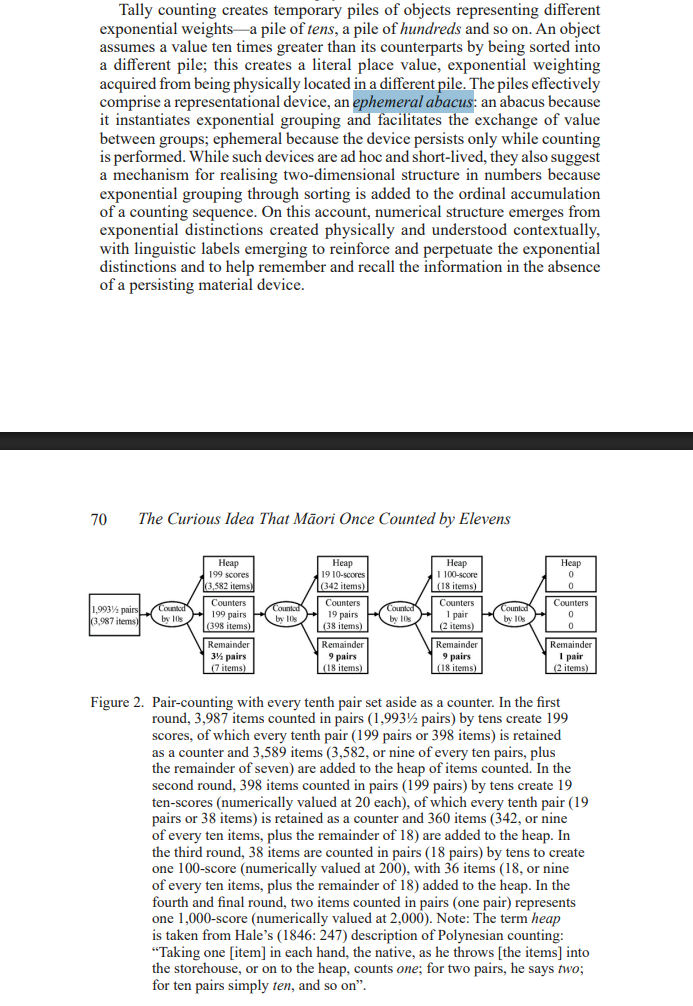
The contemporary researcher Karenleigh Overmann has proposed treating this case as evidence of a complex oral and object-based counting technique rather than proof of “base 11”. One possible mechanism worked as follows: while counting objects, one in every ten was set aside to mark a completed group. These markers could then themselves be counted, forming the next level of accounting.
This resembles a calculating device, but without a board, beads or written notation. Objects temporarily become place values. Some lie in the main group, while others are set aside to represent completed tens or larger groups. Once counting was finished, this temporary structure could be dismantled.
Overmann therefore calls such a system an “ephemeral abacus”: a temporary counting device that exists only while the count is in progress.
It is especially important here to avoid the trap of familiar assumptions. Mathematics does not always begin with written formulas. Sometimes it lives in hand movements, the arrangement of objects, practical arithmetic, words, and rules governing exchange, farming, building and navigation at sea.
An outsider observing this counting may record only what they understood through their own cultural habits. What they understood is not always what actually happened.
In the Māori case, another feature was involved: counting in pairs. Such practices were well known in Polynesian languages. People might count individual objects, pairs, bundles or groups. The same collection of physical objects could therefore receive different numerical expressions depending on what was counted: single objects, pairs or groups.
Modern Māori dictionaries give the ordinary form for 11: tekau mā tahi, “eleven”. Tekau means ten; ngahuru can also mean “ten”. This again shows that the claim “Māori counted in base 11” fails scrutiny even at the level of basic numerals.
The story’s value, however, lies beyond catching earlier authors in an error. Something else is much more interesting.
Here we see how historians of mathematics work with fragile evidence. There is a traveller’s report, a dictionary, a grammar, oral practices and linguistic forms. All must be compared. Only then does an odd curiosity become a serious discussion of how different cultures organized counting.
Māori mathematics is no less interesting because “counting by elevens” proved doubtful. On the contrary, behind the apparent strangeness lies something more subtle: the ability to count in large groups without writing, use objects as temporary place values, and move from counting individual items to pairs and groups.
Sometimes the history of mathematics teaches caution rather than new formulas. Another culture’s mathematics cannot be understood solely through a familiar school table. It may have its own units, grouping methods, oral algorithms and “calculating machines” unlike ours.
Numbers are more than digits on paper. They are also a way to come to terms with the world: count a harvest, divide possessions, remember a quantity and pass knowledge to another person. The story of “elevens” reminds us that sometimes the most interesting mathematics begins where a researcher first thinks: “That cannot be!”