
It is hard to imagine modern mathematics without formulas and equations — perhaps that is why some people dislike it. There was once a time when mathematics existed but formulas did not. Today, every pupil who has studied algebra remembers a formula named after a person.
For a=1:
Viète’s formulas.
Viète’s famous formulas, expressing the relationship between the roots and coefficients of a quadratic equation, are a monument to this great man. He is regarded as the “father” of symbolic algebra. Yet this discovery might never have happened had the Holy Spanish Inquisition, which sentenced Viète in absentia to be burned at the stake, carried its schemes through. He might also have died in the great massacre of Huguenots on Saint Bartholomew’s Night, when many of his friends were killed.
The fates of peoples, civilisations and religions intertwine in remarkable ways. The same happens in the history of science. The peoples of Islamic countries did especially much for science during the Middle Ages. They preserved the science of the ancient Greeks and further developed the rich knowledge of the ancient Indians. They brought this knowledge to Europe. An enormous part of Asia and Africa, and even part of Europe — Spain and Portugal — had come under the Arab caliphate. One achievement that Arabic mathematics gave the whole world was algebra.
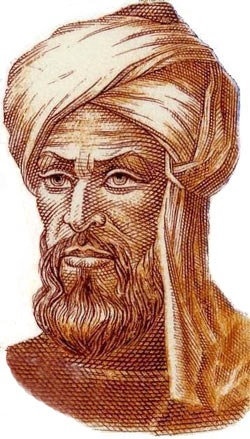

In the ninth century, the mathematician Muhammad al-Khwarizmi lived in Baghdad. He wrote a book on general rules for solving equations. Its title included the word “al-jabr”, meaning the “completion” or “restoration” of subtracted terms.
The book was later translated into Latin in Europe, and the word “algebra” arose to describe the science of solving equations. The term also entered medicine as the name for the art of restoring an injured part of the body. The Arabs, followed by the Spaniards, called the surgeon’s art “algebra”. An algebraist was a bonesetter. The Moors gave algebra to the Spaniards, from whom it spread into Europe. Its further development belonged to Viète, an unwilling “enemy of Spain”.
The late Middle Ages… One of the most dramatic periods in human development, also called the Renaissance or the early modern period. Nation-states were growing stronger, and different religions played a major role in this process.
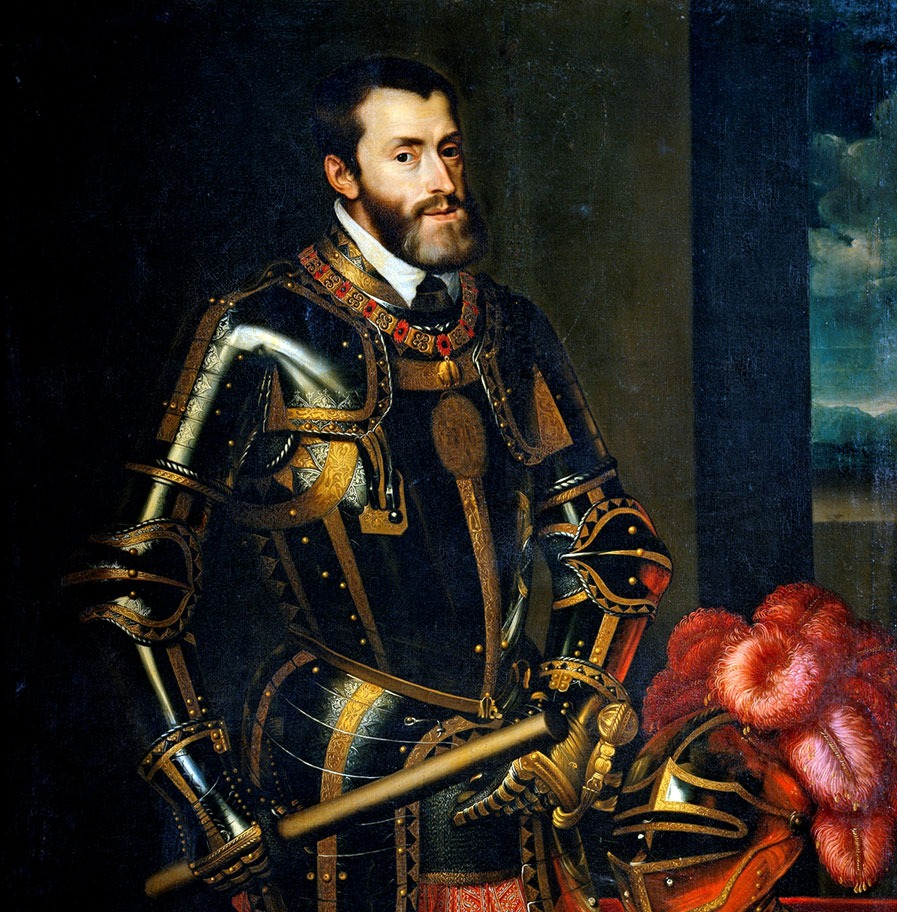

In 1519, the Spanish king Charles V was elected Holy Roman Emperor. He dreamed of creating a worldwide Catholic power. But in the sixteenth century, the Roman Catholic Church split. The Reformation, a religious revolution, gave rise to new Christian churches. Religious wars began between Catholics and Protestants. Charles V’s son, King Philip II of Spain, led the struggle against the Reformation. This religious fanatic supported Catholics in Germany, England and France against Protestants. Philip also waged ruinous wars, including war with France.
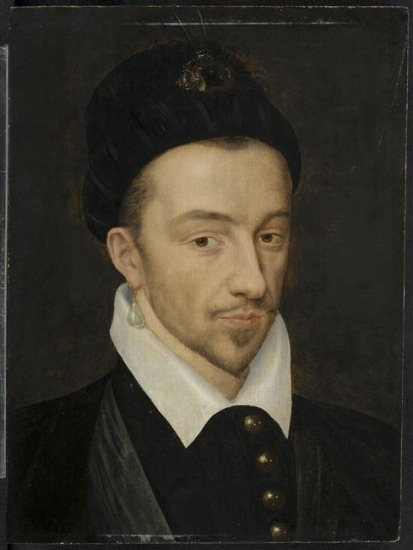

During the reign of Henry III of Valois (1574–1689), France was engaged in a civil war between Catholics and Huguenots, the French Protestants. It had begun under Charles IX (1560–1574). Its most brutal event was the bloody massacre on the night before Saint Bartholomew’s feast in 1572. The wars continued. King Henry III himself and the Catholic leader Henry of Guise both fell victim to fanaticism.
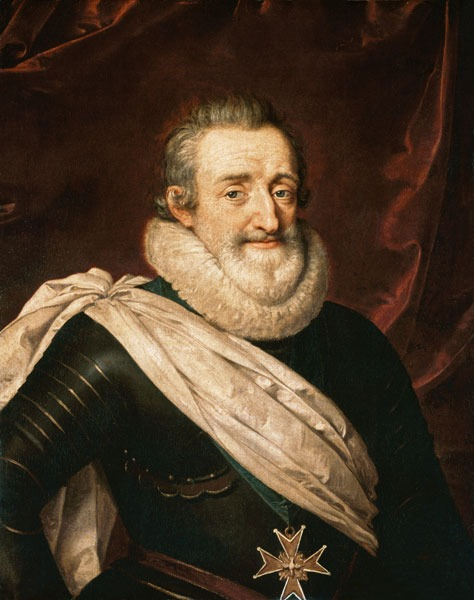

Henry of Navarre (1594–1610), a shrewd politician who converted to Catholicism, then ascended the throne as Henry IV. Under this “glorious” king, France ended its war with Spain.
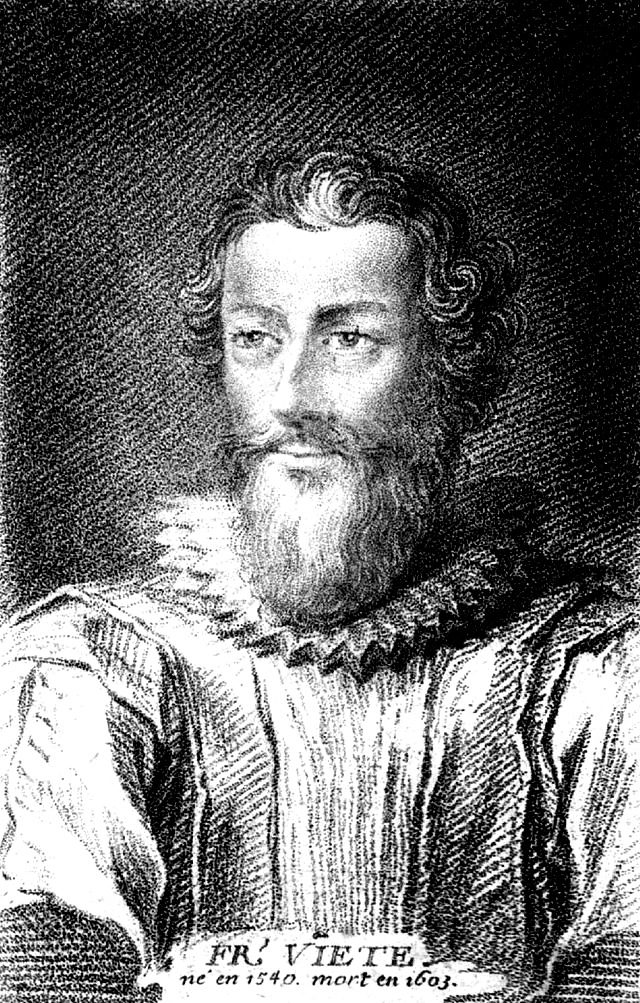

The future reformer of algebra, François Viète (1540–1603), lived through these wars. He was born in southern France, in the small town of Fontenay-le-Comte, near La Rochelle, then a Huguenot stronghold. He spent much of his life alongside the movement’s most prominent leaders, although he remained Catholic himself. Viète’s father was a prosecutor, and his son also chose the legal profession. He became a lawyer, then secretary to the Huguenot nobleman de Parthenay and tutor to his daughter Catherine. During this period he developed an interest in mathematics. He then moved to Paris with the Parthenay family, meeting prominent French and Italian mathematicians. In 1571 he entered government service and became an adviser to King Henry III.
While serving the state, Viète remained a scholar. He became famous for deciphering the intercepted correspondence between the King of Spain and Henry’s opponents in France, enabling the king to keep abreast of his enemies’ actions. The Spaniards could not believe that so complex a cipher had been broken. Viète was accused of dealings with the devil and sentenced to be burned.
In 1584, at the insistence of the Guises, Viète was removed from office and expelled from Paris. He returned only in 1589. He then entered Henry IV’s service, holding a responsible government post and enjoying enormous respect as a mathematician. The peak of his mathematical creativity came during his enforced absence from Paris. Viète devoted this unexpected leisure to creating a universal mathematics.
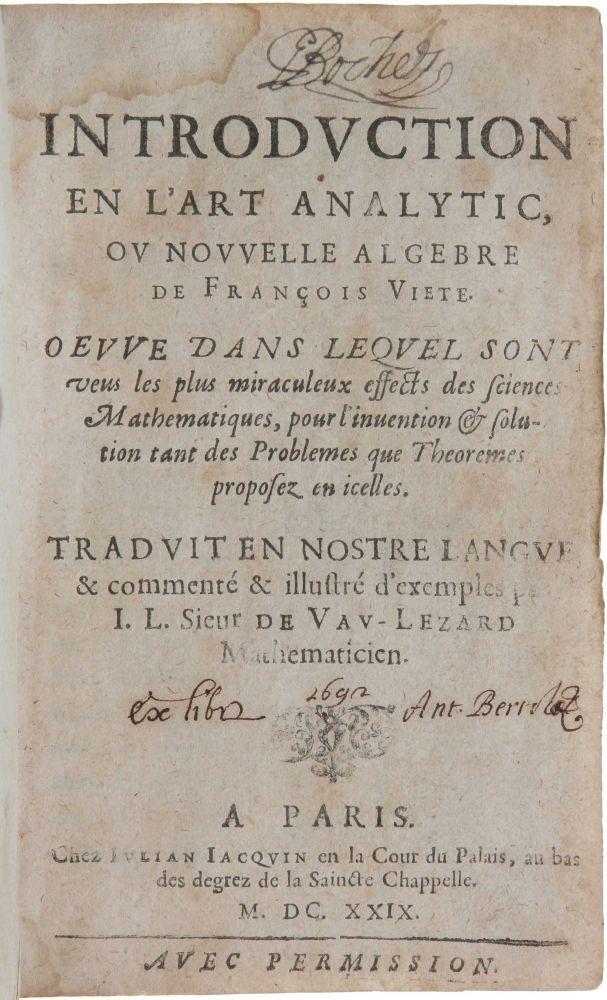

His famous Introduction to the Analytic Art appeared in 1591, written in the language of the new symbolic algebra. Viète showed that manipulating symbols allows a problem to be solved in general form. This is the whole power of algebra. He was the first to use letters for coefficients as well as unknowns.
His profound knowledge of algebra also gave Viète great advantages in trigonometry. He derived formulas expressing the sines and cosines of multiple angles. These formulas enabled him to solve an equation of degree 45, the Dutch scholar Adriaan van Roomen’s “challenge to the mathematicians of the world”.
According to the story, at a reception held by Henry IV, the Dutch ambassador said that van Roomen had set a problem for the world’s mathematicians, but apparently France had none who could solve it. Henry replied that France did have such a mathematician and summoned Viète, who solved the equation immediately.
Viète’s works shaped the development of all early modern mathematics. In mathematical history, his name rightly stands alongside those of Descartes and Newton, in whose works algebra developed further.