
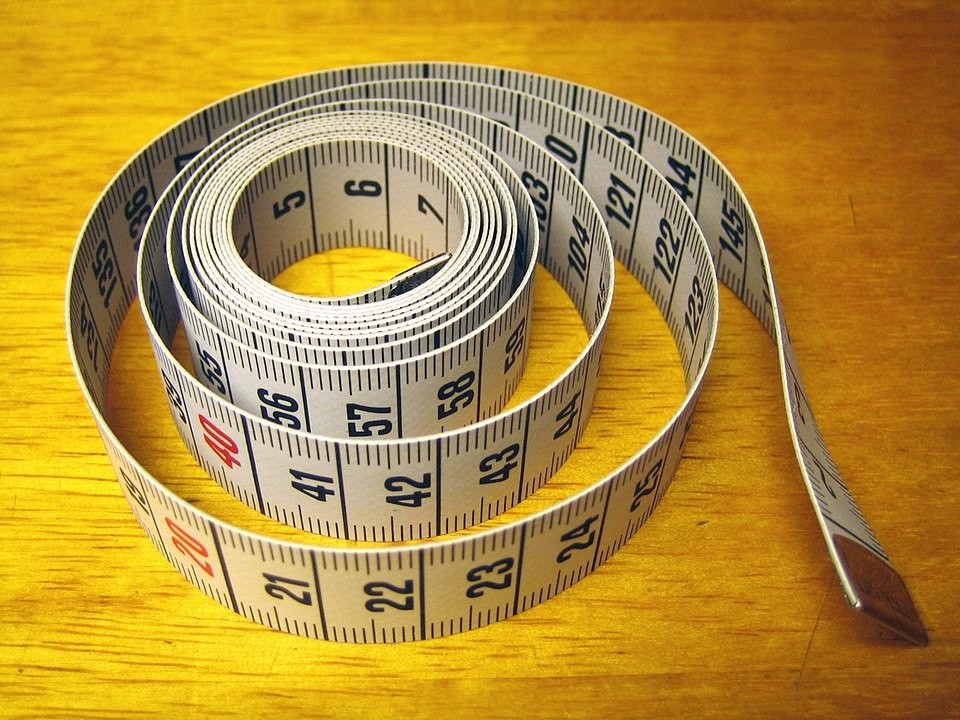

A tape measure — called ruletka in Russian, from French roulette, “little wheel,” derived from rouler, “to roll” — is one of the world’s most widely used measuring tools. It is a flexible graduated strip of metal or fabric, rolled into a drum or case, for conveniently measuring lengths and perimeters. It is used in everyday life, construction, land surveying and geodesy.


Flexible measuring tapes have been known since antiquity: craftspeople and land surveyors in Asia and Europe used braid and linen or silk ribbons. The Chinese scholar Cheng Dawei used a precursor of the instrument as early as the sixteenth century. He measured plots of land with a tape wound into a roll.
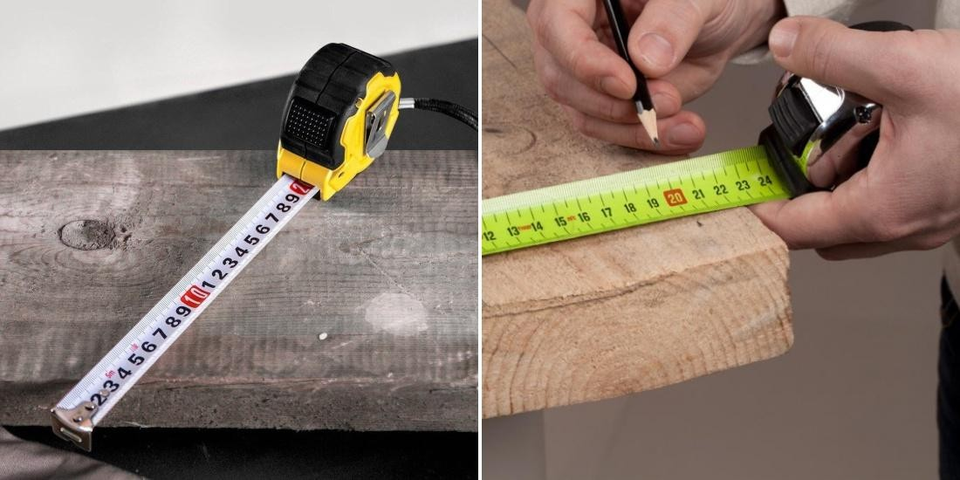
James Chesterman’s steel tape (England, 1829) brought a revolution: it was strong, thin and able to hold its shape. The tape measure acquired its modern pocket form through a spring mechanism with a lock, patented in the United States by Alvin Fellows in 1868: pull it out, measure, press to lock, release, and the tape retracts by itself.
Tape measures can be classified by scale length, tape material, coating, scale accuracy class and the design of the tape’s free end.
Today tape measures are made with nominal scale lengths of 1, 2, 3, 5, 10, 20, 30, 50 and 100 m. They are graduated in millimetres, centimetres, decimetres or metres. Inch and combined scales are also available.
There are several kinds of rewind mechanism:
- A return spring: the tape retracts when released and takes some effort to pull out of the case.
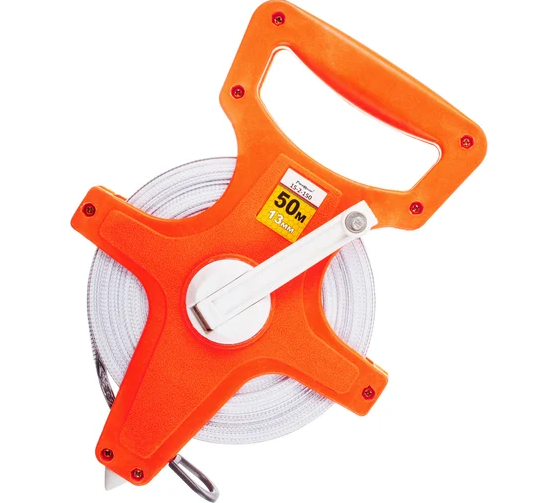
- A protruding rotary handle connected to the tape reel: turning the handle winds the tape back in.
Spring-return tape measures usually have a lock to prevent unintended retraction. A firmly attached hook sits at the free end of the tape. This is usually a metal plate bent at a right angle, preventing the end from disappearing into the case.
A tape measure may have an electronic display for reading measurements.
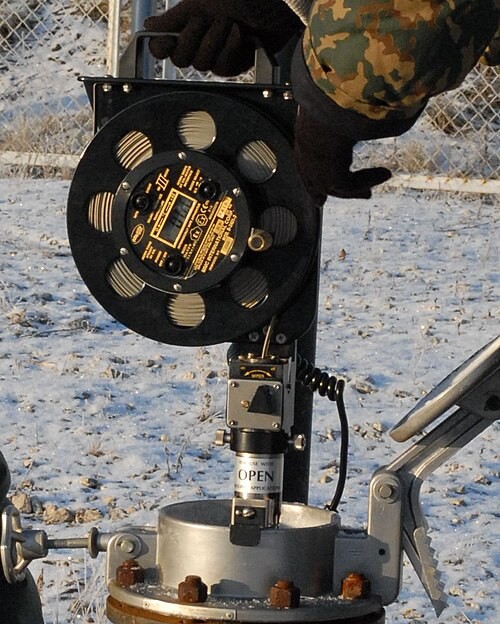

Where tape measures are heading:
- Digital tape measures: laser rangefinders that measure heights and diagonals without an assistant and offer area and volume functions.
- Hybrids: tape measures with digital displays that read distance from a roller, or ultrasonic models.
- “Smart” tape measures connected to a smartphone: they send dimensions directly to a drawing or note and monitor measurements.
- Electronic tapes for oil or water tanks: they have level sensors and help with metrological certification.
Further reading
- Great Soviet Encyclopedia, 3rd ed., vol. 22. A. M. Prokhorov, editor-in-chief. Moscow: Sovetskaya Entsiklopediya, 1970–1978. [In Russian.]
- Znamensky, M. A. Field Measurement. Moscow: Uchpedgiz, 1960. 192 pp. [In Russian.]
- Nikitin, N. N. Geometry: A Textbook for Grades 6–8. Moscow: Prosveshcheniye, 1969. 216 pp. [In Russian.]