

In May 1727, a twenty-year-old young man walked along “Nevsky Perspective”. He had just arrived in St Petersburg from Basel. The young Swiss, a Master of Arts, had been invited to work at the recently established Academy of Sciences. “There was nothing magnificent in the whole city except the Neva, not yet adorned with its granite frame. Bare dams, canals without embankments and wooden bridges everywhere revealed the recent victory of human will over the resistance of the elements,” A. S. Pushkin wrote of that time. Within a few months, the newcomer was speaking the “incomprehensible” Russian language quite fluently.
So began the Russian life of the “great immigrant”, Leonhard Euler. He is one of those notable people who changed their place of residence and became not only recipients of help, but also an inexhaustible source of enrichment for the society they joined. In all, he lived in St Petersburg for 31 years. His remains now rest in the necropolis of the Alexander Nevsky Lavra, beside Lomonosov.
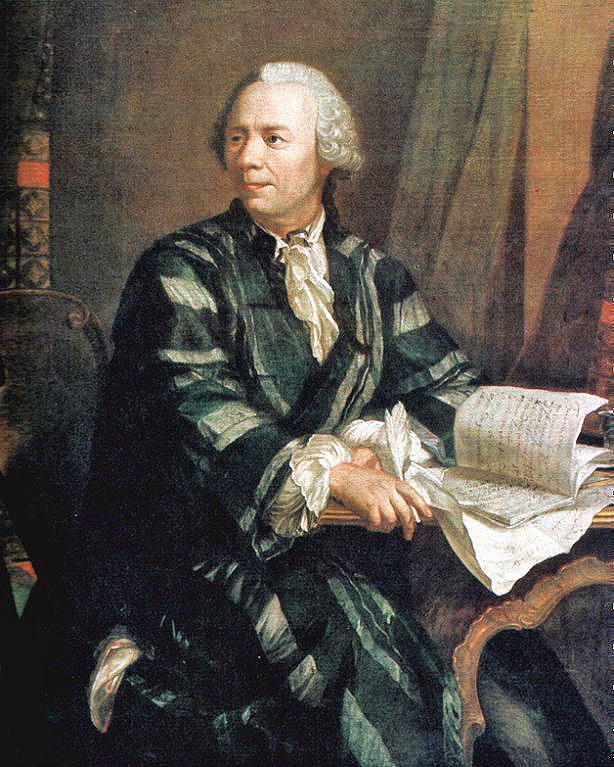
For most of us, the name Leonhard Euler means nothing. This is one of the most obvious historical injustices. He was one of the most brilliant people on earth. Euler’s mathematical genius is a sparkling diamond in the crown of mathematics, the “queen of sciences”. On 15 April 2007, the 300th anniversary of his birth was widely celebrated throughout the educated world. It was in Russia that Euler became the “common teacher” of all mathematicians. For more than fifty years, he was the pride and glory of our Academy. St Petersburg and Russia should be no less proud of him than of Lomonosov.
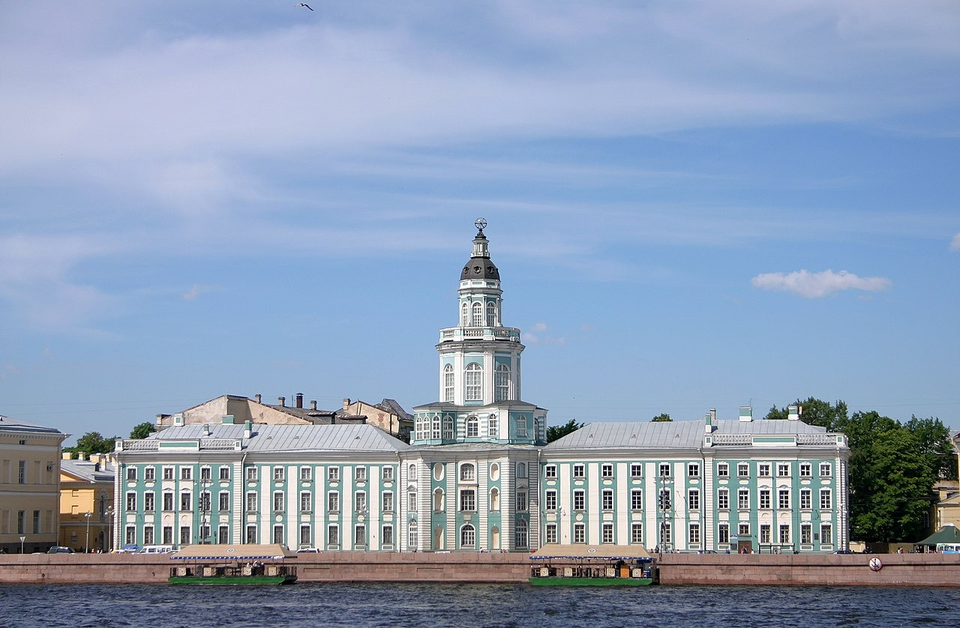

The talented foreigner became an academician in St Petersburg as early as 1731. Euler found highly favourable conditions for scientific work: financial security, the opportunity to pursue the work he loved, scholarly exchange with colleagues, and an annual journal in which to publish his research. These circumstances allowed him to begin working on mathematics and mechanics immediately. From his very first days in St Petersburg, his chief character trait was evident: he could work under any circumstances and in any surroundings. His Latin articles appeared without interruption in the Academy’s publication, Commentaries of the St Petersburg Academy of Sciences, from its 2nd volume for 1727 until his death, and for another 43 years afterwards.
Young, rapidly developing Russia needed solutions to many practical problems. Academician Euler devoted all his energy to developing the Russian land and tackled numerous challenges. He served on the Commission of Weights and Measures and in the Geographic Department. His work on mapping Russia produced an excellent atlas of the empire, used for more than a hundred years. Euler examined many technical projects in detail. His contributions included the design and construction of fire pumps, mechanical saws and hydraulic turbines, and assessments of proposed bridges across the Neva, including the single-arch wooden bridge proposed by I. P. Kulibin, who worked as a mechanic at the Academy.
Above all, however, Euler was a mathematician. His name appears at every turn on the “map” of modern mathematics. He laid the foundations of many mathematical disciplines.
Among all scientists, Euler stands out for his astonishing productivity, extraordinary intuition and phenomenal memory. “Euler calculated as others breathe.” In 1735, the Paris Academy of Sciences offered a prize for calculating a comet’s trajectory. The problem was so difficult that Europe’s academicians asked for 3 months to solve it. Euler undertook to finish the calculations in 3 days, and did so. But the achievement cost him his health: he lost the sight in his right eye. Later, in 1766, he also lost the sight in his other eye. Euler himself faced his blindness with the greatest composure. With his phenomenal memory, he continued calculating and dictating profound and important works. Some 550 of his books and articles were published during his lifetime alone, and the complete list of his works contains 866 titles. His collected works, published in Switzerland in 1909-1975, comprise 72 volumes.
Euler was an involuntary witness to the frequent changes on the Russian throne. At the invitation of the Prussian king Frederick II, he joined the Berlin Academy (1741-1766), while remaining an honorary Russian academician. He continued helping the St Petersburg Academy train Russian mathematicians. Catherine II, who understood the importance of science both for the state’s prosperity and for her own prestige, invited him to return on favourable terms: “And if these do not please him, let him graciously state his own conditions, provided only that he does not delay his arrival in St Petersburg.” In 1766, Euler returned with his family for good. His second St Petersburg period of work for Russia lasted another 17 years (1766-1783).
Euler’s authority in the Academy was immense. Consider the recollections of Princess E. R. Dashkova, appointed its director in 1783. She devised a sure way to convince the academicians of her commitment to science. “Before going to the Academy, I paid a visit to the great Euler … Entering the meeting hall, I told the professors and adjuncts gathered there that, having no claim to scholarship myself, I could find no more solemn way to express my respect for science and enlightenment than to be introduced to the Academy by Mr Euler. I invited him to sit wherever he wished, since any place he occupied would always be the first.” Euler died that very year: he “ceased to live and calculate”. The posthumous honours paid to him did not go unnoticed in Europe and enhanced Russia’s reputation.
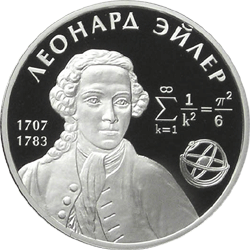
Russia became Leonhard Euler’s second homeland. His five children and numerous grandchildren grew up here. Descendants of the great scholar still live in our country. In 2007, the Central Bank of the Russian Federation issued a commemorative coin marking the 300th anniversary of his birth.