
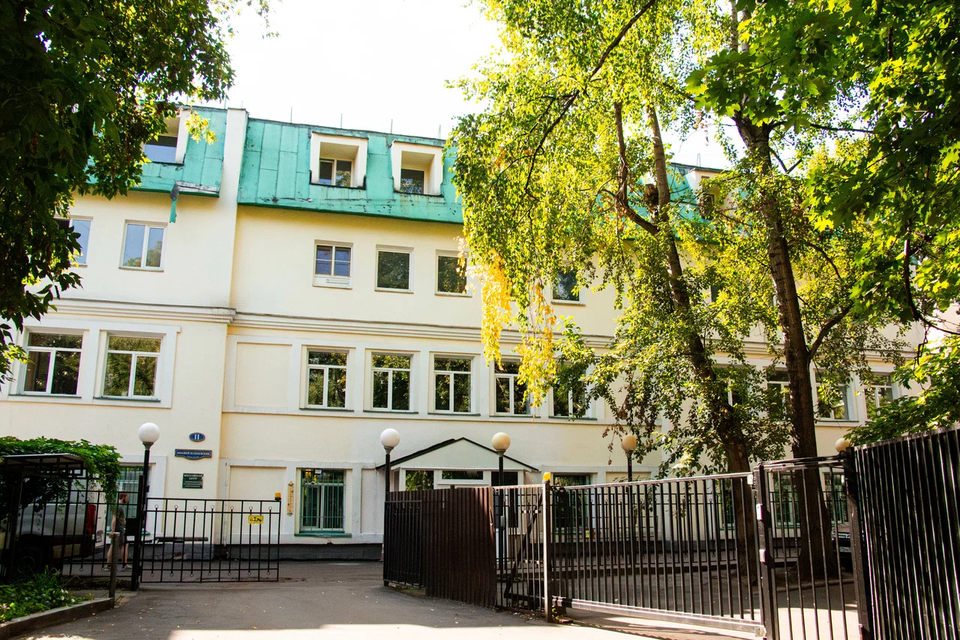

11 Bolshoy Vlasyevsky Lane in Moscow is known as the home of the legendary MCCME — the Moscow Center for Continuous Mathematical Education. For more than 10 years, it has hosted a regular creative seminar for mathematics teachers, led by Alexander Davidovich Blinkov.
The seminar usually meets twice a month, on Thursdays at 19:00, from October to April. Teachers meet and talk in the warm, friendly atmosphere of the MCCME dining room. Its distinctive mathematical atmosphere is easy to feel: even the walls bear sayings by great mathematicians, famous theorems and formulas.
The following meetings took place during the 2025–2026 academic year, and the author was fortunate to attend. I would like to name those who presented their new ideas and work in school mathematics education.
Meeting 161, 9 October 2025
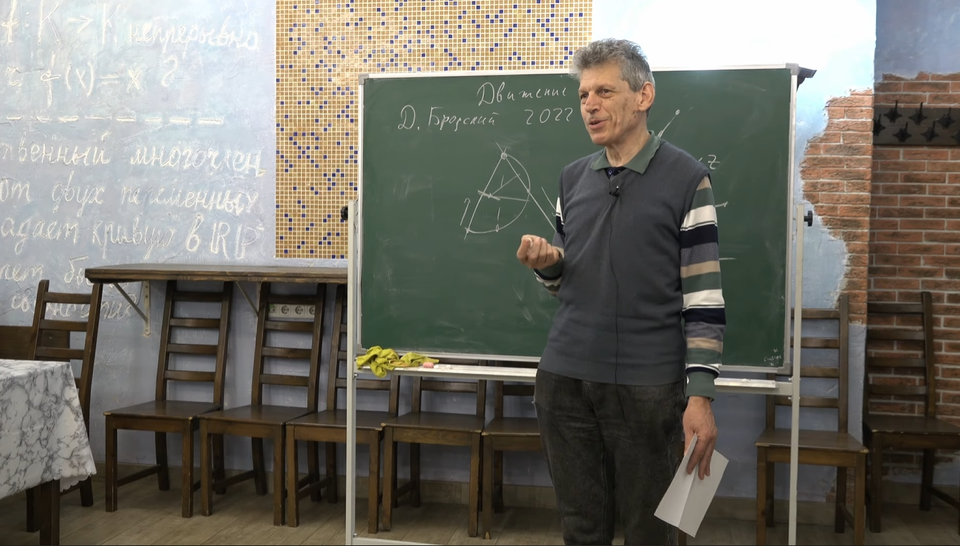
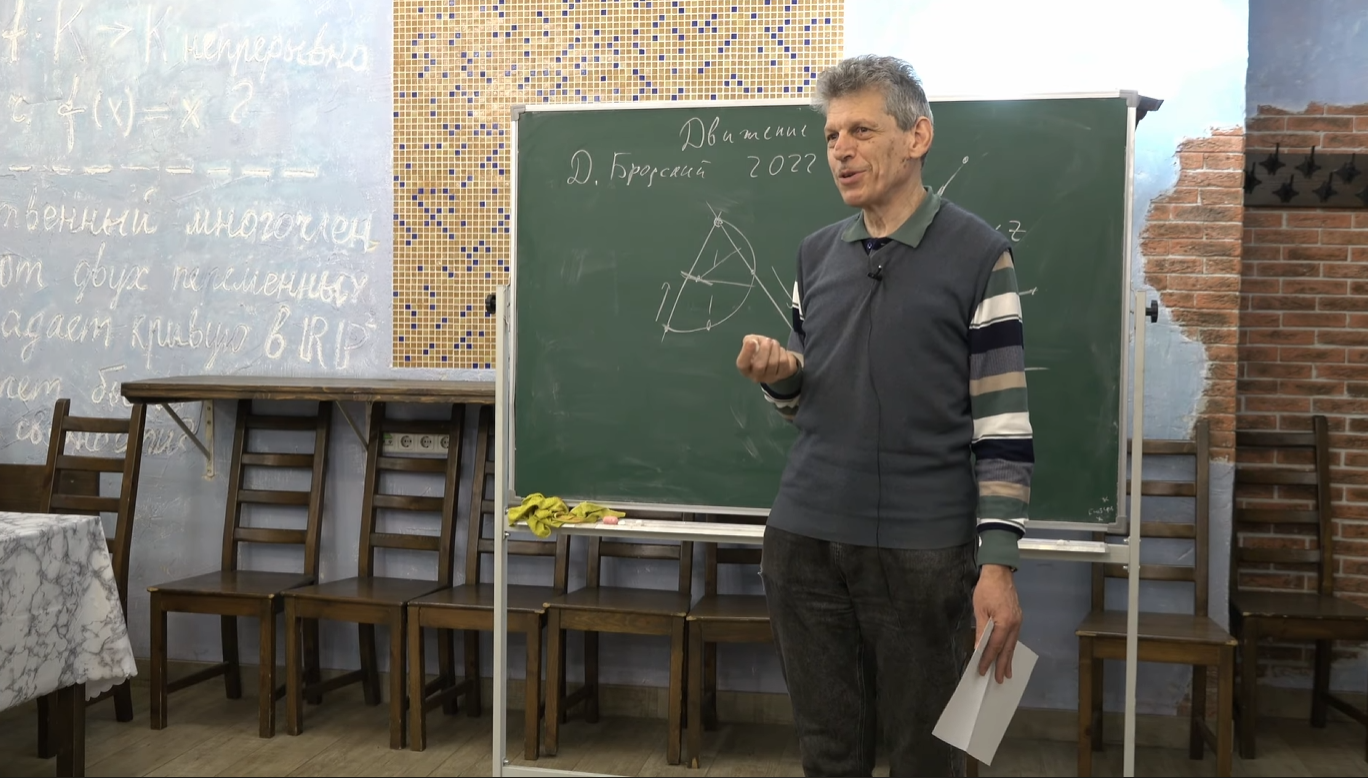
A. Zaslavsky, V. Konyshev, S. Kuznetsov and Yu. Nagumanov. New methods in olympiad geometry
Alongside traditional methods, olympiad geometry has recently made extensive use of tools such as moving points, cubic curves and Desargues’s involution theorem. The talks explained these methods and analysed several difficult problems from recent olympiads.
Meeting 162, 23 October 2025
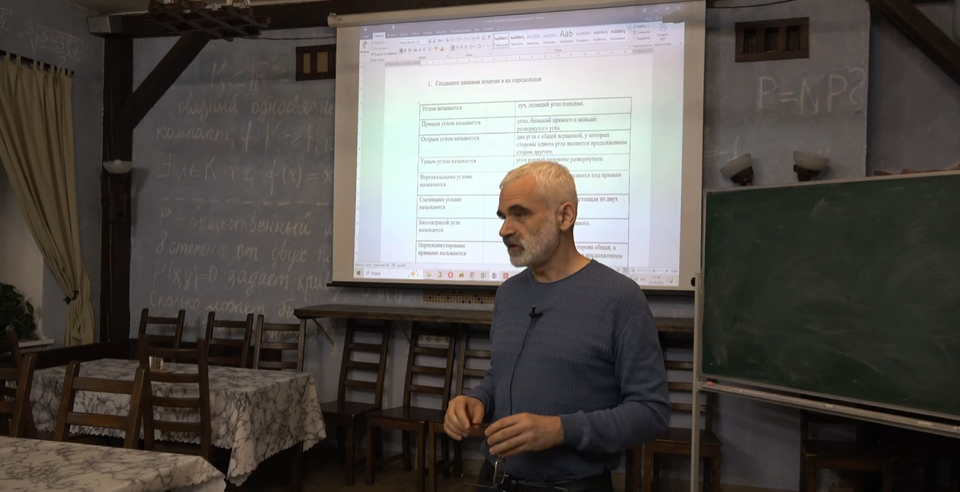
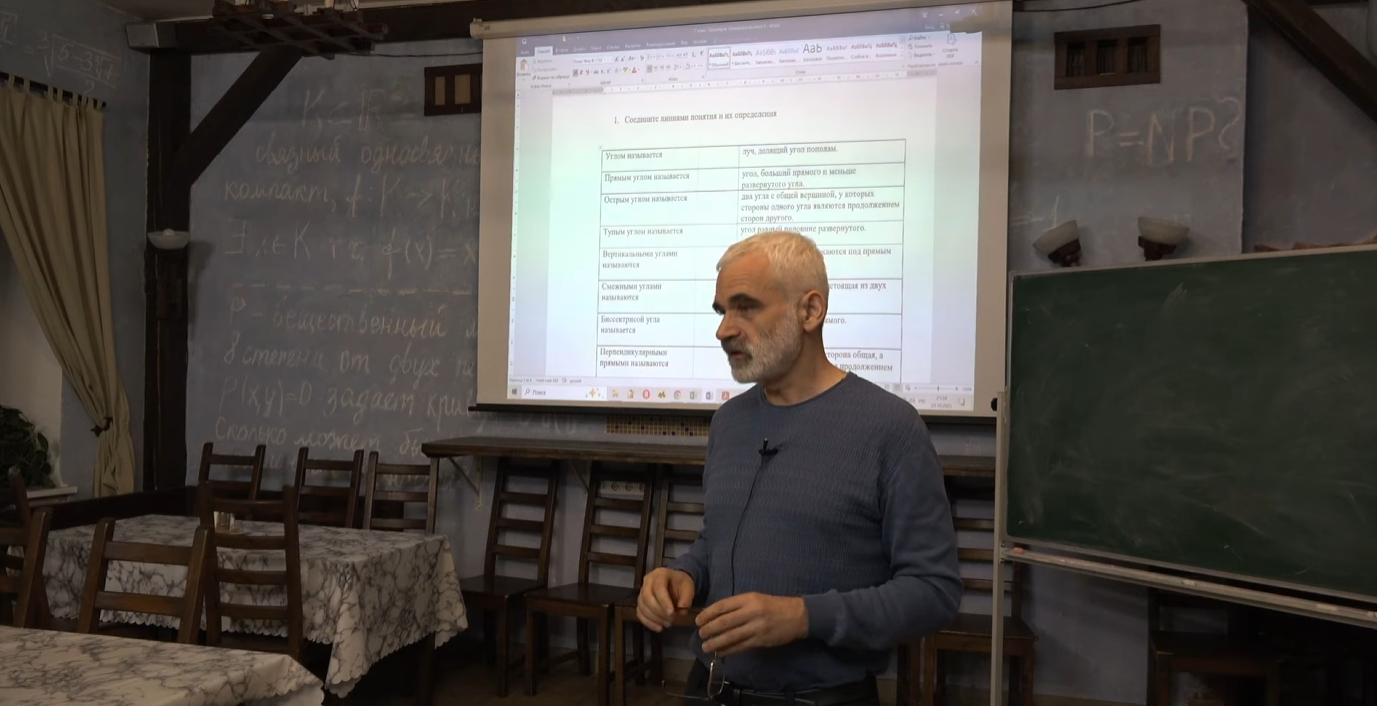
D. E. Shnol. Changing mathematics teaching in a school without selecting pupils
The speaker is director of the private Oxbridge school in Tashkent. He described tools for reorganizing mathematics teaching: promotion examinations, a system of written tests, oral assessments, grouping pupils within a year by level, compulsory mathematical dictations, mathematical support, sharing experience of game-based methods, and a separate course in “Developmental Mathematics”.
D. E. Shnol. School assessment as a tool for managing change
The second part explained how changing an assessment system can change a school’s learning culture, help teachers structure the curriculum appropriately, and teach them to establish priorities when planning lessons.
Meeting 163, 13 November 2025
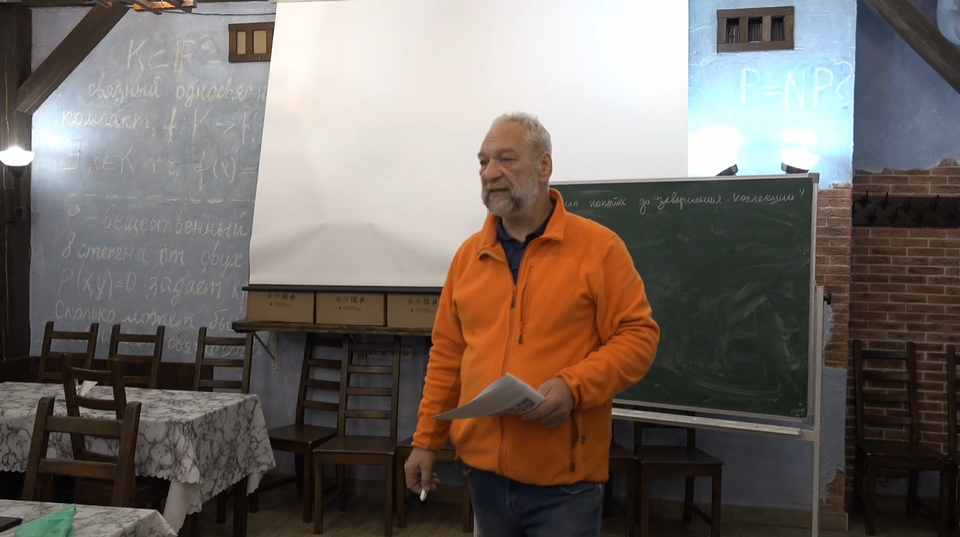
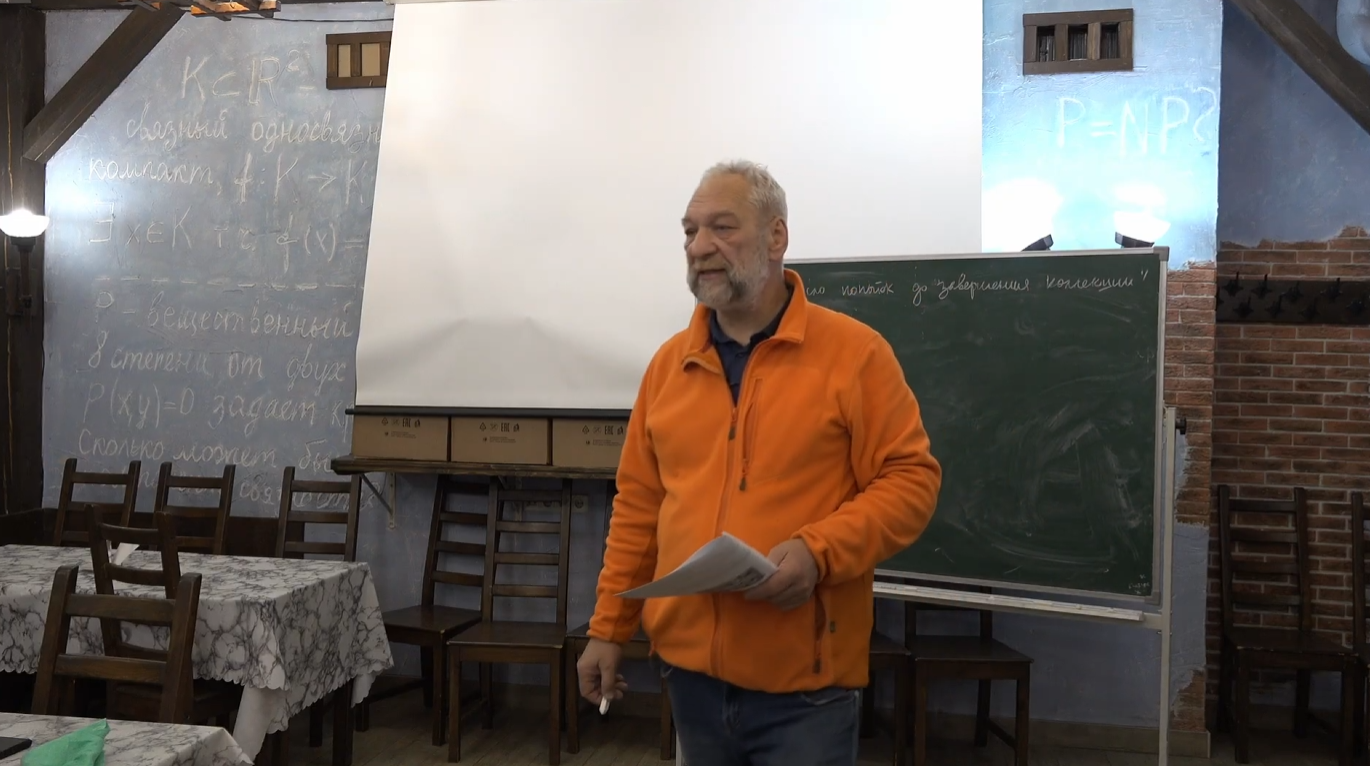
I. R. Vysotsky. Variations on the coupon collector’s problem
Collecting is one of humanity’s oldest passions. For more than a hundred years, marketers have exploited it by putting toys or celebrity photographs in chocolate eggs or sweet jars. Naturally, mathematicians could not ignore it. Mathematical models of collecting have been known since the XVII century, and many related questions have of course been solved. Yet an apparently innocent generalization or extension of a solved problem often proves frustratingly difficult.
The talk outlined the most natural problems connected with collecting and solved some of them. Several are quite accessible to motivated schoolchildren.
The talk went somewhat deeper than the article “The Coupon Collector’s Problem” (Mathematics, 2022, no. 9, pp. 54–59).
Meeting 164, 27 November 2025
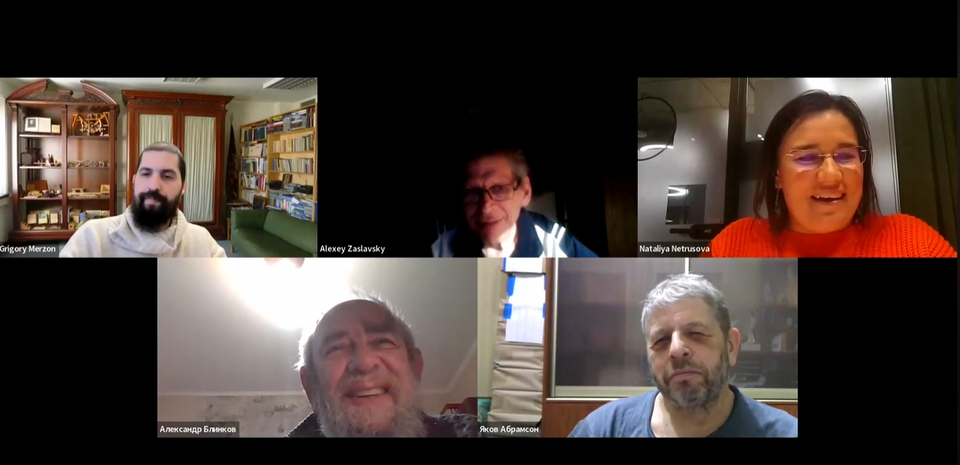
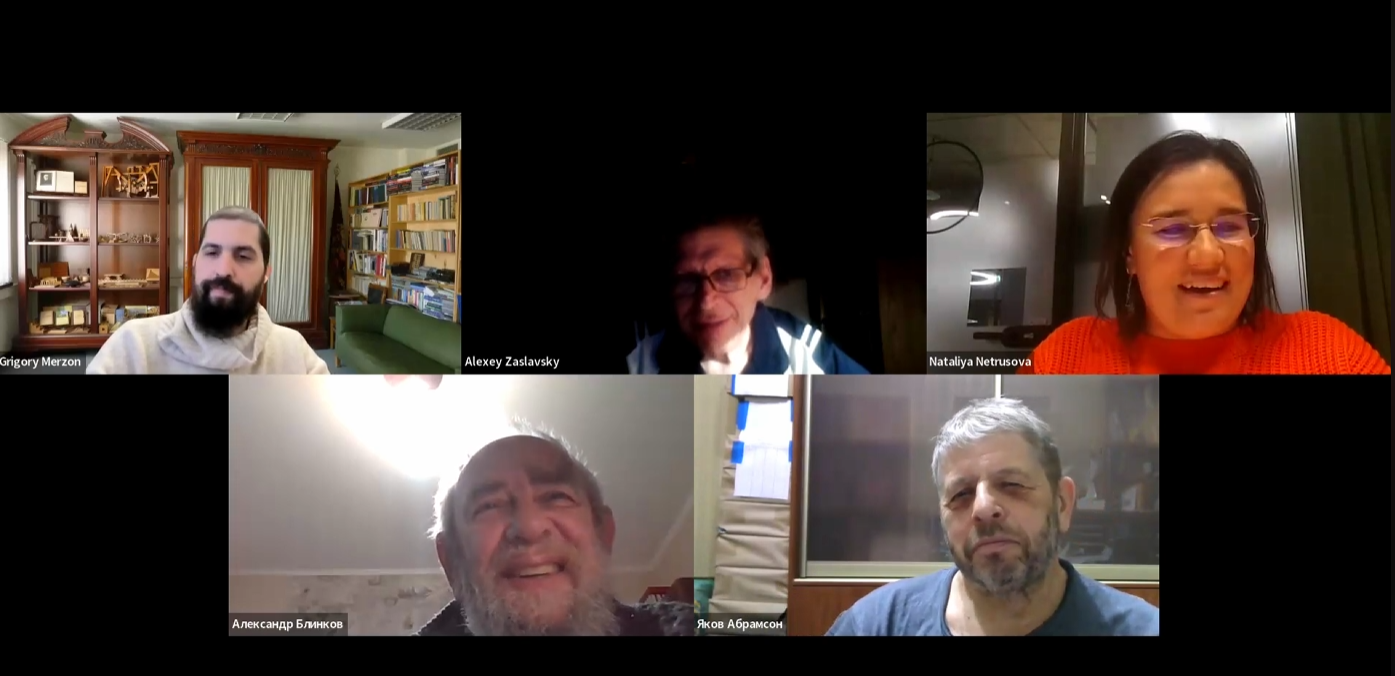
N. M. Netrusova. Mathematics for schoolchildren in Serbia
The talk described the structure of Serbian school education and mathematics teaching in detail. It compared the syllabus with Russia’s, showed examples of examinations and olympiads, and discussed local clubs, journals and books. In particular, it noted that geometry begins there in grade 5.
Meeting 165, 11 December 2025
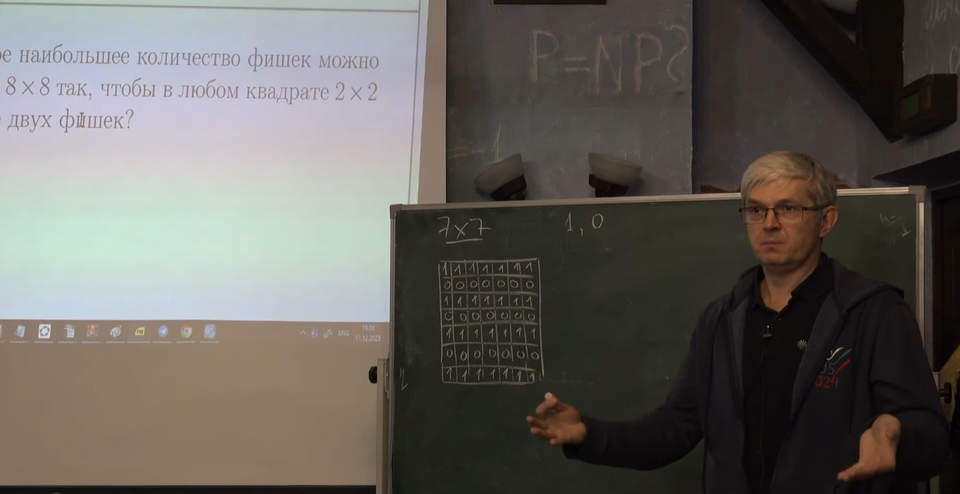
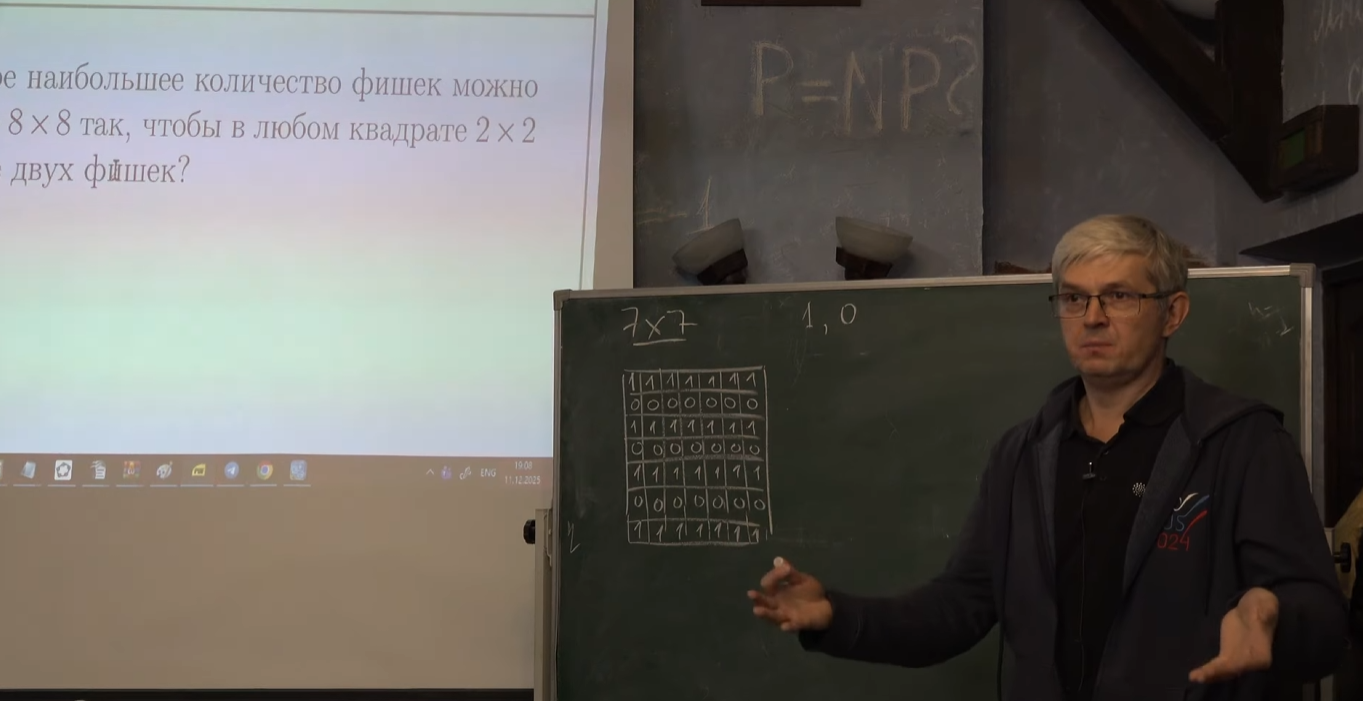
P. A. Kozhevnikov. Numbers in tables and linear constraints on sums
The discussion covered problems such as this: what is the greatest number of counters that can be placed on a 7×7 board so that every 2×2 square contains at most two counters?
It also described an interesting technique devised by Artur Abzalilov, an 11th-grade pupil from Kazan, for problem 11.4 at the 2025 All-Russian Olympiad.
Meeting 166, 25 December 2025
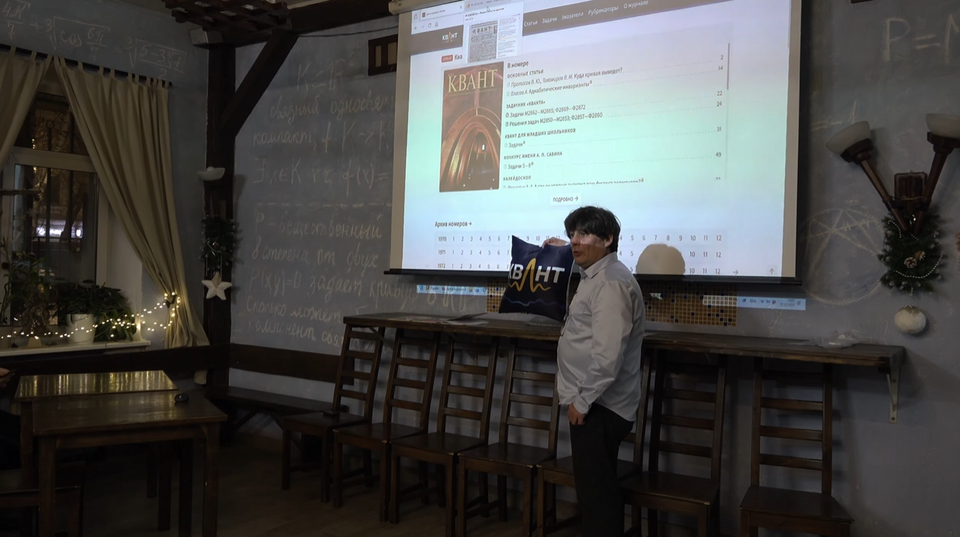
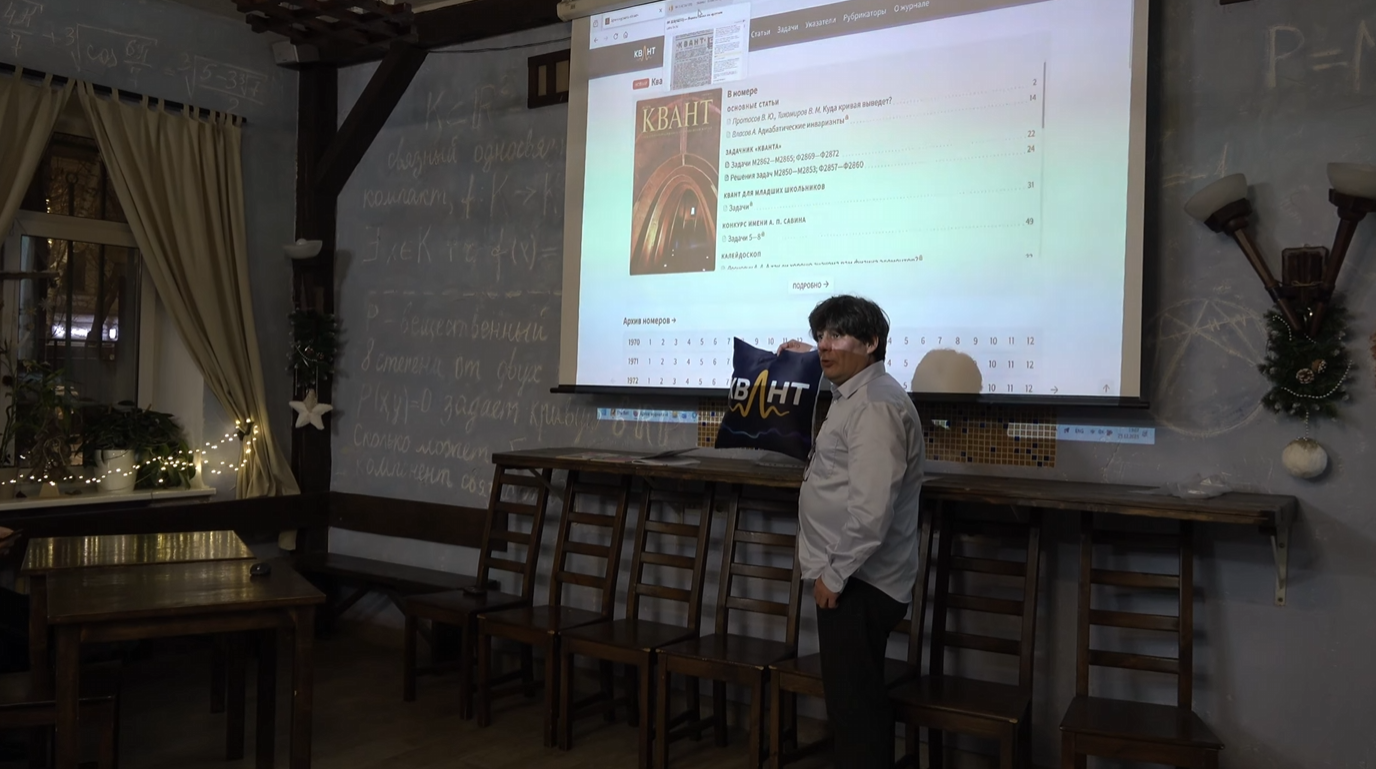
N. N. Andreev. Under the Sign of Kvant
We discussed the journal’s new website, kvant.digital, and its capabilities, what had been done before and after its launch, and what further features users would find convenient.
Meeting 167, 15 January 2026
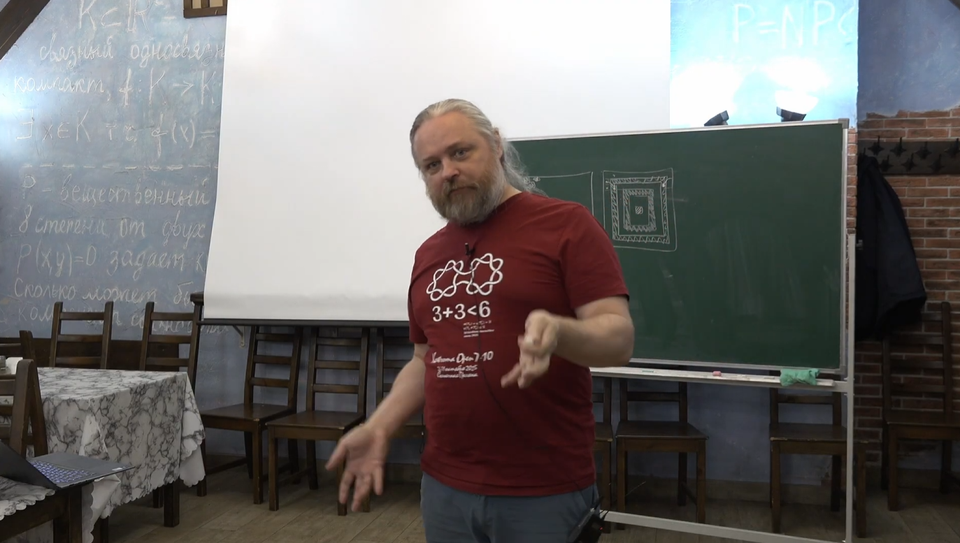
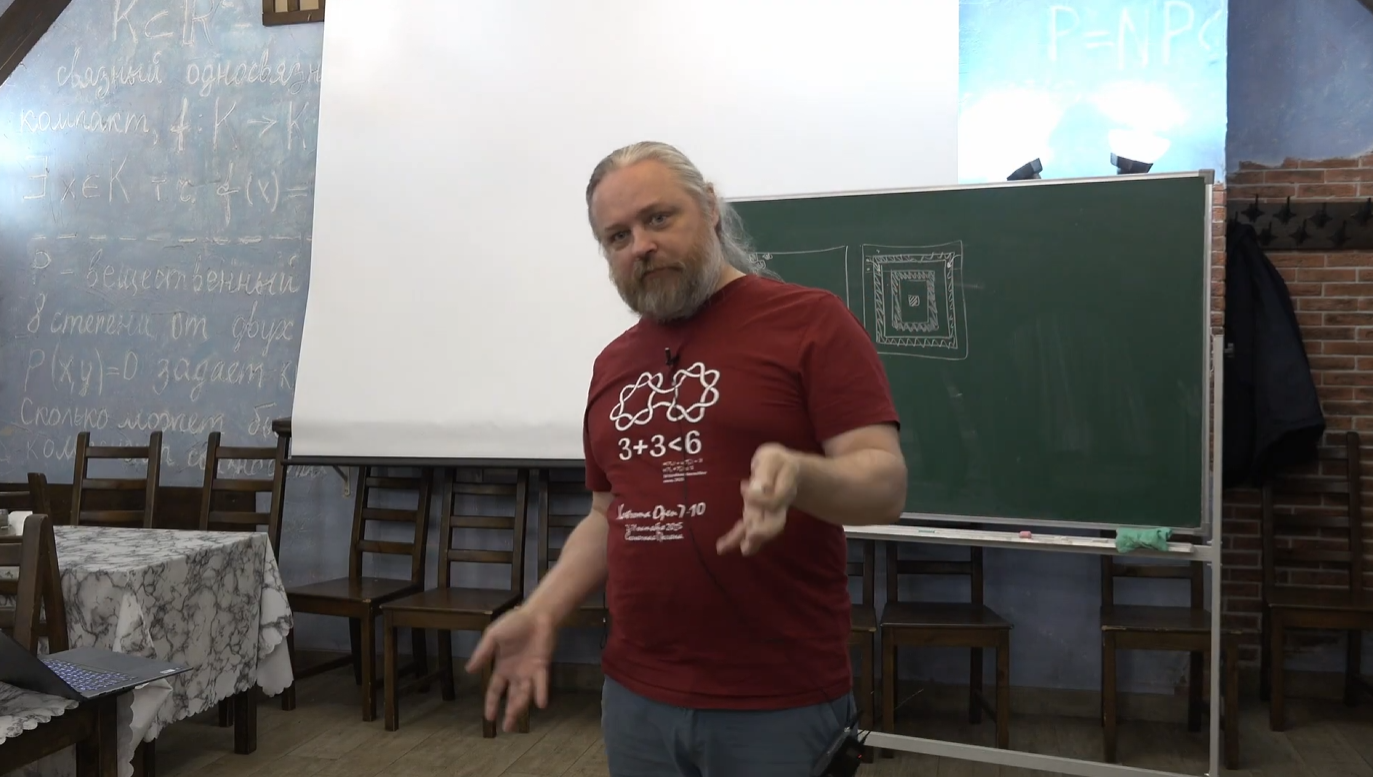
D. A. Kalinin. The Kostroma Open tournament: traditions and problems
The Kostroma mathematical battles tournament, now called Kostroma Open, began in January 1996. The talk described the traditions formed over the years and presented beautiful problem ideas developed at recent tournaments.
Meeting 168, 29 January 2026
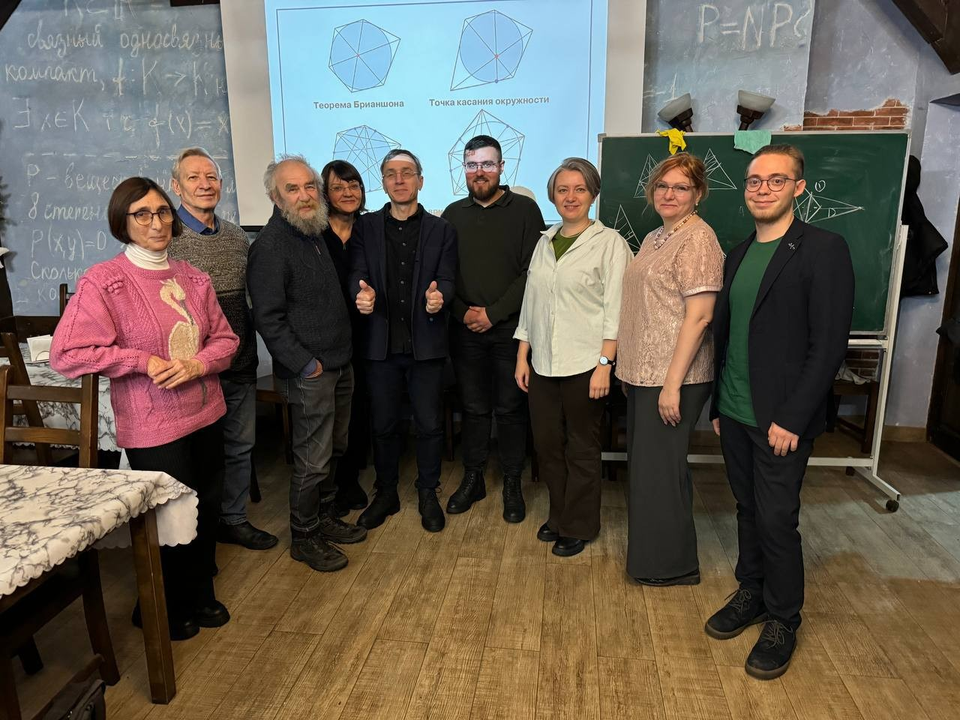
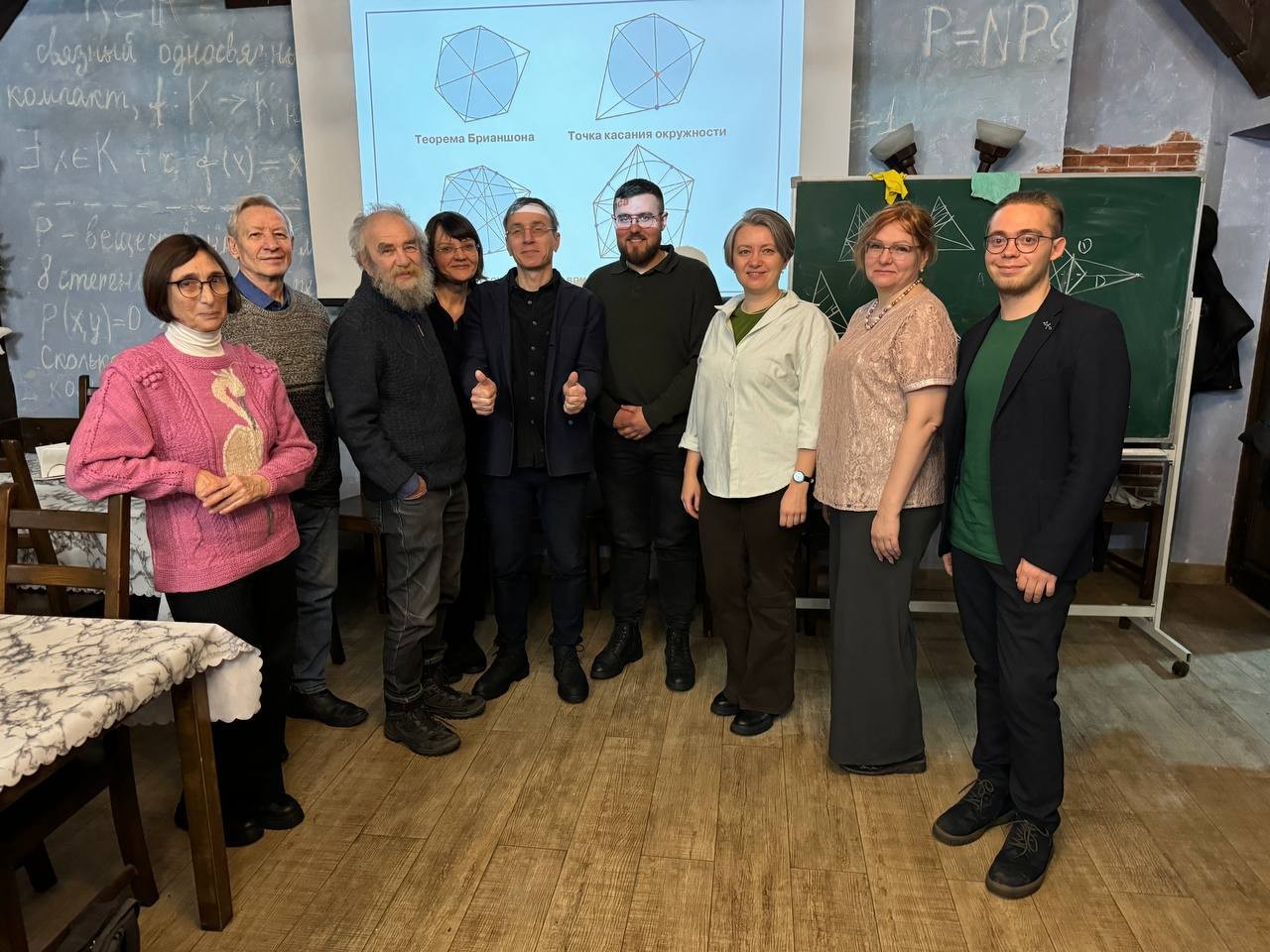
M. A. Volchkevich. Using parallel projection in geometry problems
Desargues’s theorem; constructions with a short ruler; area ratios in projection; the greatest shadow area of a cube and a prism; the ellipse as a compressed circle; the shape of the crescent Moon; constructions on an ellipse; Steiner ellipses; the theorem on the projection of a triangle’s altitudes; the Gauss line.
Meeting 169, 12 February 2026
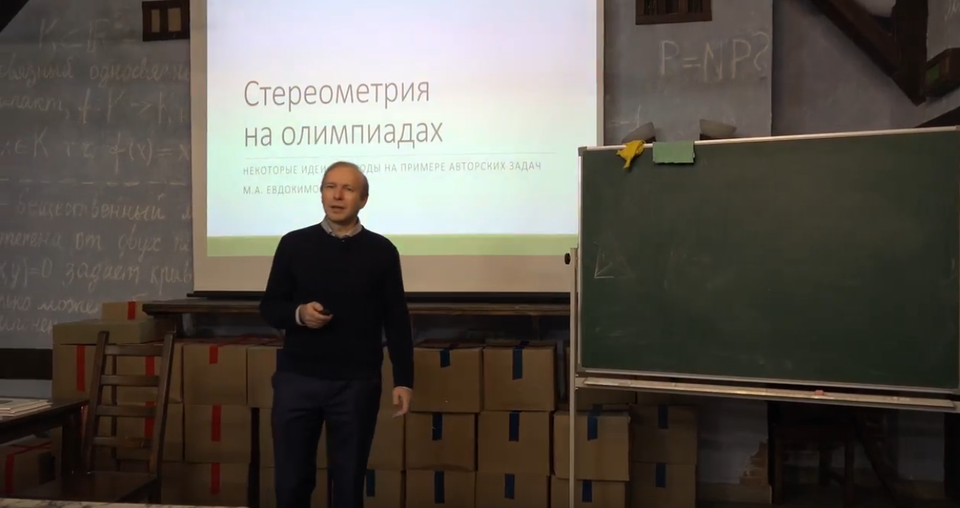
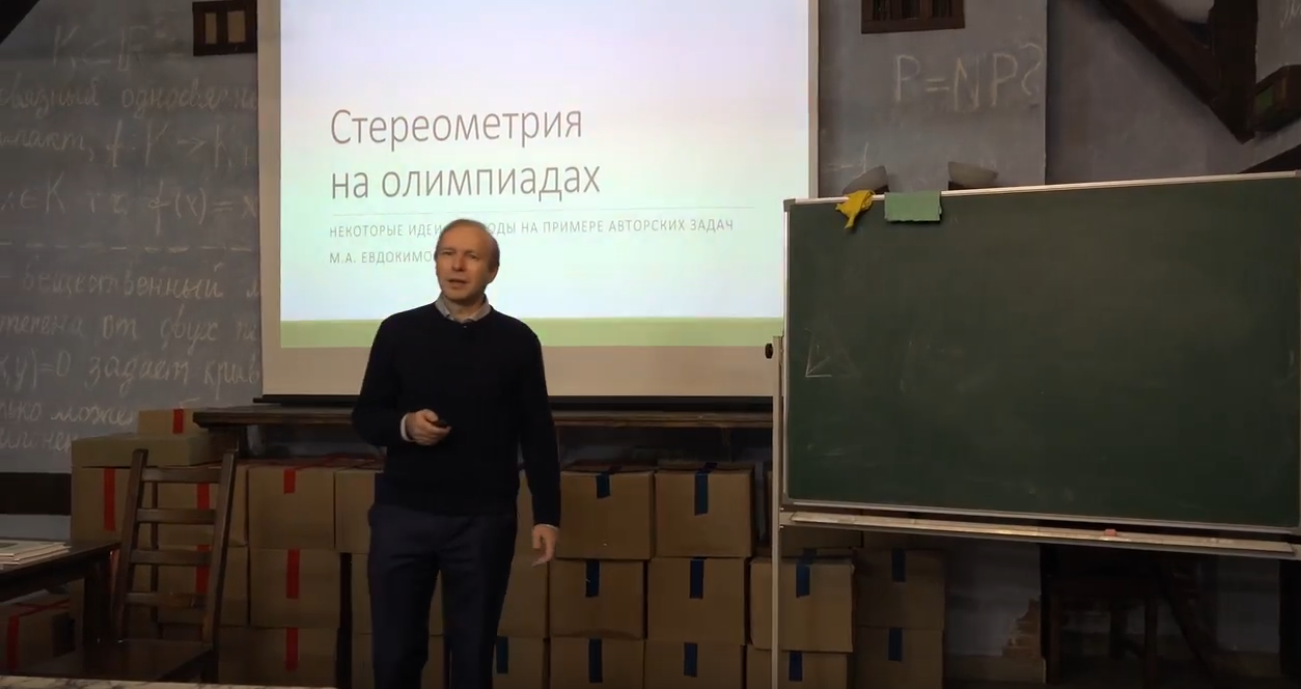
M. A. Evdokimov. Solid geometry at olympiads
The talk explored various ideas and methods through the speaker’s original solid-geometry problems presented at different olympiads. It discussed how the problems were invented and the plane-geometry analogues of some of them.
Meeting 170, 26 February 2026
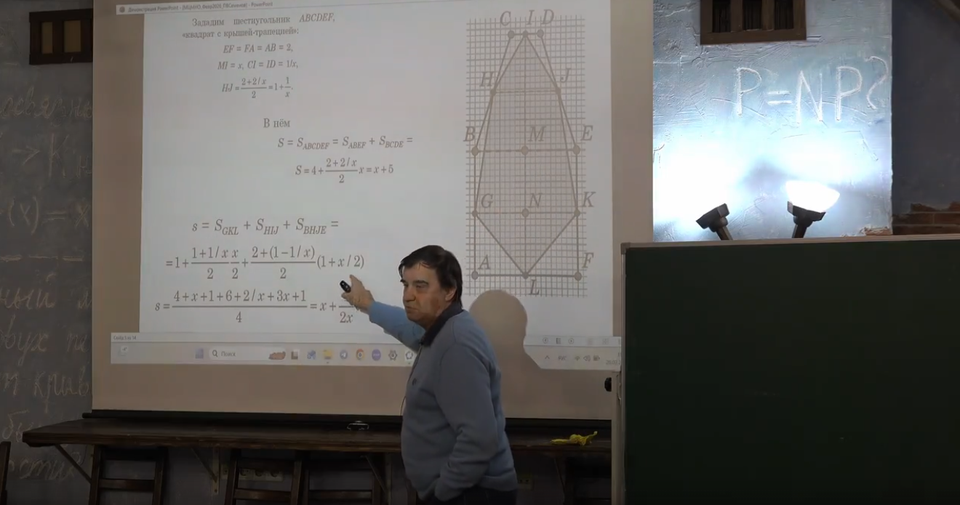
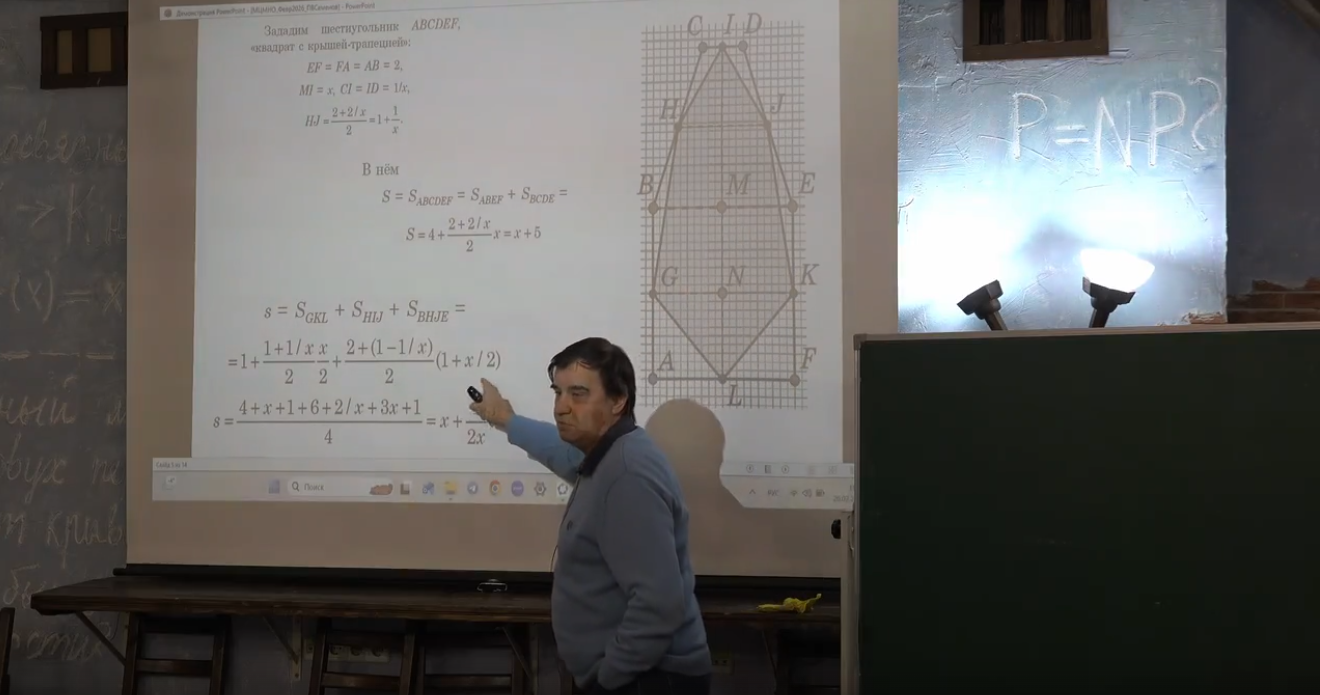
P. V. Semyonov. The area of a midpoint polygon
For any convex, nondegenerate n-gon M, consider its “midpoint” n-gon, formed by segments joining the midpoints of adjacent sides of M. Let their respective areas be S and s. The discussion examined relationships between them.
Meeting 171, 12 March 2026
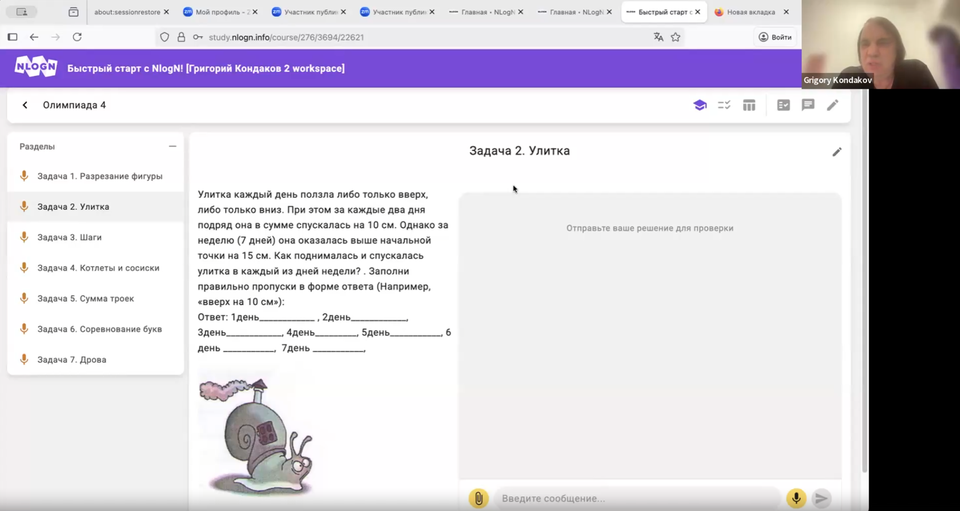
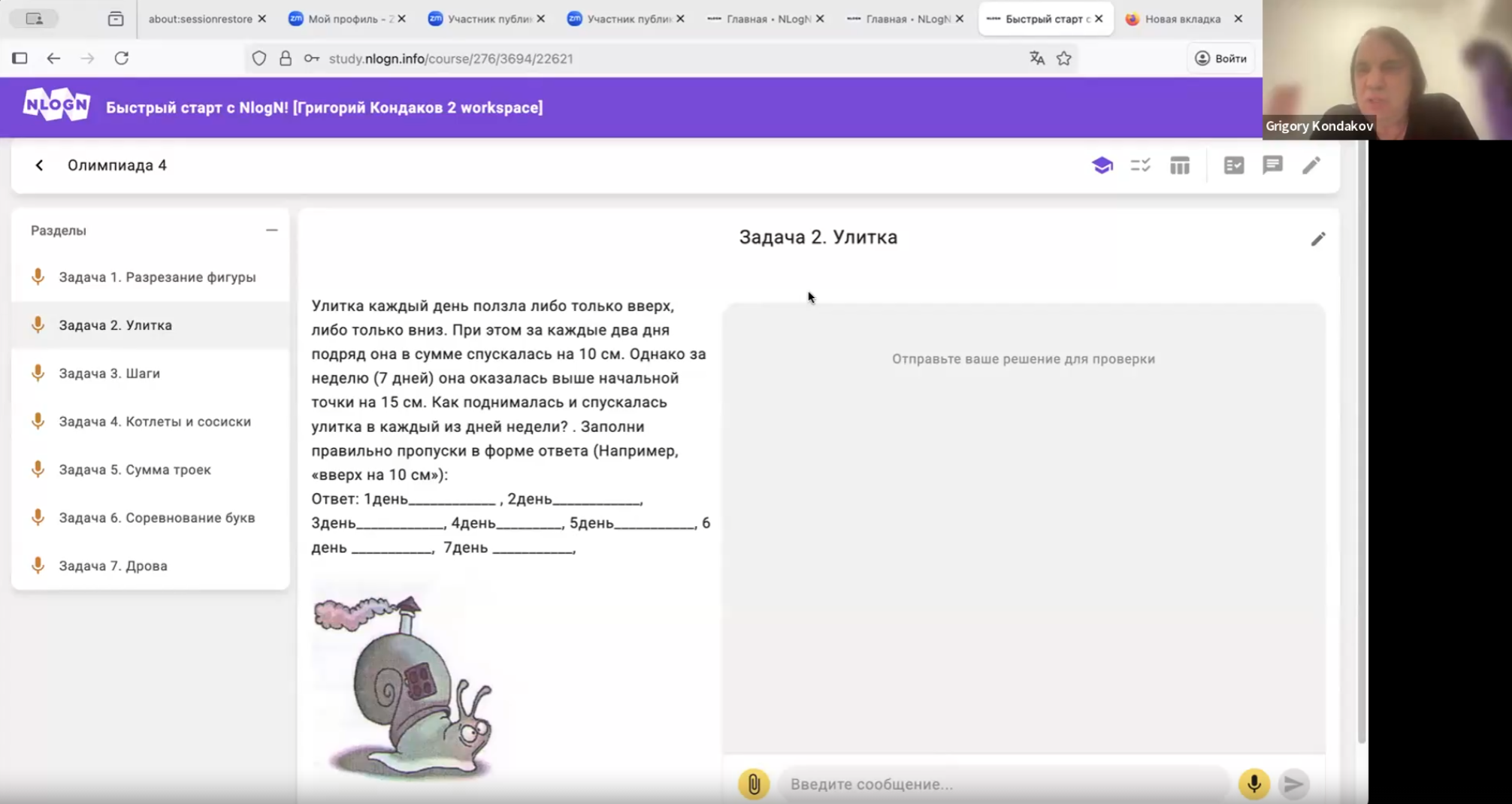
G. V. Kondakov. How a teacher’s AI assistant works: checking assignments, creating courses and combating copying
Mathematics education is a field where innovations are introduced continually and particularly rapidly. These changes cannot be stopped, but they can be adapted to one’s needs. Competition in supplementary education has intensified again; tutors and teachers who learn to manage new AI tools will gain substantial advantages.
Grigory Kondakov shared his team’s experience. He founded ShAD, the Berendeyevy Polyany camp and the Pelican platform on which Yandex.Textbook was based. The seminar examined actual uses of neural networks in teaching, demonstrated how teachers’ AI assistants can implement N. N. Konstantinov’s model effectively, and showed how AI can make learning more productive.
Meeting 172, 26 March 2026
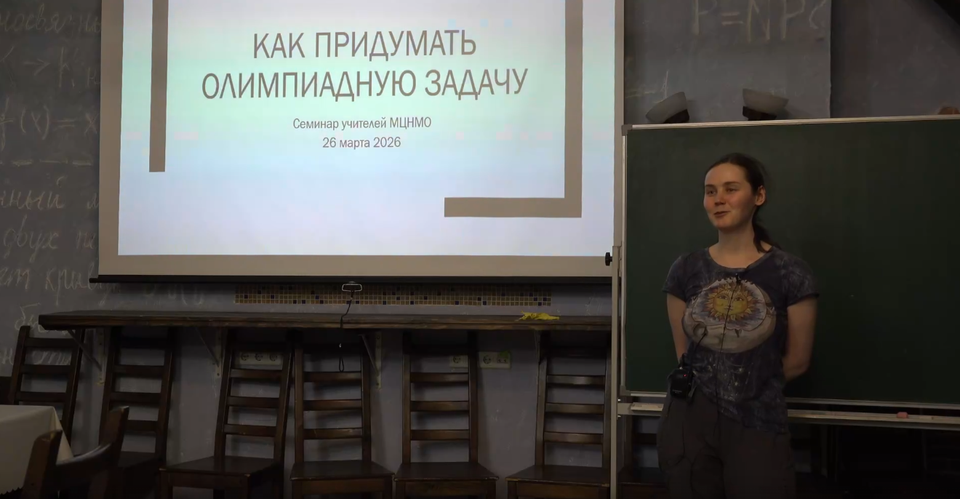
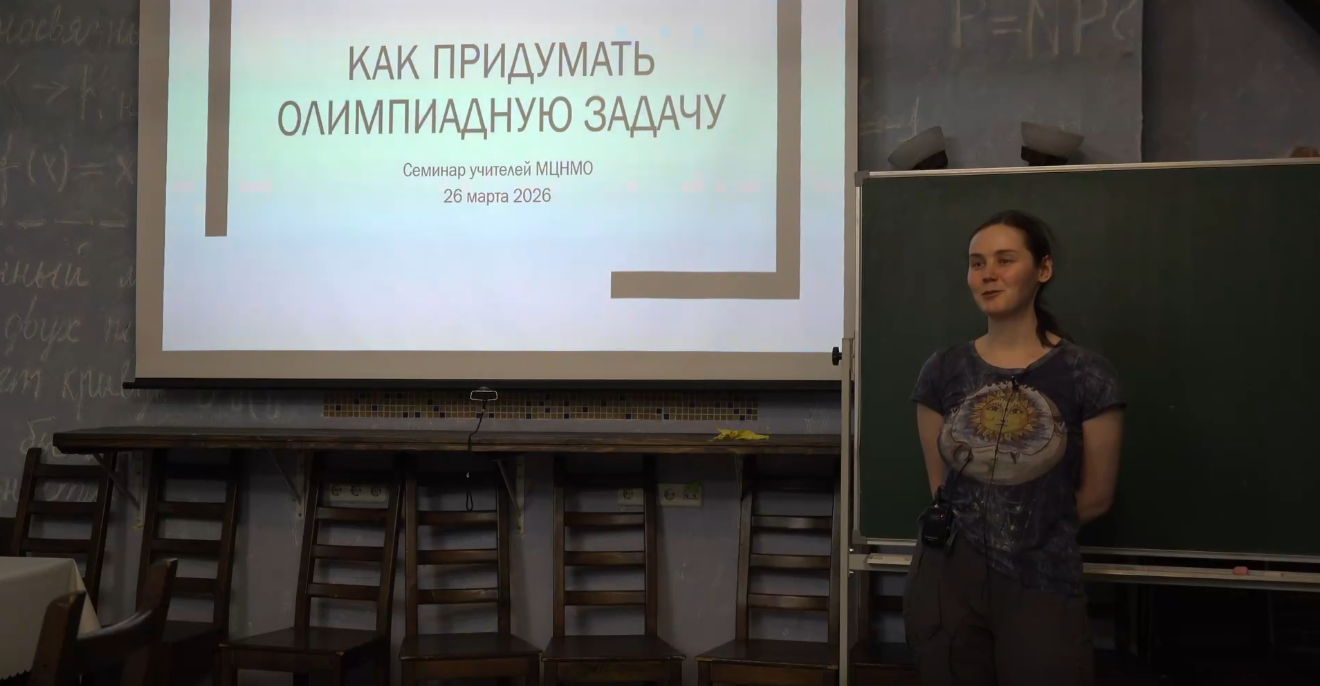
A. A. Tutubalina. How to invent an olympiad problem
What should you do when preparing a club lesson, an olympiad or a set for a mathematical battle, and you do not have enough problems? Invent new ones, of course.
The speaker described her experience of composing problems and shared ideas, advice and practical tricks. She also showed several interesting ideas she had developed for the Möbius Tournament, the Savin Tournament and various olympiads.
Meeting 173, 9 April 2026
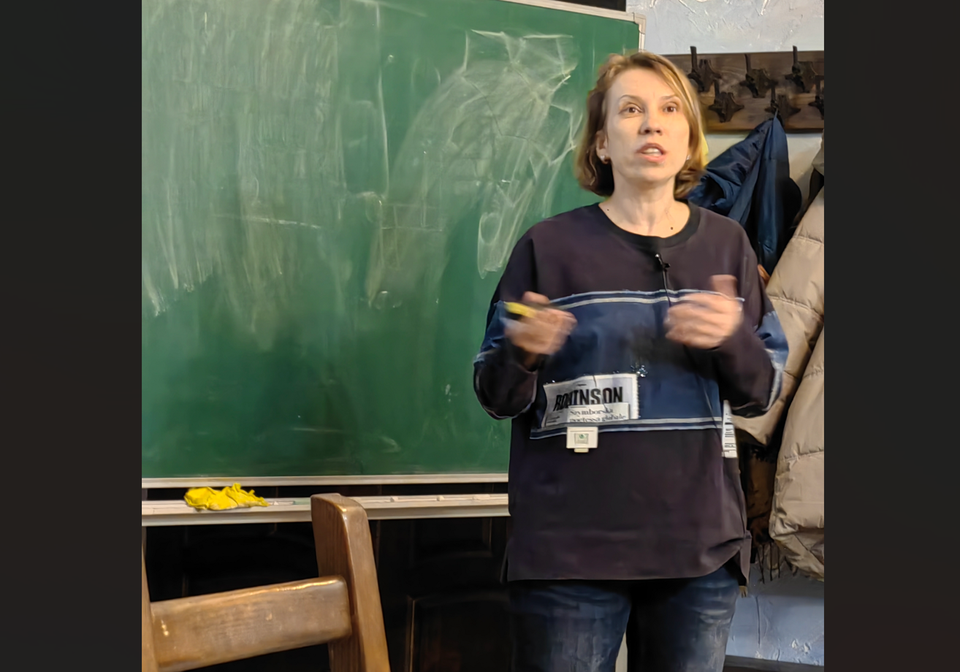
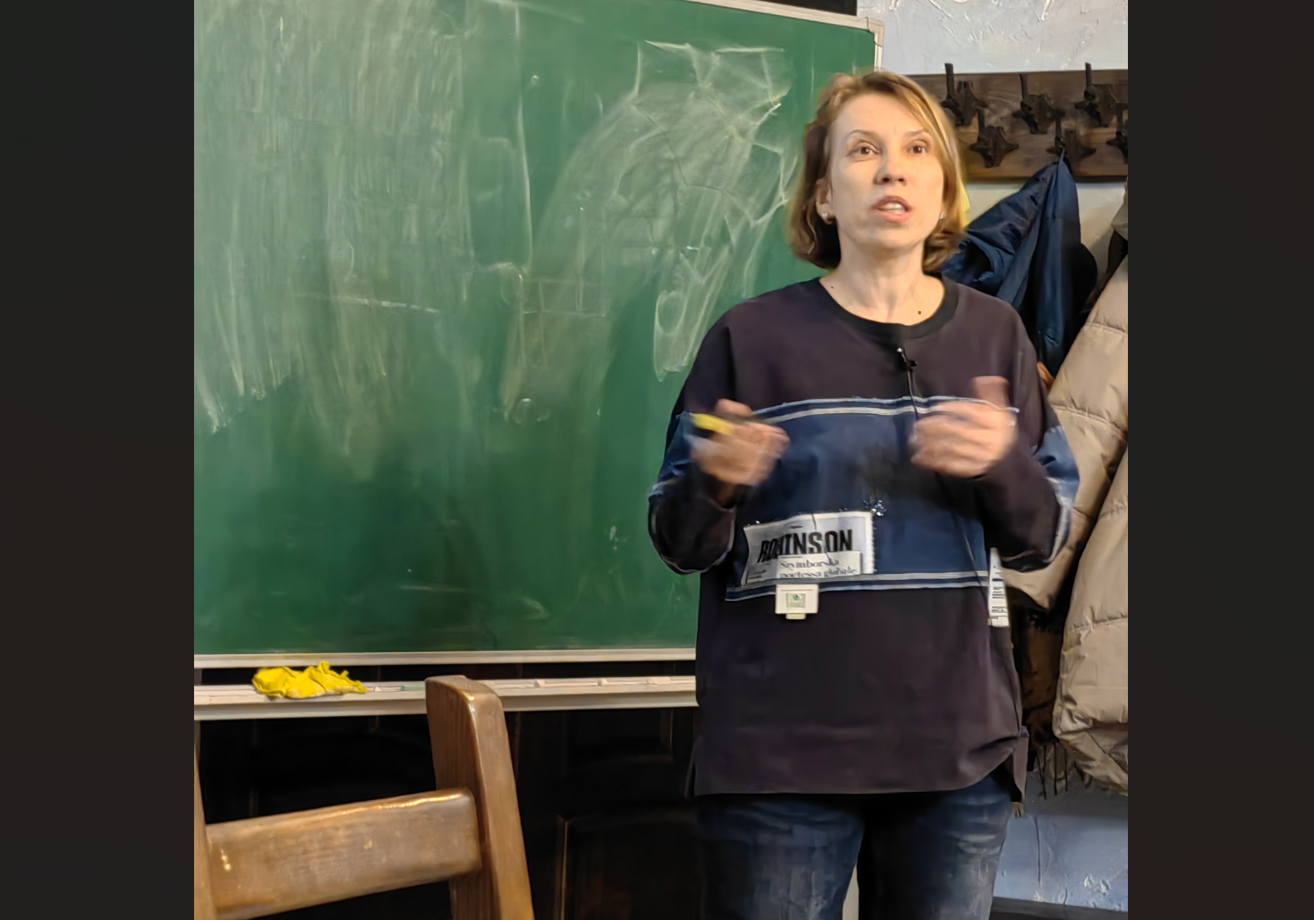
E. A. Chernysheva. Mathematical games as part of teaching
How can tournament games be used in an ordinary lesson, and why? The talk analysed several specific games played in primary and secondary school. It also discussed mathematical debates, an adaptation of mathematical battles organized outside lessons for the school’s pupils and as friendly matches with other schools.
Videos and presentations of every talk are available on the seminar website.