
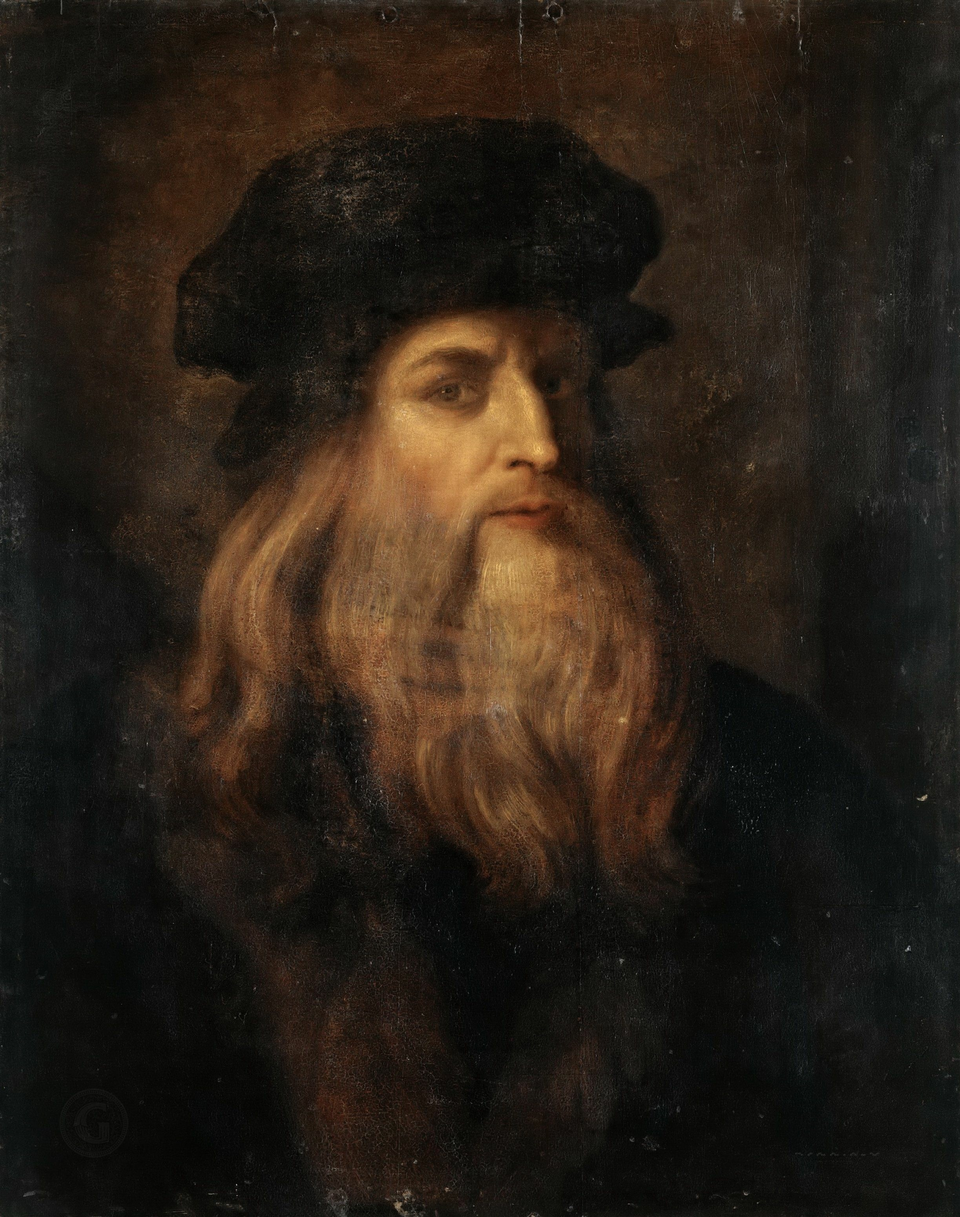

Everyone knows Leonardo da Vinci (1452–1519) as a brilliant Italian Renaissance painter. Many are unaware, however, that he was among the most extraordinarily gifted people in world history. An outstanding inventor, he was centuries ahead of his time. It was in this era that artists, architects and engineers began taking an intense interest in science.
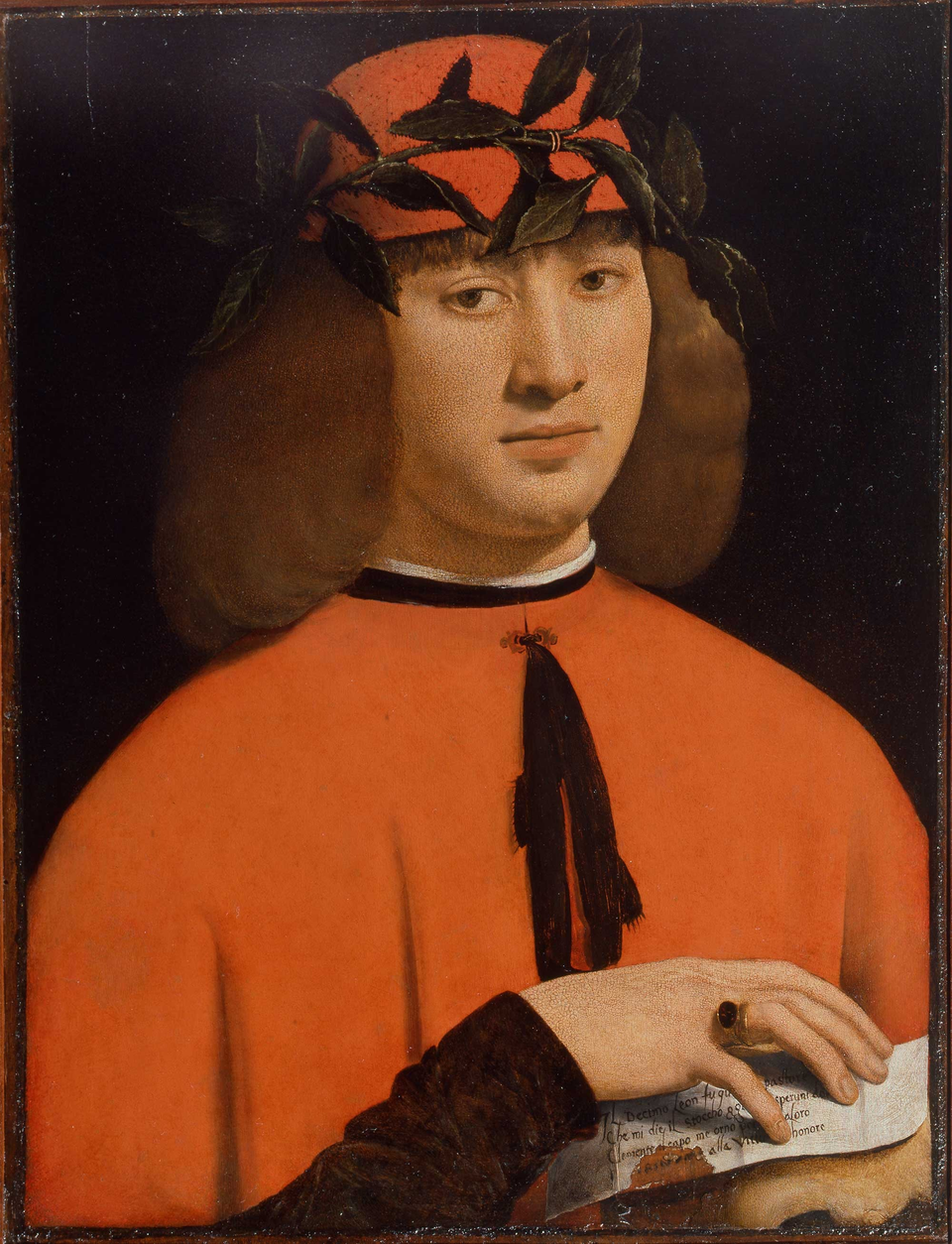

…It was 1495. In Florence, several young men were talking in the dyers’ guild warehouse. Giovanni Boltraffio, an apprentice painter, listened attentively to a pious clerk. Antonio da Vinci, as the clerk was called, angrily denounced contemporary sculptors and painters who served the devil by digging pagan gods out of the earth. Such paintings should be burned and their ashes scattered to the wind! Yet Giovanni dreamed of becoming an apprentice to Antonio’s relative Leonardo — which meant he wanted to destroy his soul. Messer Leonardo was a heretic and an atheist. Through mathematics and black magic, he sought to penetrate nature’s secrets.
This is how D. S. Merezhkovsky’s novel The Resurrection of the Gods describes Giovanni’s arrival as Leonardo da Vinci’s pupil. For a long time, the young painter could not understand whom his master worshipped, whom he regarded as human and whom as divine. Was he more an artist or an engineer?
The great da Vinci is known to have been secretive, developing many projects in deep secrecy. He understood that he might provoke the wrath of both God and the Church.
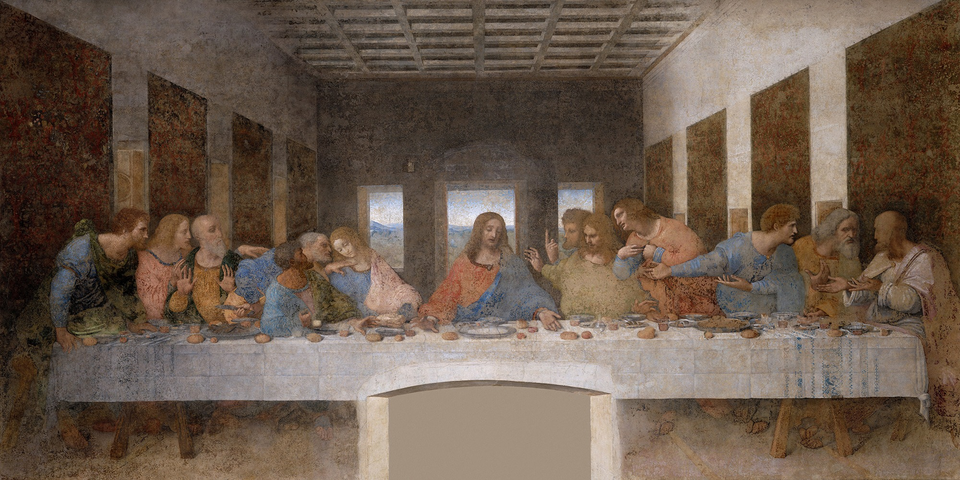

Leonardo became one of the most famous painters in human history. His great works, such as the portrait of Mona Lisa (La Gioconda) and the church mural The Last Supper, are outstanding examples of visual art.
Our story, however, concerns Leonardo the polymath. He is called a painter, sculptor, architect and engineer. He studied mathematics, physics, optics, astronomy, hydraulics, geology, botany, anatomy, and human and animal physiology. Many areas of scientific knowledge were useful to him as an artist. He believed it important to unite theory and practice: “Those who devote themselves to practice without science are like a helmsman boarding a ship without rudder or compass; they can never be sure where they are sailing.” Yet science without practice also resembles “stagnant water, which either rots or freezes in the cold; the human mind, finding no use for itself, withers.”
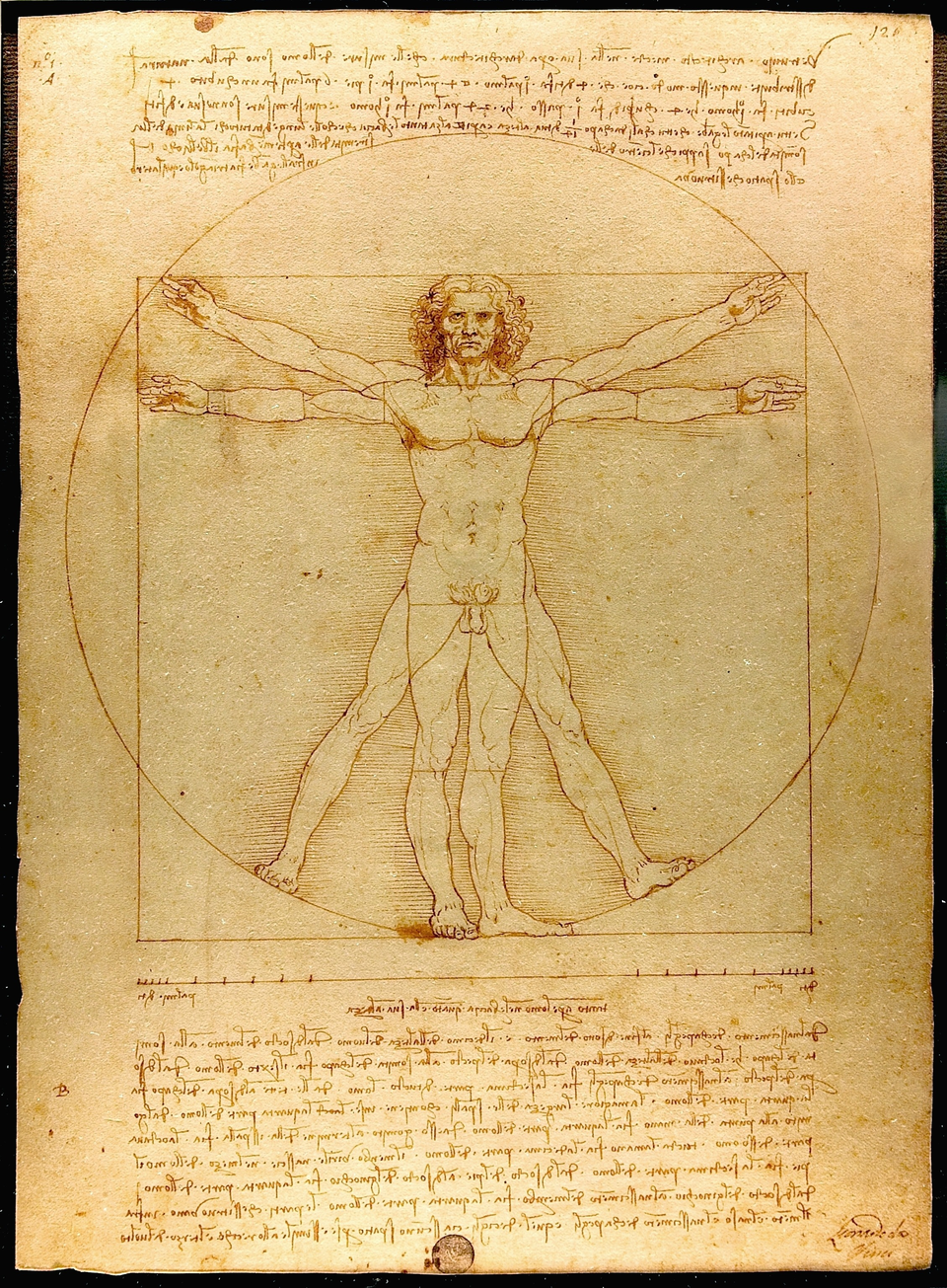

A life of wandering denied Leonardo the opportunity to develop his scientific ideas into completed works. His notebooks survive, however. After his death, one of his pupils published his investigations into art theory as A Treatise on Painting, which became widely known among artists.
For him, art and science were inseparable. He became an experimenter in order to discover the laws of art. He is regarded as a founder of exact natural science and a forerunner of Galileo. As a scientist, he enriched every field of knowledge of his time.
He paid particular attention to mechanics, calling it “the paradise of the mathematical sciences”. Physicists mention his investigations of force, moment, coefficients of friction and sliding, motion on an inclined plane, strength of materials and the impossibility of perpetual motion.
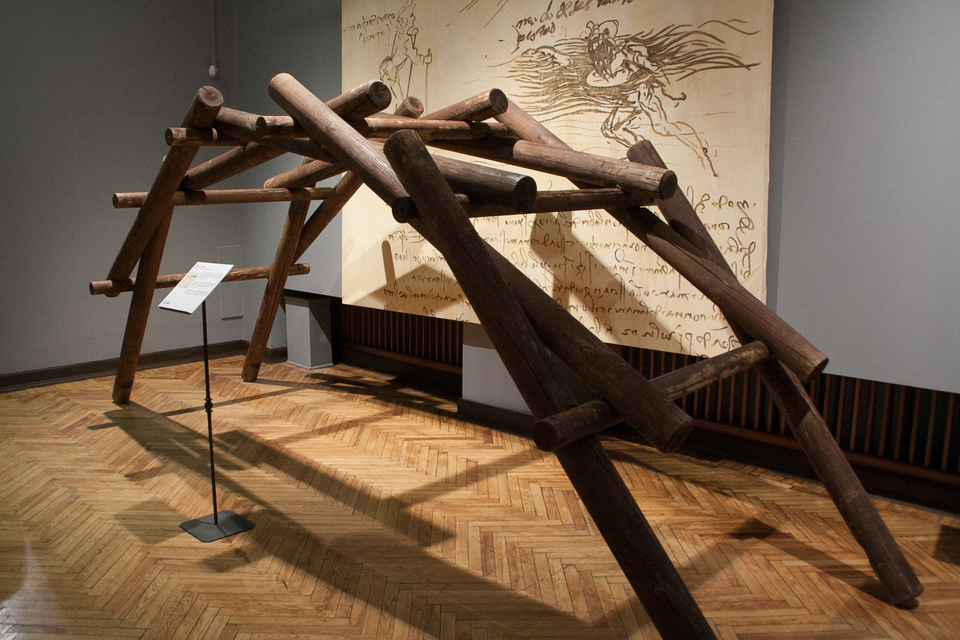

His passion for modelling led to brilliant design insights far ahead of their age: plans for metallurgical furnaces, rolling mills, spinning and weaving machines, printing, woodworking and earth-moving machinery, and even a submarine and a tank. Many of his experiments, however, took place only on paper.
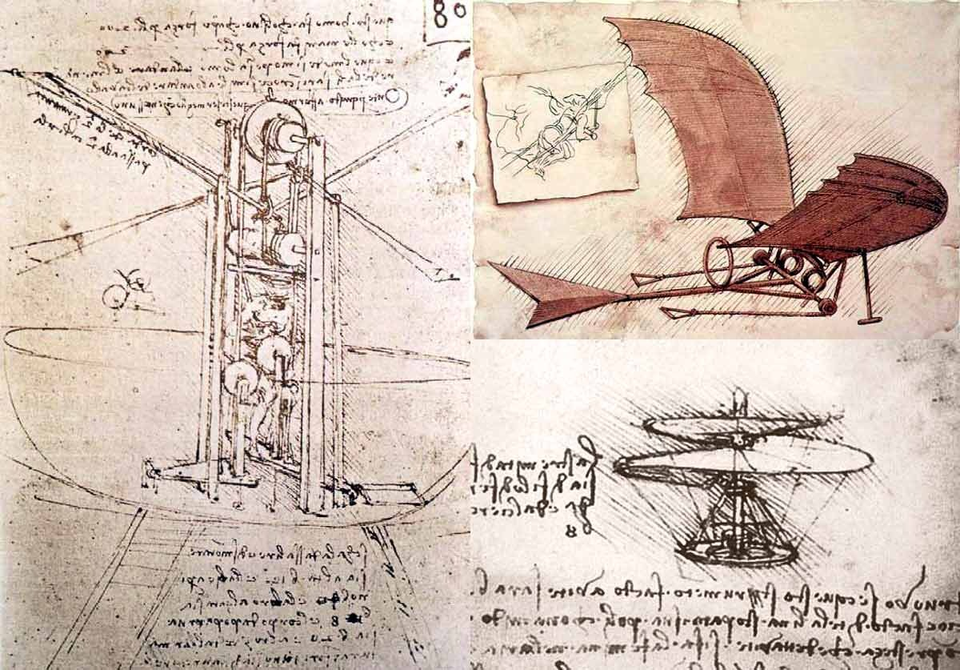

Careful study of bird flight and wing structure led him to designs for a helicopter and parachute. His ideas for a centrifugal pump, hydraulic press and rifled firearms were also ahead of their time and beyond the technical capabilities of the era. Nevertheless, many of his devices had direct practical use for a long time: machines for cutting file teeth, cutting screw threads and twisting ropes.
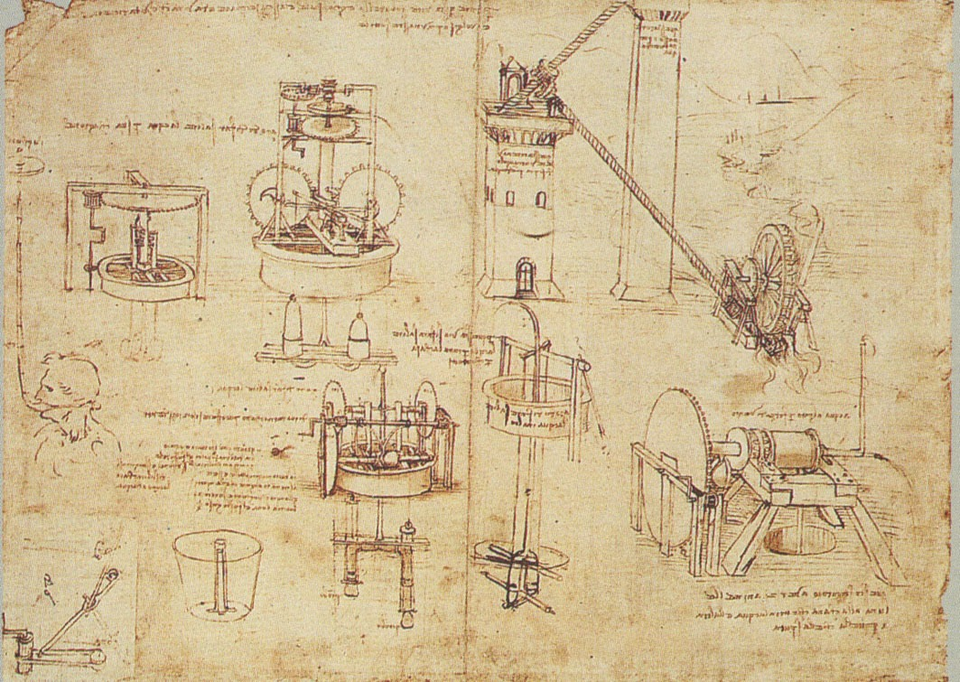

For a long period, he served the ruler of Milan, Duke Ludovico Moro, and later the French king Francis I, as a military and hydraulic engineer. He developed innovative designs for canals, irrigation systems and hydraulic machines.
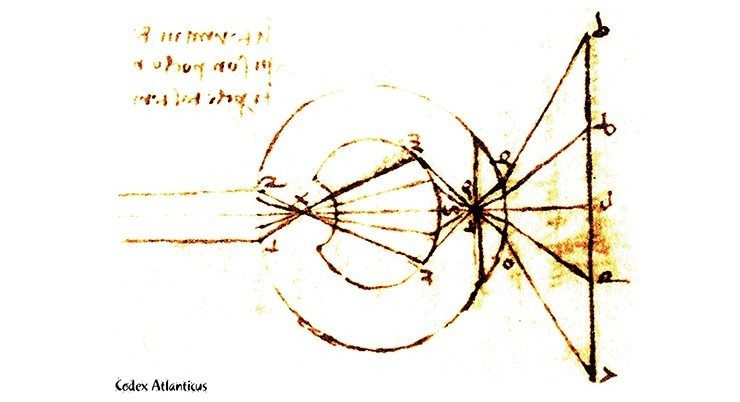

Drawing on his optical research, Leonardo created a precursor of the camera, the camera obscura. To do so, he studied the human eye thoroughly. His anatomical investigations and their detailed drawings, conveying an illusion of three-dimensional form, are models of modern scientific illustration. He regarded living organisms as examples of “natural mechanics”. In his anatomical sketches, diagrams of hydraulic mechanisms appear alongside drawings of the heart and blood circulation.
His mathematical inquiries included perspective theory and exercises and problems of practical value: finding figures of equal area, constructing regular polygons and finding centres of gravity. His teacher and friend was the leading algebraist and mathematics professor Luca Pacioli. Under Leonardo’s influence, Pacioli also took up geometry. Da Vinci himself illustrated one of his books, On the Divine Proportion.
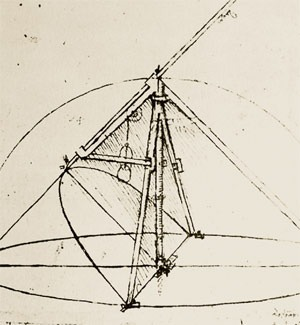

Leonardo is believed to have introduced the familiar mathematical term “golden section”, also encountered in painting. He also invented mathematical instruments: a compass for proportionally enlarging and reducing figures, and an apparatus for drawing parabolas.
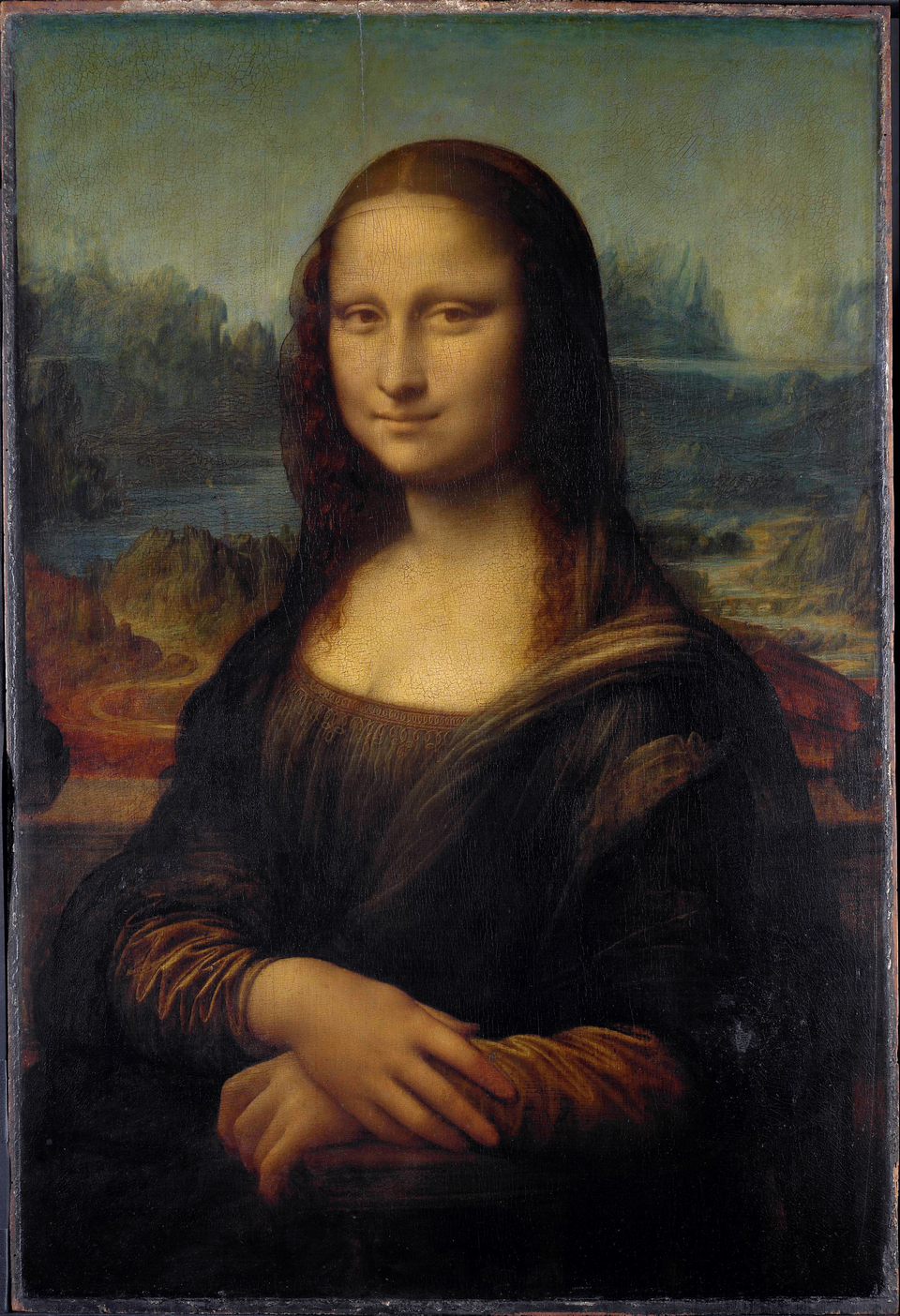

The great artist and scientist smiles mysteriously through the features of the famous Mona Lisa, promising to reveal further facets of his talent to posterity across the centuries.