

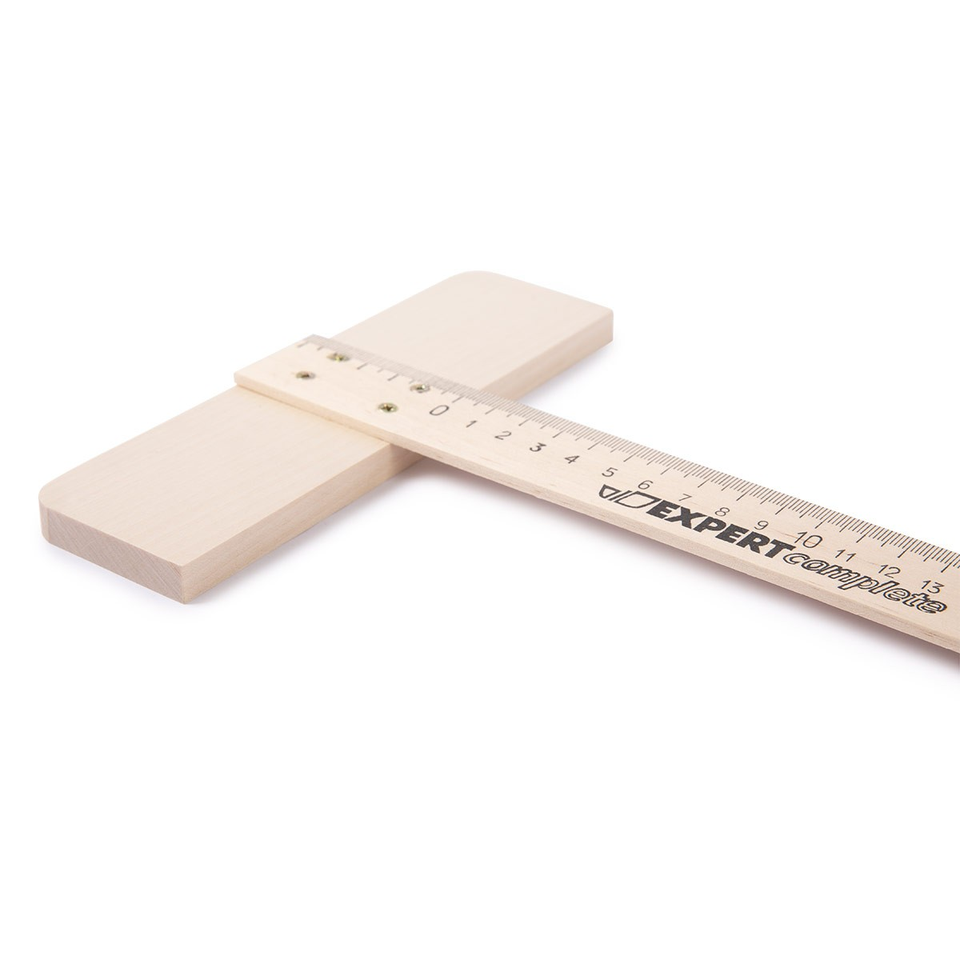
A T-square, called reysshina in Russian from German Reißschiene (reißen, “to draw,” and Schiene, “rail”), is a drawing ruler with a perpendicular crosspiece at one end, used to draw parallel lines. This seemingly simple tool played an enormous role in the development of engineering, architecture and cartography.
Another Russian name is vinkel, from German Winkel, “angle,” emphasizing the tool’s angled construction.
There are several types:
- Single-piece head, 500–750 mm long: the working edge is set at exactly 90° to the head.
- Two-part head, 800–1400 mm long: a movable upper piece allows lines to be drawn at any angle.
- Roller parallel rulers: rollers and cords guide the ruler across the drawing board.
A traditional T-square has an accuracy of no more than 1 mm deviation over a length of 1000 mm.


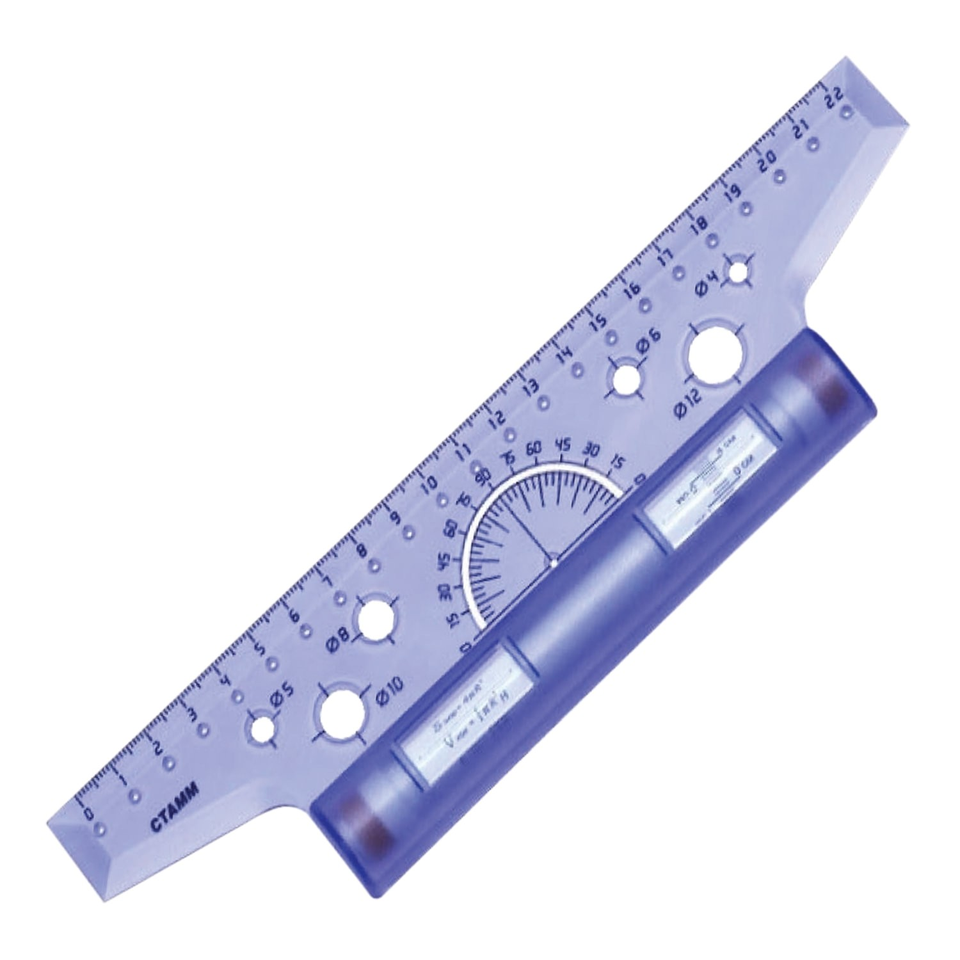

Similar devices may have been used as early as the time of Archimedes, in the third century BCE. The Renaissance flowering of engineering and architecture demanded even more accurate tools. Leonardo da Vinci mentioned various drawing devices in his notebooks, although there is no specific evidence of a T-square. The Industrial Revolution of the nineteenth century and the growth of mechanical engineering created demand for extremely precise drawing instruments.
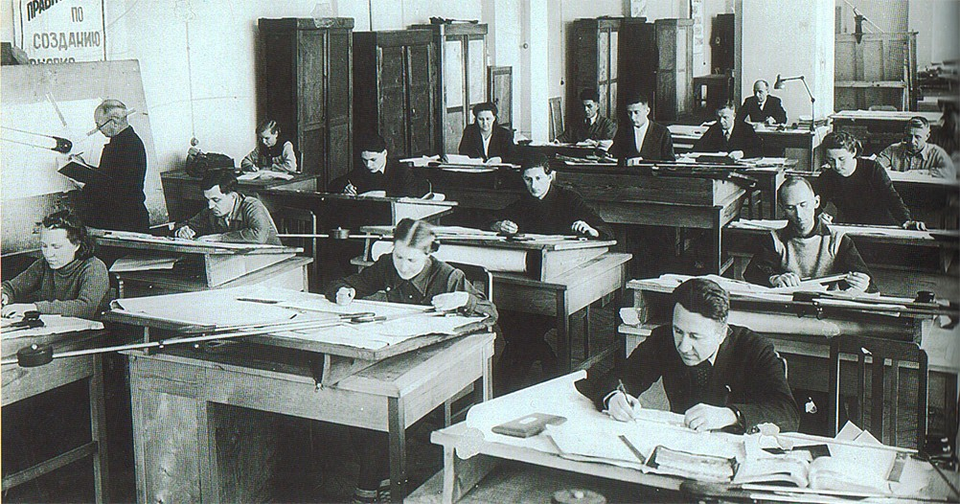
In the USSR, the T-square became a symbol of the engineering profession in literature and film. Before CAD — computer-aided design — systems appeared, the T-square and drafting machine were central tools in every design bureau.
“The country’s entire industry was born on such boards, from rockets and submarines to children’s toys.”
— Yu. V. Shkokov, design engineer
With the arrival of drafting machines, or improved drawing boards, designers who worked with T-squares came to appear more distinguished than other groups of engineering and technical staff.

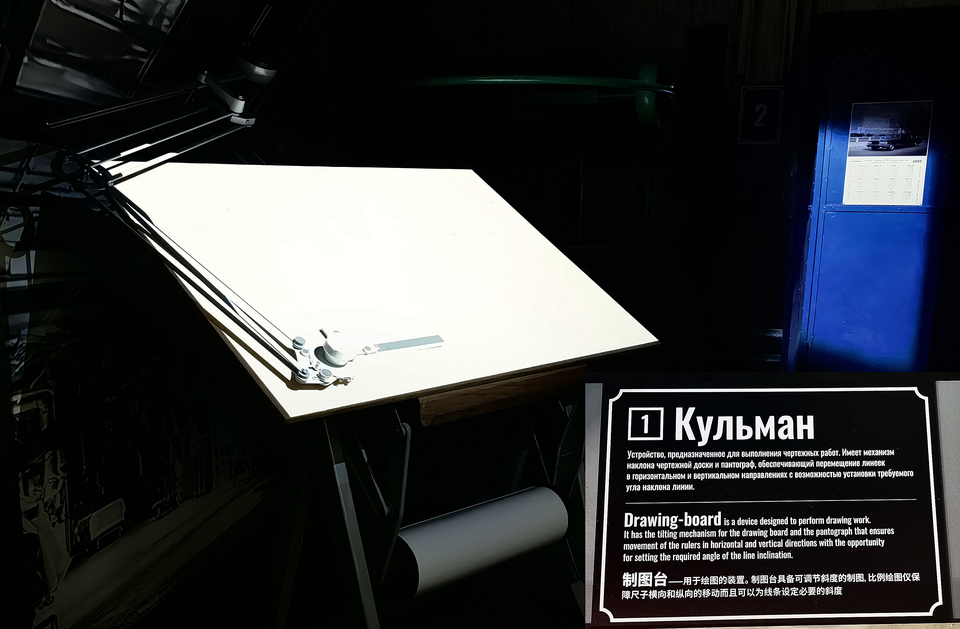

A traditional T-shaped ruler is used as follows:
- Press the head against the edge of the drawing board.
- Move the tool up and down to draw parallel lines.
- For inclined lines, fix the upper piece of a two-part head at the required angle.
For complex drawings, a T-square is used together with:
- set squares, for vertical and inclined lines;
- compasses, for circles;
- French curves, for complex curves;
- protractors, for measuring angles.
During the 1980s and 1990s the T-square gradually lost its dominant position. Digital technologies have now displaced it. Most engineers today work in programs such as AutoCAD, KOMPAS and SolidWorks.
Nevertheless, it survives in educational institutions for teaching the basics of drafting, in art schools and in model-making by hand.
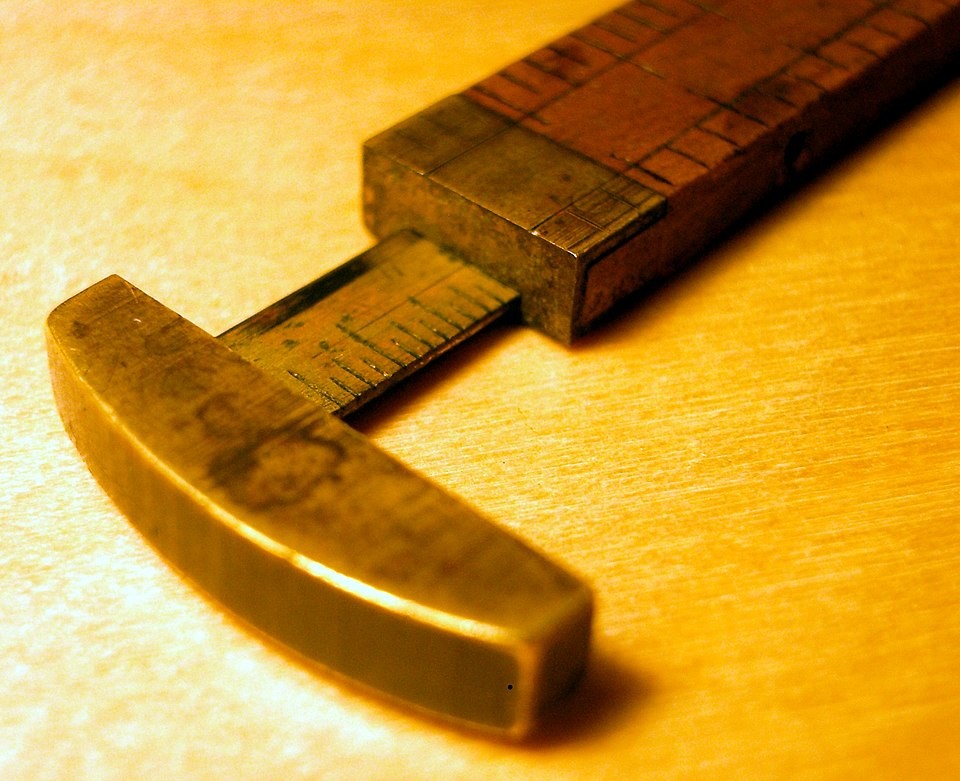
In the mid-twentieth century, books such as Skilful Hands even taught readers to make T-squares themselves. They were usually made from hardwood.

Further reading
- Atanasyan, L. S., and V. F. Butuzov. Geometry: A Textbook for Grades 7–9 of General Education Schools. Moscow: Prosveshcheniye, 1998. 336 pp. [In Russian.]
- Great Soviet Encyclopedia, vol. 21. A. M. Prokhorov, editor-in-chief. Moscow: Sovetskaya Entsiklopediya, 1970–1978. [In Russian.]